From Sanger to Oxford Nanopore MinION Technology: The Impact of Third-Generation Sequencing on Genetic Hematological Diagnosis
María José Larráyoz, Pablo Luri-Martin, Amagoia Mañu, Oihane Churruca, Natalia Gordillo, Irache Erdozain, Ada Esteban-Figuerola, Carlos de Miguel, Diego Robles, María García-Fortes, José Rifón Roca, Ana Alfonso-Pierola, Felipe Prósper, Beñat Ariceta, María José Calasanz

TL;DR
This study compares Sanger sequencing with MinION technology for detecting genetic variants in blood cancers, finding that MinION is nearly as accurate but much faster.
Contribution
The study demonstrates that MinION technology can replace Sanger sequencing in hematological diagnostics with high accuracy and faster turnaround times.
Findings
MinION achieved 99.43% concordance with Sanger sequencing in variant detection.
MinION offers faster diagnostic results within 24 hours compared to traditional methods.
The technology is suitable for diagnosing myeloproliferative neoplasms and leukemias.
Abstract
With the aim of advancing and innovating improvements in genetic diagnosis, this work aims to compare traditional Sanger sequencing with MinION technology for detecting variants in short fragments. The routine use of this third-generation technology is expected to have a tremendous positive impact on improving the turnaround time (TAT), among other factors, directly contributing to improvements in patients’ health. Background: Sanger sequencing remains the gold standard for characterizing genetic variants in short DNA fragments (<700 bp). However, the increasing demand for short TATs and high sensitivities in variant detection, particularly in oncohematology, is driving the need for more efficient methods. Next-generation sequencing (NGS) has improved sensitivity and allows for the simultaneous analysis of multiple genes, but it is still costly and time-consuming. Consequently, Sanger…
Genes, proteins, chemicals, diseases, species, mutations and cell lines named across the full text — each resolved to its canonical identifier and authoritative record.
Click any figure to enlarge with its caption.
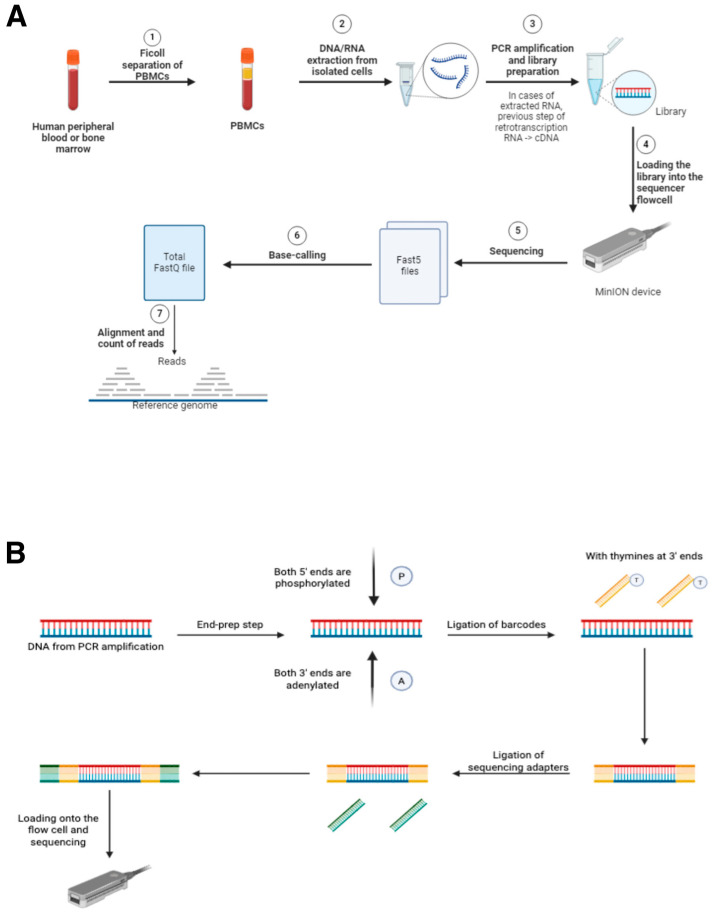 Figure 1
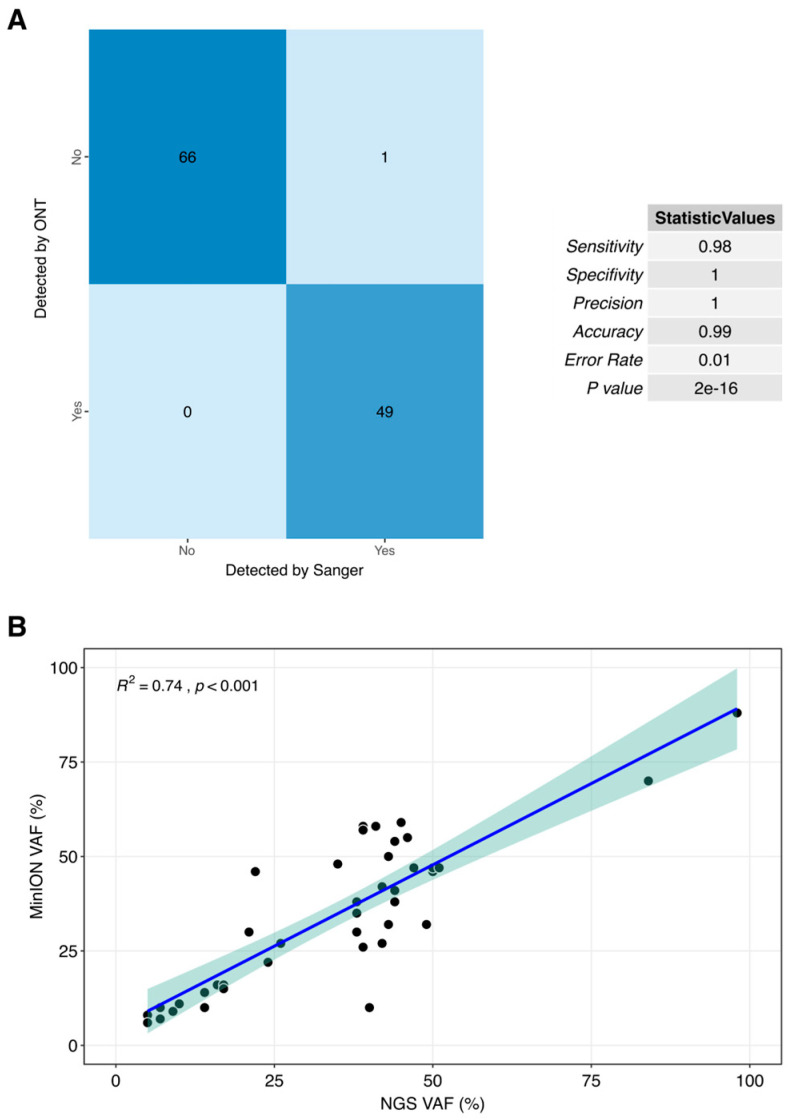 Figure 2
Peer Reviews
No public reviews on file for this paper yet. If you reviewed it on a platform where reviews are public (OpenReview, ICLR, NeurIPS, ICML), you can paste yours below so the community can read it here.
Videos
No videos yet. Explain this paper in a talk, walkthrough, or lecture? Add one.
Taxonomy
TopicsCancer Genomics and Diagnostics · Molecular Biology Techniques and Applications · RNA modifications and cancer