Does the Organ Matter in PTLD Development in Solid Organ Transplant Recipients? A Multicenter Observational Study of Risk and Prognostic Factors
Rafał Staros, Bartosz Foroncewicz, Dorota Kamińska, Dominika Dęborska-Materkowska, Sławomir Lizakowski, Izabela Zakrocka, Joanna Raszeja-Wyszomirska, Anita Stanjek-Cichoracka, Anna Pawłowska, Emilia Knioła, Paweł Poznański, Jolanta Gozdowska, Alicja Dębska-Ślizień

TL;DR
This study shows that the type of transplanted organ affects the risk and timing of post-transplant lymphoproliferative disorder (PTLD) and patient survival.
Contribution
The study provides organ-specific insights into PTLD risk and prognostic factors using a large multicenter registry.
Findings
Kidney transplant recipients had a significantly longer median time to PTLD onset compared to liver and lung recipients.
Older age at transplantation was linked to earlier PTLD development and worse survival in kidney recipients.
Liver recipients treated with tacrolimus developed PTLD later than those treated with cyclosporin.
Abstract
Post-transplantation lymphoproliferative disorder is considered one of the most life-threatening complications of solid organ transplantation (SOT). Evidence suggests that PTLD risk is influenced by organ graft type. Since only a limited population is at risk of PTLD, the majority of research has been based on either small cohorts of single graft-type recipients or larger cohorts of multiple types of SOT recipients. The conclusions from such studies may not be sufficiently generalizable or may miss organ-specific risk and prognostic factors. To address these limitations, we created a multicenter registry that included 103 PTLD patients diagnosed out of 9432 kidney, 3500 liver, and 331 lung transplant recipients. We used this registry to analyze various risk and prognostic factors according to organ graft types. We found that the constellation of factors affecting the time of PTLD onset…
Genes, proteins, chemicals, diseases, species, mutations and cell lines named across the full text — each resolved to its canonical identifier and authoritative record.
Click any figure to enlarge with its caption.
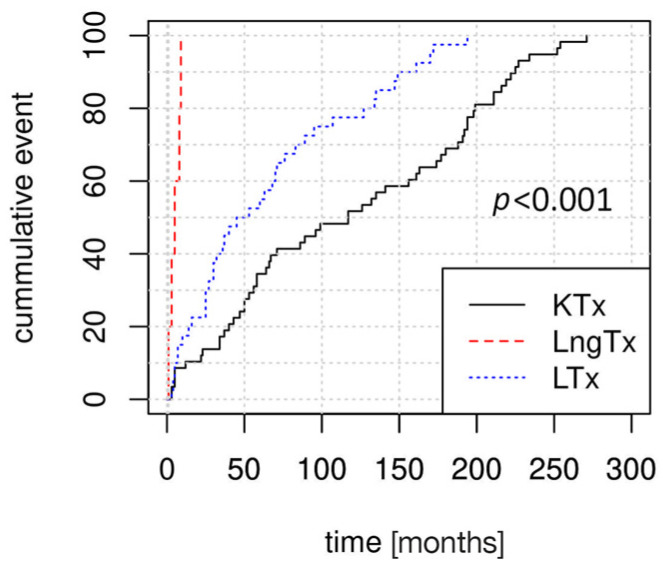 Figure 1
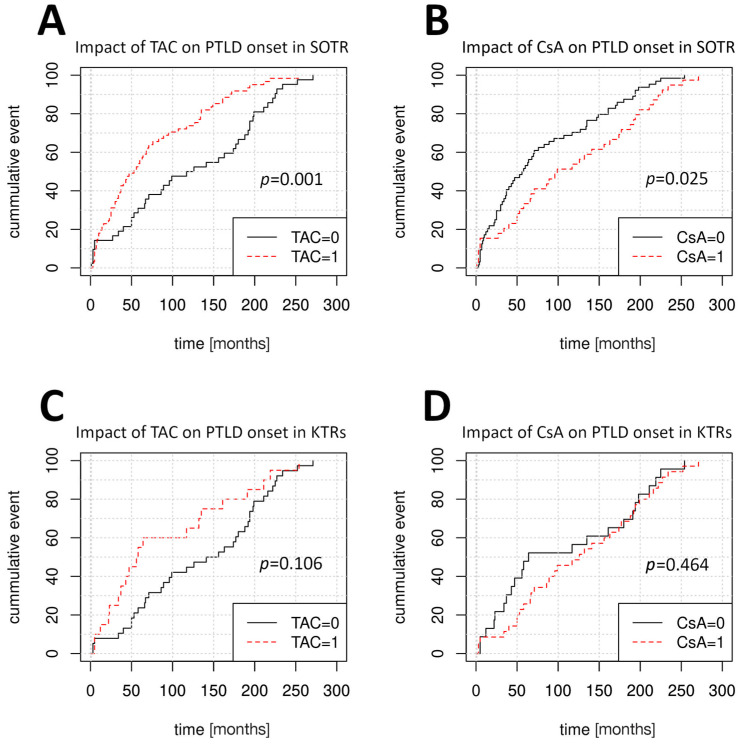 Figure 2
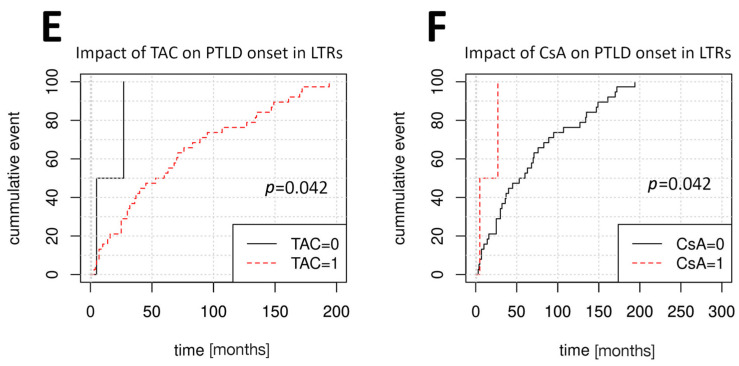 Figure 3
Peer Reviews
No public reviews on file for this paper yet. If you reviewed it on a platform where reviews are public (OpenReview, ICLR, NeurIPS, ICML), you can paste yours below so the community can read it here.
Videos
No videos yet. Explain this paper in a talk, walkthrough, or lecture? Add one.
Taxonomy
TopicsViral-associated cancers and disorders · Polyomavirus and related diseases · Cytomegalovirus and herpesvirus research