Association of Pathologic Response and Adjuvant Chemotherapy with Survival in Resected Pancreatic Ductal Adenocarcinoma Following Neoadjuvant Therapy
James Yu, Jose M. Laborde, Robin Park, Moazzam Shahzad, Youngchul Kim, Jaekyung Cheon, Iman Imanirad, Richard D. Kim, Tiago Biachi de Castria, Nicole L. Nardella, Mokenge Malafa, Jason W. Denbo, Jason B. Fleming, Sarah E. Hoffe, Jessica M. Frakes, Andrew J. Sinnamon

TL;DR
This study finds that adjuvant chemotherapy after surgery improves survival in pancreatic cancer patients who did not respond strongly to initial treatment.
Contribution
The study identifies that adjuvant chemotherapy benefits patients who lack a major pathologic response to neoadjuvant therapy.
Findings
Adjuvant chemotherapy was associated with improved disease-free and overall survival in pancreatic cancer patients.
Patients without a major pathologic response, pN0, or R0 status benefited more from adjuvant chemotherapy.
The specific neoadjuvant chemotherapy regimen did not significantly affect survival outcomes.
Abstract
The optimal treatment strategy following neoadjuvant therapy and curative resection in early-stage pancreatic cancer remains inconclusive. We retrospectively evaluated the clinicopathologic features and survival outcomes of patients with curatively resected pancreatic cancer treated with neoadjuvant chemotherapy. Receiving adjuvant chemotherapy (ACT) was associated with favorable survival outcomes. Subgroup analyses showed that ACT appeared to benefit patients who did not achieve a major pathologic response, pN0, or R0 status following neoadjuvant therapy, whereas those who achieved a major response with pN0/R0 showed no survival benefit. The specific neoadjuvant chemotherapy regimen (FOLFIRINOX vs. GEM-NAB) and changes in ACT from NACT did not significantly influence survival outcomes in our cohort. Background: In patients with curatively resected pancreatic adenocarcinoma who have…
Genes, proteins, chemicals, diseases, species, mutations and cell lines named across the full text — each resolved to its canonical identifier and authoritative record.
Click any figure to enlarge with its caption.
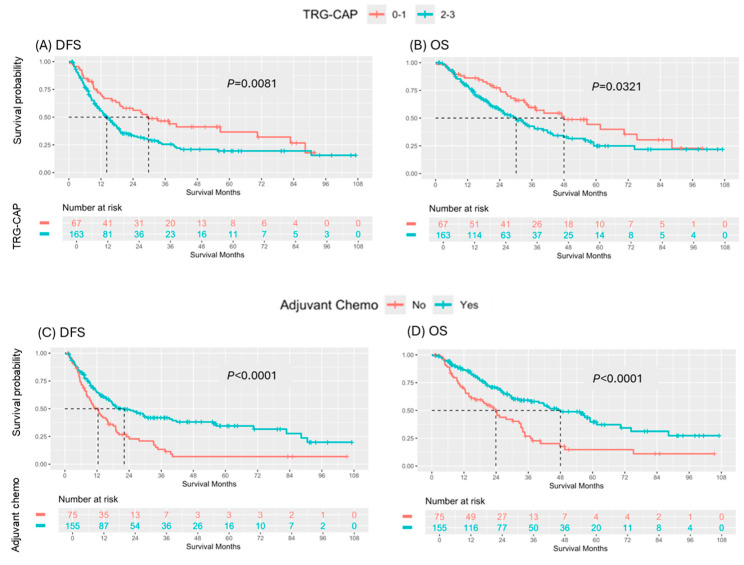 Figure 1
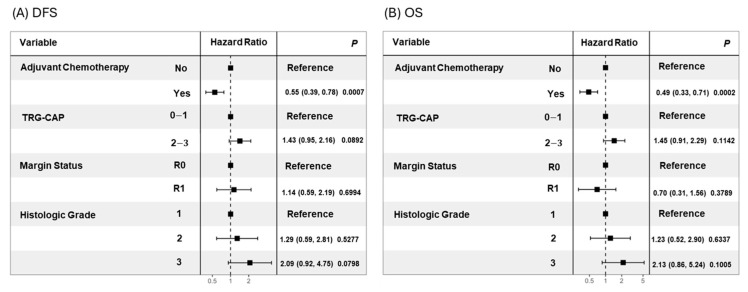 Figure 2
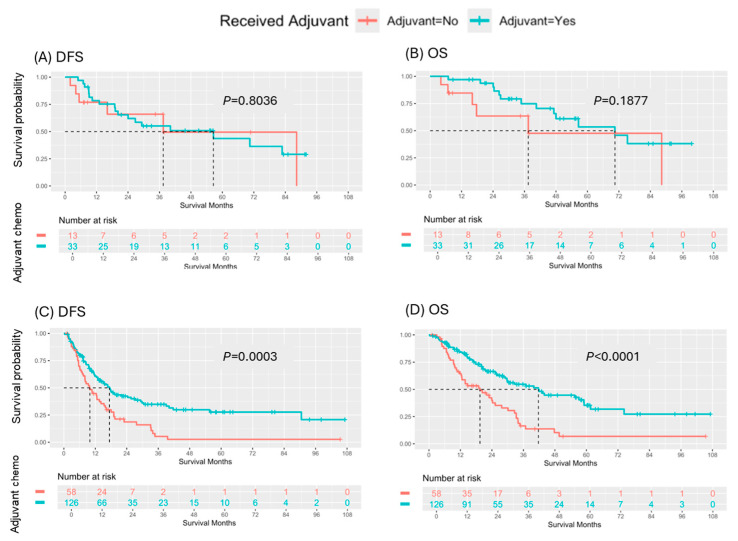 Figure 3
Peer Reviews
No public reviews on file for this paper yet. If you reviewed it on a platform where reviews are public (OpenReview, ICLR, NeurIPS, ICML), you can paste yours below so the community can read it here.
Videos
No videos yet. Explain this paper in a talk, walkthrough, or lecture? Add one.
Taxonomy
TopicsPancreatic and Hepatic Oncology Research · Gastric Cancer Management and Outcomes · Cancer Genomics and Diagnostics