Classification of Gene Variants in a Danish Population with Suspected Predisposition to Hereditary Breast and/or Ovarian Cancer
Anne K. Munch, Elisabeth S. Feldner, Caroline H. Bækgaard, Mie B. Larsen, Naja Slemming-Adamsen, Desirée S. Boonen, Nanna B. Møller, Inge S. Pedersen, Thomas V. O. Hansen, Thorkild Terkelsen, Mark Burton, Qin Hao, Susanne E. Boonen, Mads Thomassen

TL;DR
This study analyzed gene variants in Danish patients suspected of hereditary breast and ovarian cancer to better classify variants of unknown significance.
Contribution
The study reclassified 22.8% of variants of unknown significance using association and splice analysis in a Danish population.
Findings
10.6% of patients carried likely pathogenic or pathogenic variants, mostly in BRCA1 and BRCA2.
27.1% of patients carried variants of unknown significance, primarily in BARD1 and ATM.
22.8% of previously classified VUSs were reclassified using updated guidelines and additional analyses.
Abstract
This study aimed to classify and investigate the distribution of gene variants in 13 clinically relevant genes of 5923 Danish patients with suspected hereditary predisposition to breast and/or ovarian cancer, all of whom were tested with the same gene panel. The growth in genetic analysis over the last 25 years has generated an increasing number of variants of unknown significance (VUSs). These present challenges for daily clinical counselling and decision-making about whether a carrier should be offered inclusion in a surveillance program or risk-reducing surgery. We examined VUSs using two methods: an association analysis comparing the case group to a Swedish control group, and splice analysis using RNA sequencing. Background: Gene variants of unknown significance (VUSs) present a challenge in genetic counselling. The primary aim of this study was to describe the spectrum of genetic…
Genes, proteins, chemicals, diseases, species, mutations and cell lines named across the full text — each resolved to its canonical identifier and authoritative record.
Click any figure to enlarge with its caption.
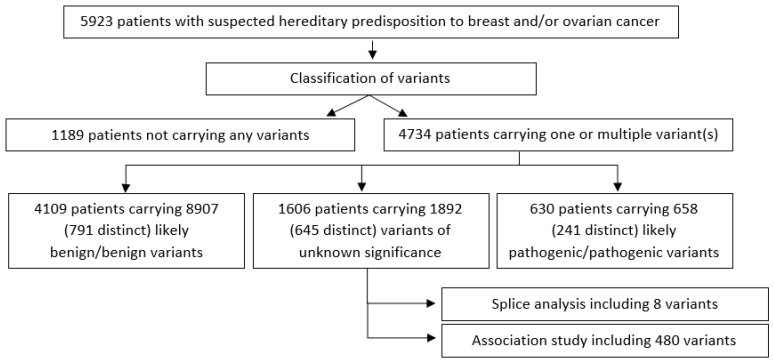 Figure 1
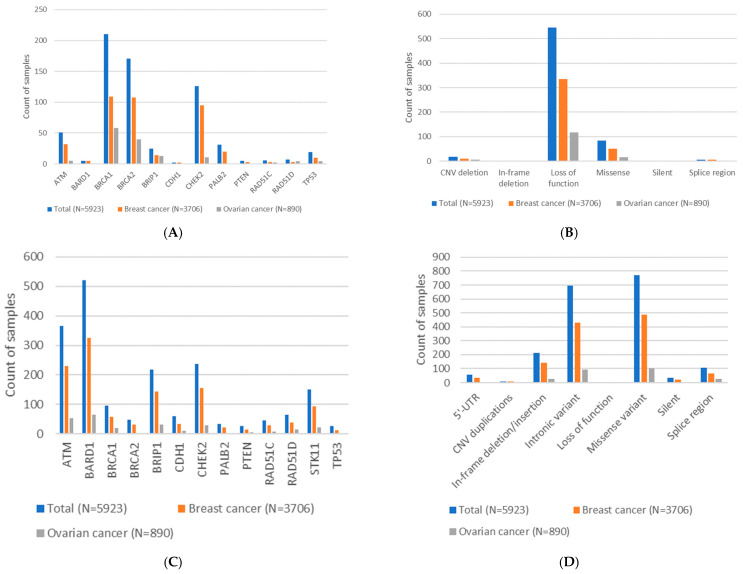 Figure 2
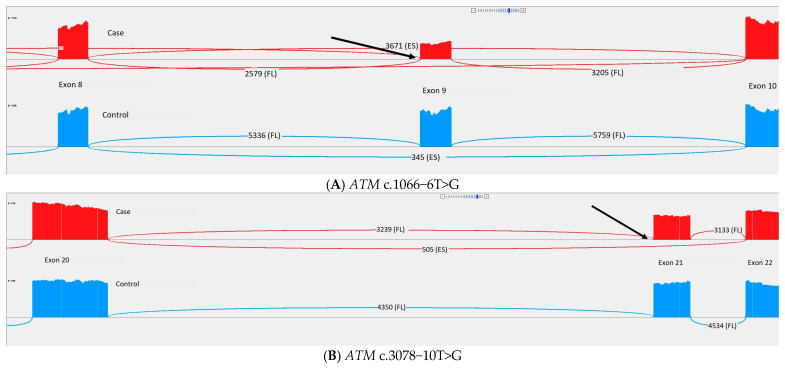 Figure 3
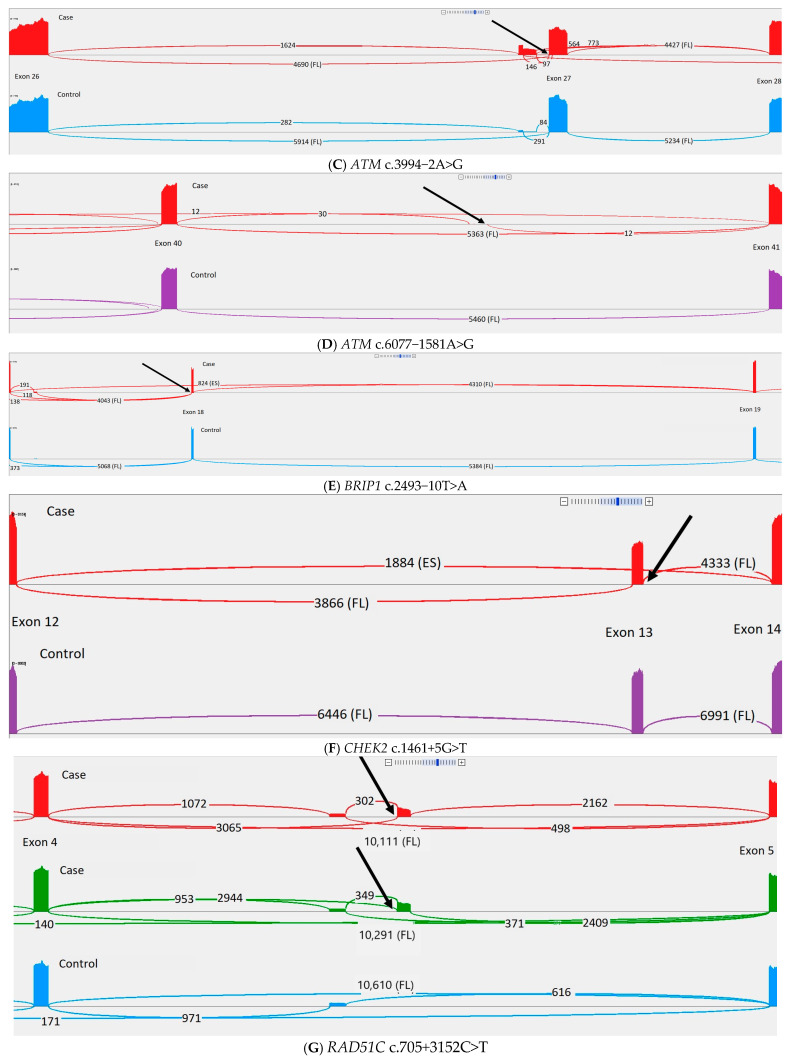 Figure 4
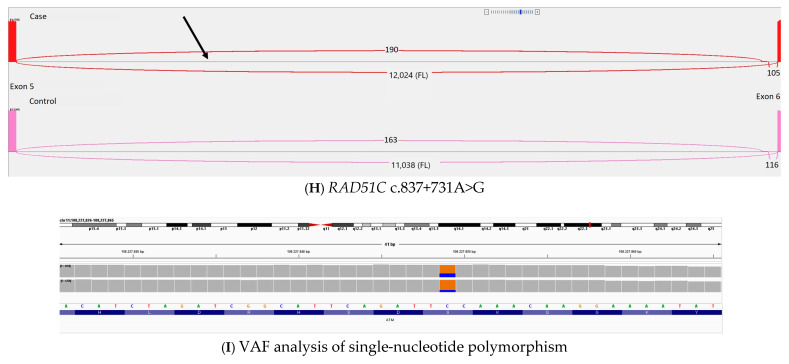 Figure 5
Peer Reviews
No public reviews on file for this paper yet. If you reviewed it on a platform where reviews are public (OpenReview, ICLR, NeurIPS, ICML), you can paste yours below so the community can read it here.
Videos
No videos yet. Explain this paper in a talk, walkthrough, or lecture? Add one.
Taxonomy
TopicsBRCA gene mutations in cancer · Genetic factors in colorectal cancer · DNA Repair Mechanisms