Comparative Analysis of Cold Versus Thermal Dissection in Nerve-Sparing Robot-Assisted Radical Prostatectomy
Andrea Fuschi, Manfredi Bruno Sequi, Yazan Al Salhi, Paolo Pietro Suraci, Fabio Maria Valenzi, Onofrio Antonio Rera, Alice Antonioni, Damiano Graziani, Giorgio Martino, Giuseppe Candita, Filippo Gianfrancesco, Paolo Benanti, Luca Erra, Giovanni Di Gregorio, Riccardo Lombardo

TL;DR
Using cold dissection during robotic prostate surgery helps men recover urinary control and sexual function faster than traditional methods.
Contribution
This study provides evidence that cold dissection improves early functional recovery in nerve-sparing prostatectomy.
Findings
Cold dissection improved urinary continence at 15 and 30 days post-surgery.
Erectile function recovery was better in the cold dissection group up to six months after surgery.
Age and preoperative IIEF-5 scores were key predictors of recovery outcomes.
Abstract
Robotic prostate surgery can cure prostate cancer, but many men experience urinary incontinence and erectile dysfunction afterward. This study investigated whether using a “cold dissection” technique during nerve-sparing robotic prostatectomy leads to better early recovery of urinary continence and sexual function. The researchers compared two groups of patients: one treated with cold dissection and the other with traditional thermal dissection. Patients treated with cold dissection had better urinary continence rates within the first 15 and 30 days and improved erectile function up to six months after surgery. This approach may help men recover faster and maintain a better quality of life after prostate cancer surgery. Background: Cold dissection (CD) during nerve-sparing robot-assisted radical prostatectomy (nsRARP) in patients with prostate cancer has been proposed to improve…
Genes, proteins, chemicals, diseases, species, mutations and cell lines named across the full text — each resolved to its canonical identifier and authoritative record.
Click any figure to enlarge with its caption.
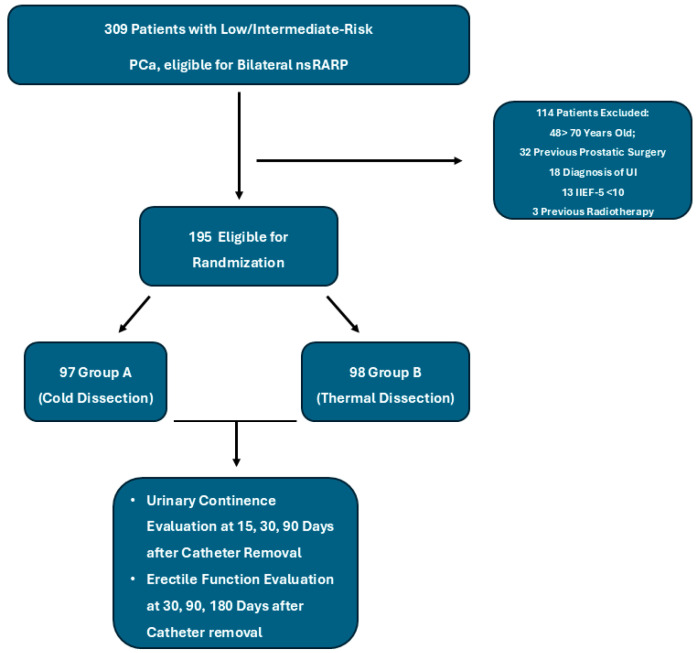 Figure 1
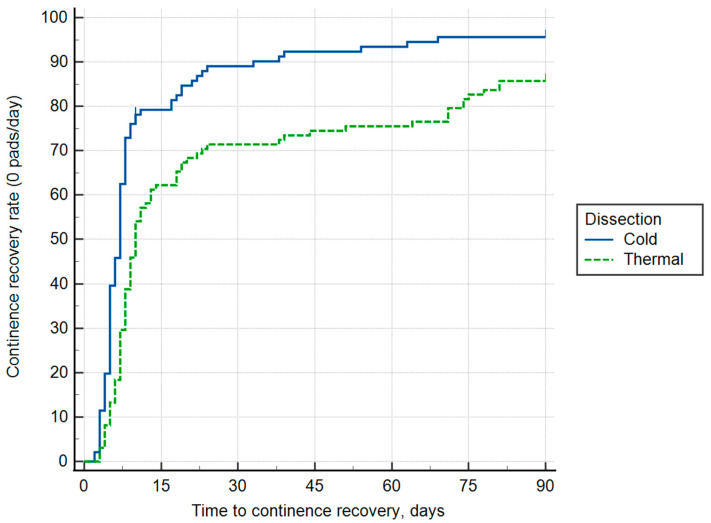 Figure 2
Peer Reviews
No public reviews on file for this paper yet. If you reviewed it on a platform where reviews are public (OpenReview, ICLR, NeurIPS, ICML), you can paste yours below so the community can read it here.
Videos
No videos yet. Explain this paper in a talk, walkthrough, or lecture? Add one.
Taxonomy
TopicsProstate Cancer Diagnosis and Treatment · Pain Management and Treatment · Surgical Simulation and Training