Taste Preferences in Broilers: Behavioral Evaluation for Varying Concentrations of Four Essential Amino Acids
Jaime Figueroa, Paloma Cordero, Sofía Herrera-Alcaíno, Sergio A. Guzmán-Pino

TL;DR
This study explores how young chickens respond to different concentrations of four essential amino acids, finding that Lysine at high concentrations is preferred while Threonine and Tryptophan are avoided.
Contribution
The study introduces a novel behavioral evaluation framework for amino acid preferences in broilers, emphasizing the need for bird-specific feeding behavior assessments.
Findings
Lysine at 1.5% concentration showed higher preference compared to water and other concentrations.
Threonine and Tryptophan at 1.5% were less preferred than water, confirmed by sensory-motivated intake analysis.
No palatability differences were observed across amino acid concentrations, possibly due to differences in behavior between chickens and other animal models.
Abstract
This study examined how chickens respond to essential amino acid solutions. After a one-hour fast, we tested 64 one-day-old male chickens over 16 days, offering them Lysine, Methionine, Threonine, and Tryptophan in concentrations ranging from 0.1% to 1.5% through two-choice preference tests. Amino acid solutions such as Threonine and Tryptophan at 1.5% tended to show less preference than drinking water, which was confirmed in the case of Threonine when performing a sensory-motivated intake (SMI) analysis. However, Lysine (1.5%) numerically showed a higher preference ratified by SMI and acceptability analysis concerning water and other concentrations of the same amino acid, respectively. No palatability differences across amino acid concentrations were observed, which is probably attributed to differences in solution intake behavior between chickens and other animal models such as rats.…
Genes, proteins, chemicals, diseases, species, mutations and cell lines named across the full text — each resolved to its canonical identifier and authoritative record.
Click any figure to enlarge with its caption.
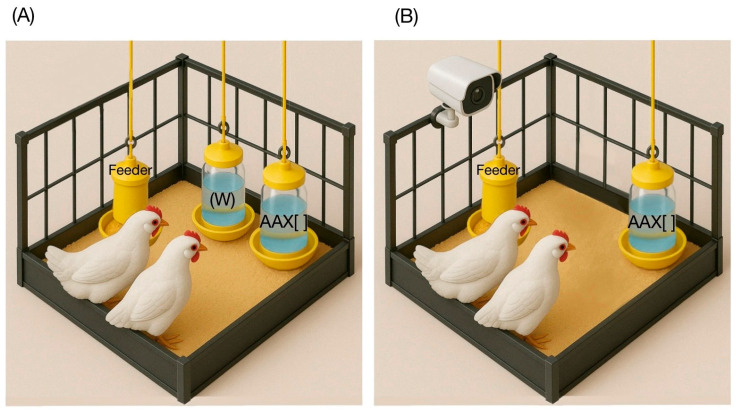 Figure 1
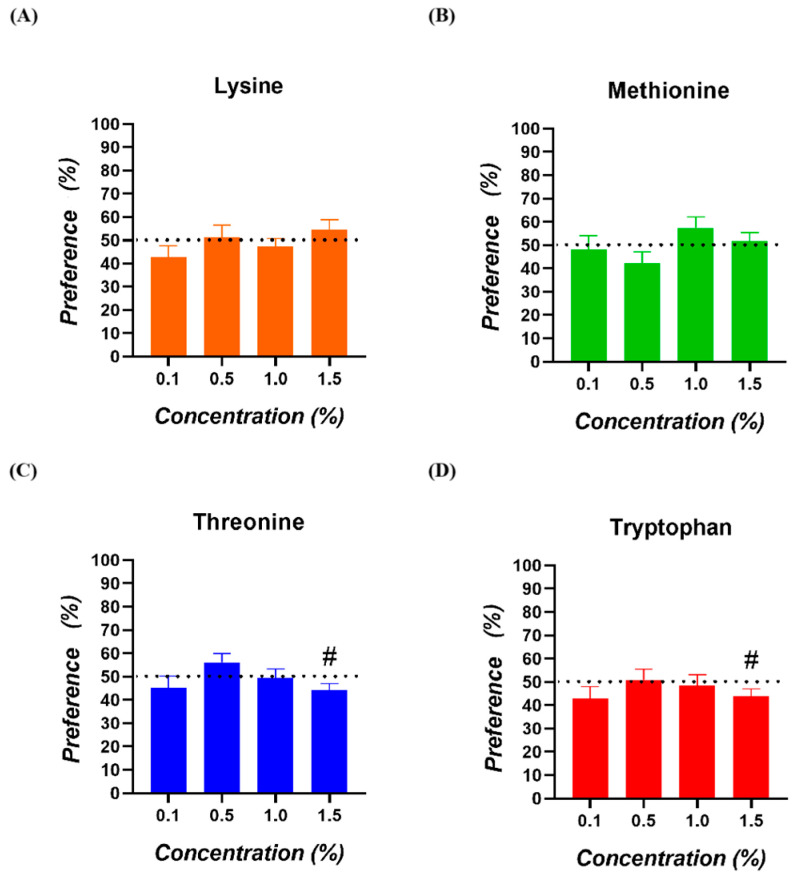 Figure 2
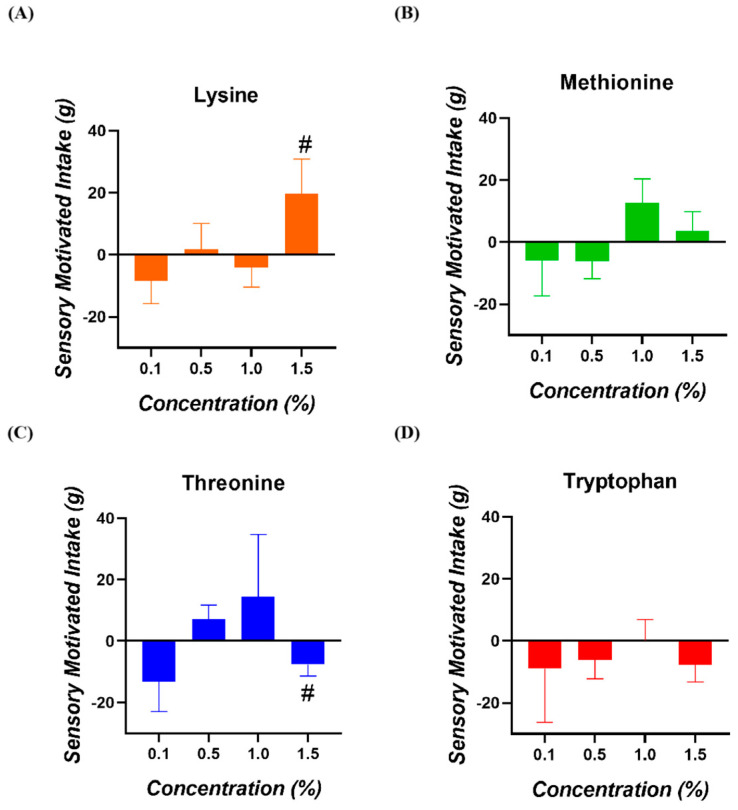 Figure 3
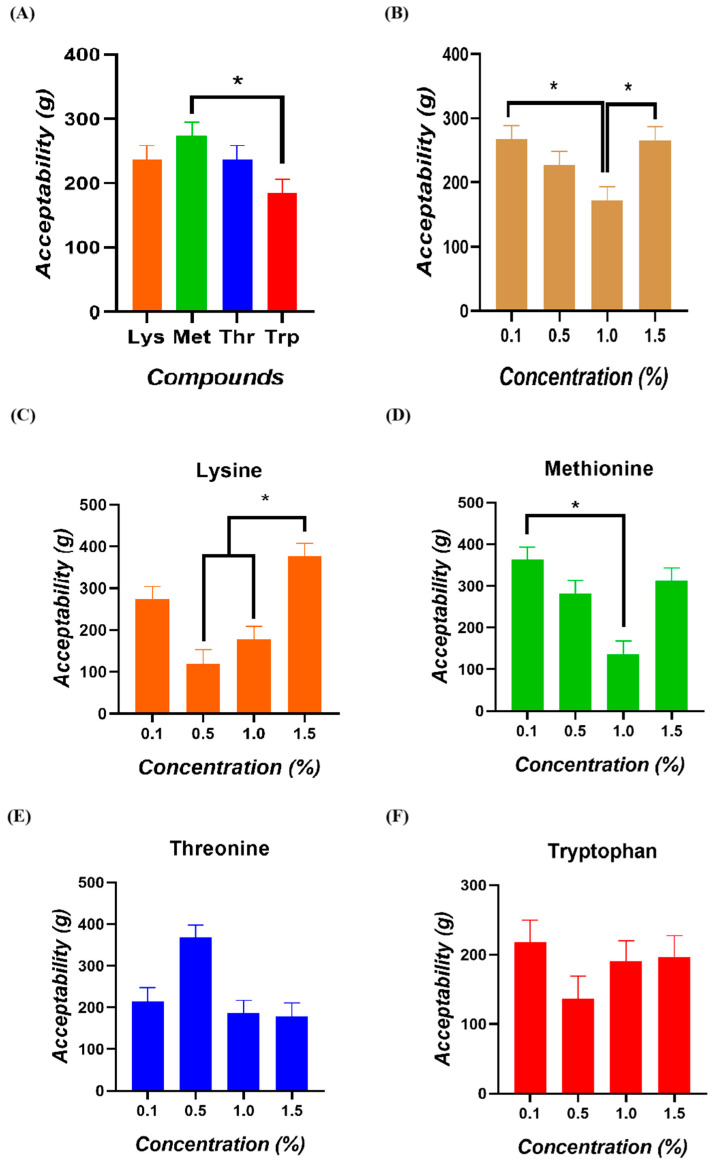 Figure 4
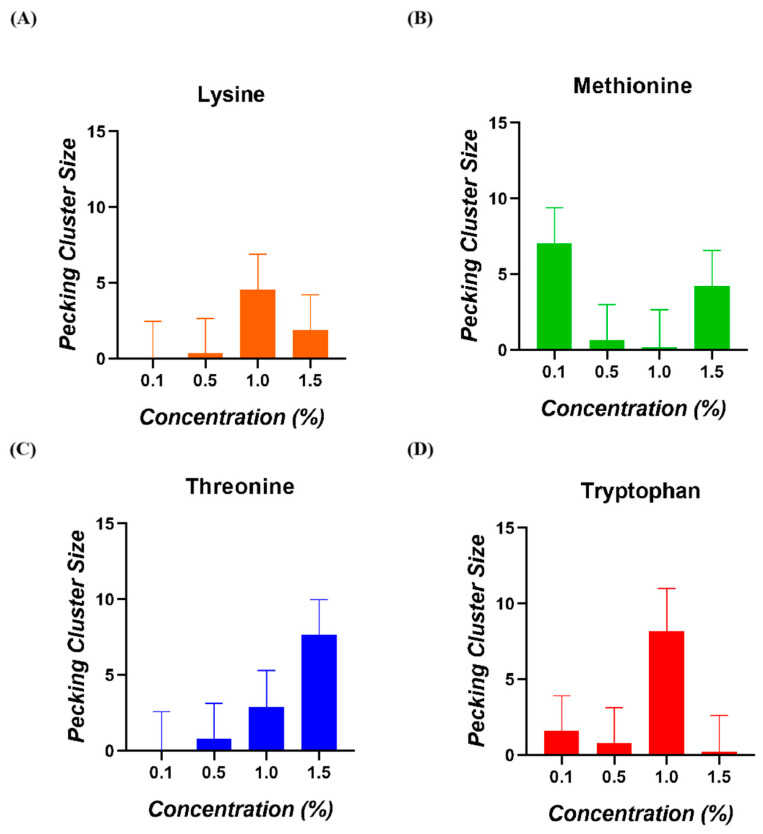 Figure 5
Peer Reviews
No public reviews on file for this paper yet. If you reviewed it on a platform where reviews are public (OpenReview, ICLR, NeurIPS, ICML), you can paste yours below so the community can read it here.
Videos
No videos yet. Explain this paper in a talk, walkthrough, or lecture? Add one.
Taxonomy
TopicsBiochemical Analysis and Sensing Techniques · Animal Nutrition and Physiology · Olfactory and Sensory Function Studies