The Activity Rhythm and Home Range Characteristics of Released Chinese Pangolins (Manis pentadactyla)
Haochen Huang, Zhenhui Shen, Xinhao Zhang, Hongyi Cheng, Chungang Xie, Rongquan Zheng

TL;DR
This study used GPS and accelerometers to track the nocturnal activity and home range of five released Chinese pangolins, providing insights for their conservation.
Contribution
The study demonstrates the effectiveness of combining GPS and accelerometer data to monitor cryptic behaviors of released Chinese pangolins.
Findings
Pangolins were primarily active between 22:00 and 4:00, showing a clear nocturnal pattern.
The core home range of the pangolins was 596.21 ± 265.58 hectares based on KDE analysis.
All five pangolins survived and remained active during the tracking period of 21–72 days.
Abstract
GPS positioning technology has become an effective means for researchers to study wildlife and protect the biodiversity of the Earth. It can obtain the spatial location, movement, and time information of wildlife and is widely used in the field of wildlife conservation. The Chinese pangolin (Manis pentadactyla) has become an endangered flagship species due to its unique morphological characteristics (e.g., scale-covered body), specialized ant-/termite-eating behavior, and critical conservation status. As a charismatic yet cryptic species, it plays a key role in mobilizing public support for biodiversity conservation efforts. This study used GPS positioning and accelerometer technology to analyze the activity rhythm and home range of five Chinese pangolins released into the wild. The results showed that the nighttime activity of the pangolins began after 18:00, mainly concentrated…
Genes, proteins, chemicals, diseases, species, mutations and cell lines named across the full text — each resolved to its canonical identifier and authoritative record.
Click any figure to enlarge with its caption.
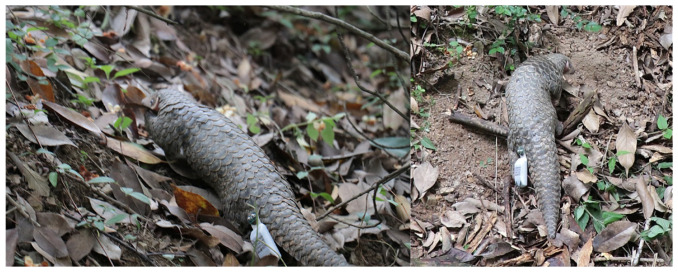 Figure 1
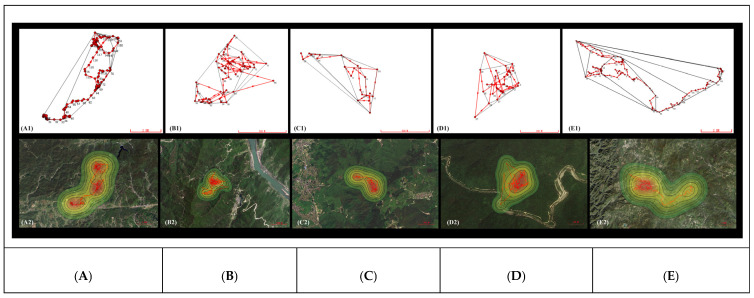 Figure 2
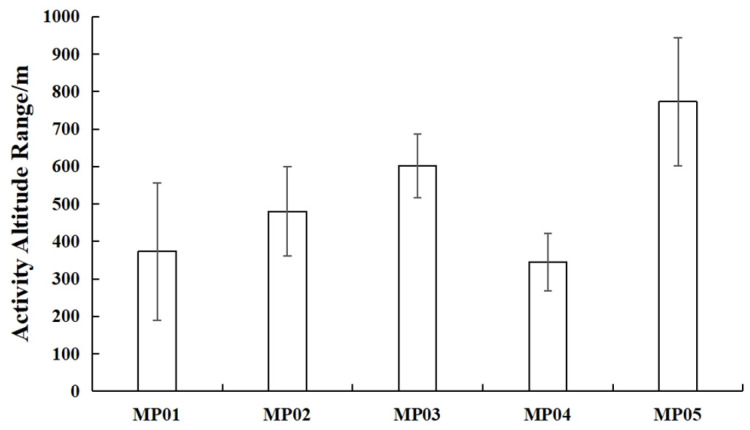 Figure 3
Peer Reviews
No public reviews on file for this paper yet. If you reviewed it on a platform where reviews are public (OpenReview, ICLR, NeurIPS, ICML), you can paste yours below so the community can read it here.
Videos
No videos yet. Explain this paper in a talk, walkthrough, or lecture? Add one.
Taxonomy
TopicsWildlife Ecology and Conservation · Marine animal studies overview · Bat Biology and Ecology Studies