Evaluating BMI, Upper Airway Dimensions, and Hyoid Bone Position and their Correlation in Non-OSA Snoring Adults: the First CBCT Study
Sogol Jafari-Pozve, Nasim Jafari-Pozve, Ali Farzamfar, S. Marjan Arianezhad, Seyed Sasan Aryanezhad

TL;DR
This study uses CBCT scans to explore how BMI, airway dimensions, and hyoid bone position relate in adults who snore but don't have sleep apnea.
Contribution
The first CBCT study to evaluate correlations between BMI, upper airway dimensions, and hyoid position in non-OSA snorers.
Findings
The hyoid bone position was significantly greater in females and changed with age in snorers.
BMI was significantly correlated with the anteroposterior dimension of the hypopharynx.
Snorers had above-average BMI across all age groups and genders.
Abstract
Precise knowledge about the characteristics of individuals who snore but do not have obstructive sleep apnea (OSA) is essential yet remains limited in the literature. This study aimed to evaluate BMI (body mass index), upper airway dimensions, hyoid bone position, and their relationship in non-OSA snoring adults using cone-beam computed tomography. In this retrospective cross-sectional study, cone beam computed tomography (CBCT) records of 100 patients were analyzed. Patients were snoring non-OSA individuals, diagnosed through a thorough examination and negative polysomnography results. CBCT scans were executed in the standard position as per the specified protocol of the Sleep Center. Upper airway was divided into four parts (nasopharynx, velopharynx, oropharynx, and hypopharynx), and anteroposterior (AP) and transverse (T) dimensions within the minimal cross-sectional area of each…
Genes, proteins, chemicals, diseases, species, mutations and cell lines named across the full text — each resolved to its canonical identifier and authoritative record.
Click any figure to enlarge with its caption.
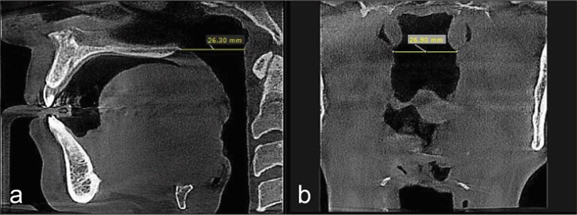 Figure 1
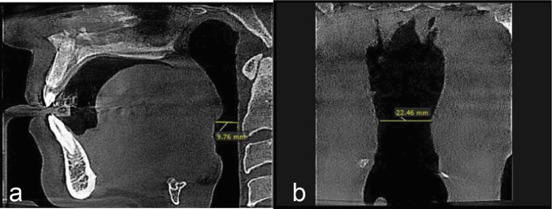 Figure 2
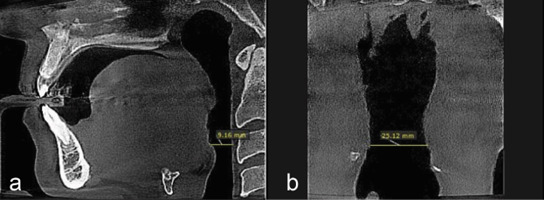 Figure 3
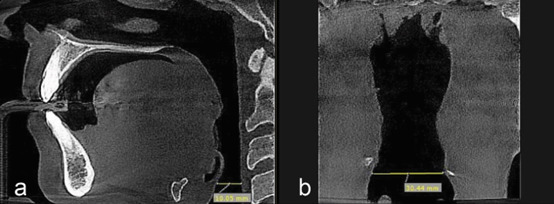 Figure 4
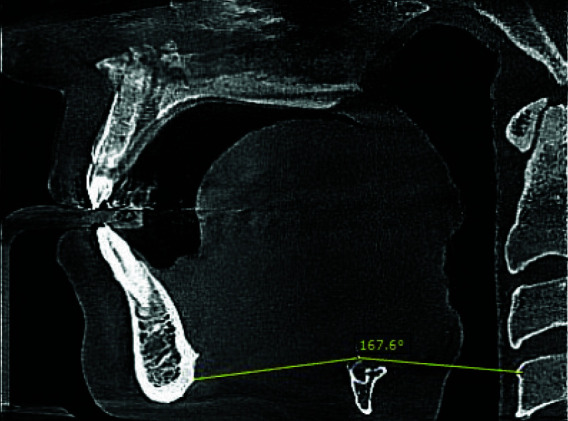 Figure 5
 Figure 6
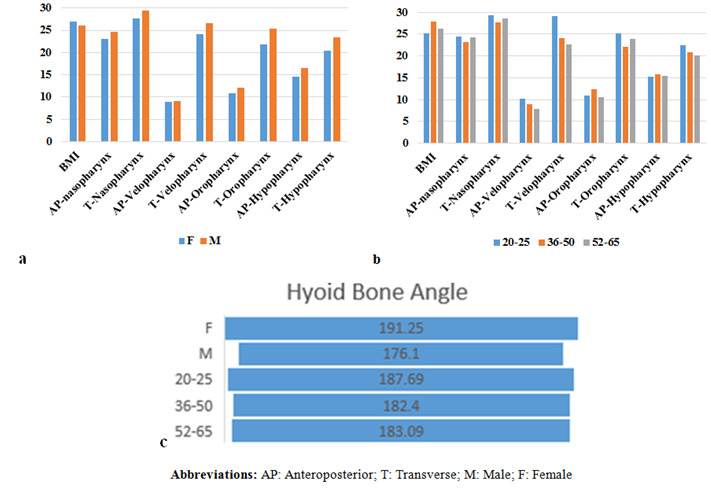 Figure 7
Peer Reviews
No public reviews on file for this paper yet. If you reviewed it on a platform where reviews are public (OpenReview, ICLR, NeurIPS, ICML), you can paste yours below so the community can read it here.
Videos
No videos yet. Explain this paper in a talk, walkthrough, or lecture? Add one.
Taxonomy
TopicsObstructive Sleep Apnea Research · Neuroscience of respiration and sleep · Cardiovascular and Diving-Related Complications