Anesthetic Management of Atypical Toxic Epidermal Necrolysis in a Six-Month-Old Patient Undergoing Burn Surgery: A Case Report
Cassidy Chau, Anthony Q Dang, Thong Nguyen

TL;DR
This case report discusses the anesthetic challenges faced during burn surgery for a six-month-old with atypical toxic epidermal necrolysis.
Contribution
The paper presents a unique case of atypical TEN in an infant, emphasizing anesthetic strategies for such rare and complex conditions.
Findings
The patient exhibited full-thickness necrotic wounds without typical bullae or sloughing.
Anesthetic planning required careful perioperative assessment and airway management due to diagnostic uncertainty.
Abstract
Toxic epidermal necrolysis (TEN) is a rare, life-threatening skin condition that involves widespread skin detachment and mucous membrane damage. We present a case of a six-month-old male with atypical TEN transferred from an outside hospital in Mexico to our facility. The patient had widespread full-thickness necrotic wounds but no bullae or sloughing. Since the diagnosis was unclear at the time, it posed a significant challenge to make an appropriate anesthetic plan given the need for prolonged intubation after extensive burn debridement and grafting surgery. This case report highlights the importance of perioperative assessment, induction strategy, airway management, resuscitation, and pain control in an atypical TEN patient.
Genes, proteins, chemicals, diseases, species, mutations and cell lines named across the full text — each resolved to its canonical identifier and authoritative record.
Click any figure to enlarge with its caption.
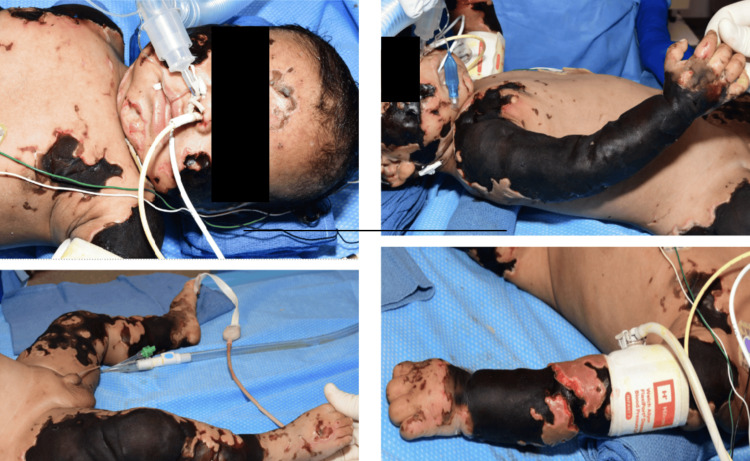 Figure 1
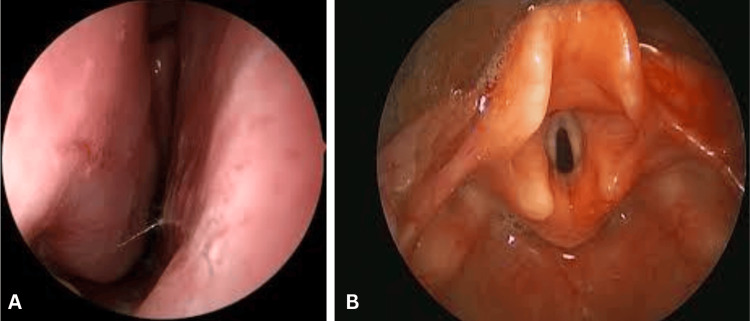 Figure 2
Peer Reviews
No public reviews on file for this paper yet. If you reviewed it on a platform where reviews are public (OpenReview, ICLR, NeurIPS, ICML), you can paste yours below so the community can read it here.
Videos
No videos yet. Explain this paper in a talk, walkthrough, or lecture? Add one.
Taxonomy
TopicsDrug-Induced Adverse Reactions · Urticaria and Related Conditions · Contact Dermatitis and Allergies