REL/DPA/AVI method: a novel approach for rapid detection of carbapenemase-producing Enterobacterales directly from positive blood cultures based on optical density
Chuwen Zhao, Junqi Zhu, Yanping Xiao, Fuxing Li, Yunwei Zheng, Shumin Gu, Yaping Hang, Qiaoshi Zhong, Longhua Hu

TL;DR
A new rapid and low-cost method for detecting carbapenem-resistant bacteria in blood cultures is introduced, offering faster and more cost-effective results than current techniques.
Contribution
The REL/DPA/AVI method is a novel, rapid, and cost-effective phenotypic test for early detection of carbapenemase-producing Enterobacterales in blood cultures.
Findings
The REL/DPA/AVI method detected carbapenemases in 1.5 to 2 hours with high sensitivity for classes A, B, and A + B.
The method is significantly more cost-effective than existing technologies, with a cost of less than $1 USD per test.
Compared to traditional methods like mCIM/eCIM and APB-EDTA, the REL/DPA/AVI method showed comparable or higher sensitivity for most carbapenemase classes.
Abstract
The high mortality rate associated with carbapenem-resistant Enterobacterales (CRE), particularly for bloodstream infections (BSI), underscores the urgent need for early identification and differentiation of its resistance mechanisms. In China, traditional phenotypic detection methods for carbapenemases, including the modified Carbapenem Inactivation Method (mCIM), EDTA Carbapenemase Inactivation Method (eCIM), and the carbapenemase inhibitor 3-aminophenylboronic acid (APB) and EDTA enhancement method (APB-EDTA method), are widely used; however, they are time consuming. The relebactam, dipicolinic acid, and avibactam sodium (REL/DPA/AVI) method is a novel phenotypic test for carbapenemase targeting to address these challenges. This method exploits the growth status differences of enzyme-producing bacteria under the combined action of imipenem and enzyme inhibitors (REL, DPA, and AVI) to…
Genes, proteins, chemicals, diseases, species, mutations and cell lines named across the full text — each resolved to its canonical identifier and authoritative record.
Click any figure to enlarge with its caption.
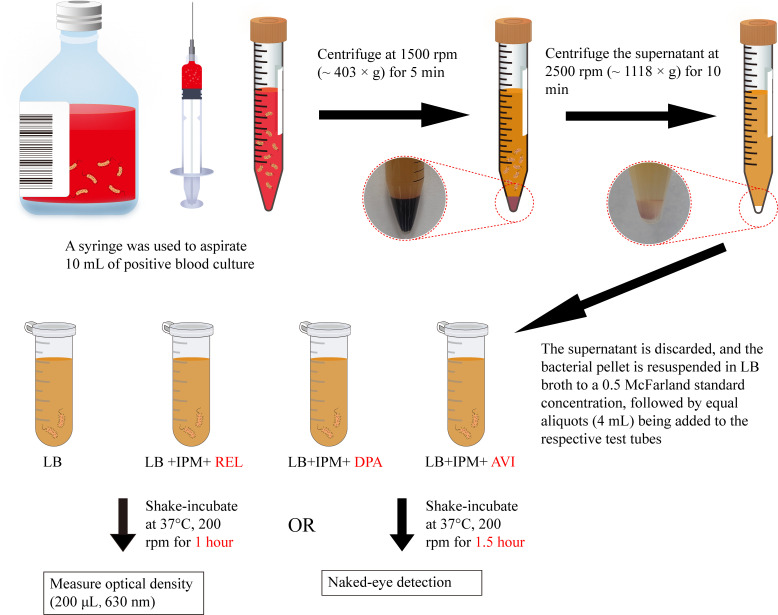 Figure 1
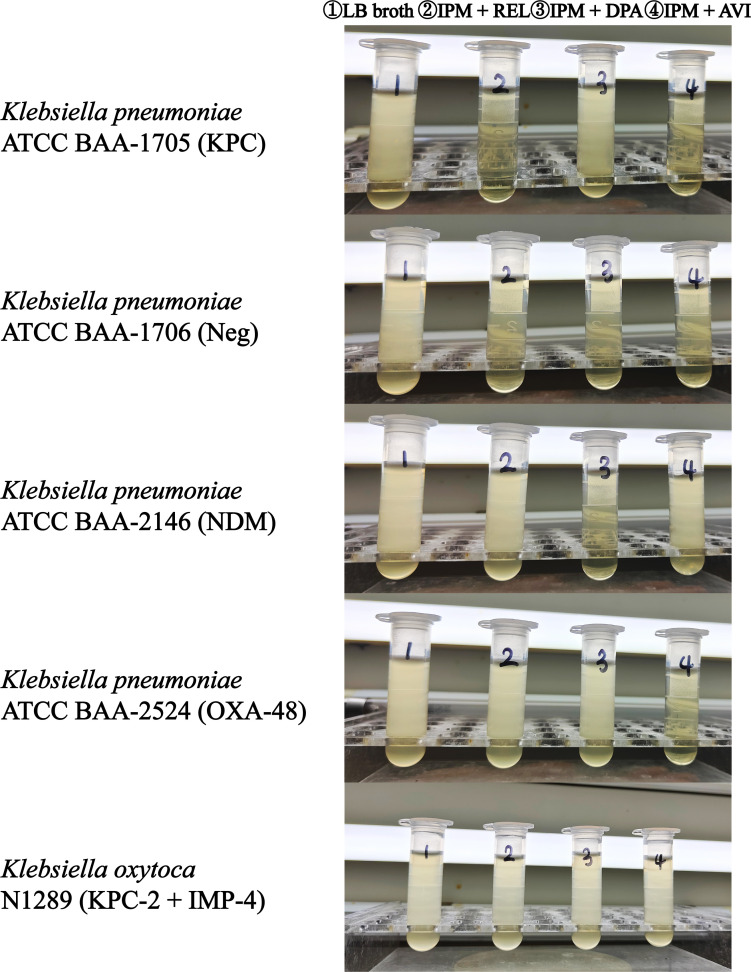 Figure 2
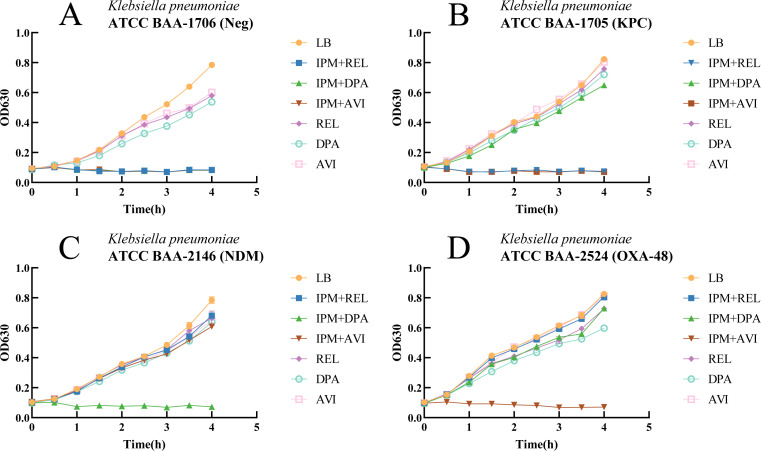 Figure 3
Peer Reviews
No public reviews on file for this paper yet. If you reviewed it on a platform where reviews are public (OpenReview, ICLR, NeurIPS, ICML), you can paste yours below so the community can read it here.
Videos
No videos yet. Explain this paper in a talk, walkthrough, or lecture? Add one.
Taxonomy
TopicsAntibiotic Resistance in Bacteria · Bacterial Identification and Susceptibility Testing · Antibiotics Pharmacokinetics and Efficacy