The AusAB non-ribosomal peptide synthetase of Staphylococcus aureus preferentially generates phevalin in host-mimicking media
Adriana Moldovan, Markus Krischke, Claudia Huber, Clara Hans, Martin J. Müller, Wolfgang Eisenreich, Thomas Rudel, Martin J. Fraunholz

TL;DR
Staphylococcus aureus preferentially produces a specific compound, phevalin, when grown in media that mimic human nasal secretions.
Contribution
The first report of an NRPS preferentially incorporating aromatic amino acids despite similar availability.
Findings
AusA preferentially produces phevalin in RPMI1640 medium despite equal availability of phenylalanine and tyrosine.
Aureusimine production persists even when specific amino acids are omitted, indicating de novo synthesis.
Phevalin is prominently produced in a synthetic medium mimicking human nasal secretions.
Abstract
Non-ribosomal peptide synthetases (NRPSs) are modular multidomain enzymes responsible for the biosynthesis of various secondary metabolites in an mRNA template-independent manner. They are predominantly present in bacteria and fungi, where they synthesize a variety of products, including antibiotics, siderophores, toxins, and signaling molecules. The human pathogen Staphylococcus aureus possesses one single NRPS, AusA, highly conserved in all sequenced S. aureus strains. AusA incorporates the aromatic amino acids (AAAs) phenylalanine or tyrosine, as well as the branched-chain amino acids valine and leucine into three cyclic dipeptides collectively called aureusimines: phevalin, tyrvalin, and leuvalin. By using targeted metabolomics, we found that during growth in the common tissue culture medium RPMI1640, AusA preferentially synthesizes phevalin, despite similar availability for both…
Genes, proteins, chemicals, diseases, species, mutations and cell lines named across the full text — each resolved to its canonical identifier and authoritative record.
Click any figure to enlarge with its caption.
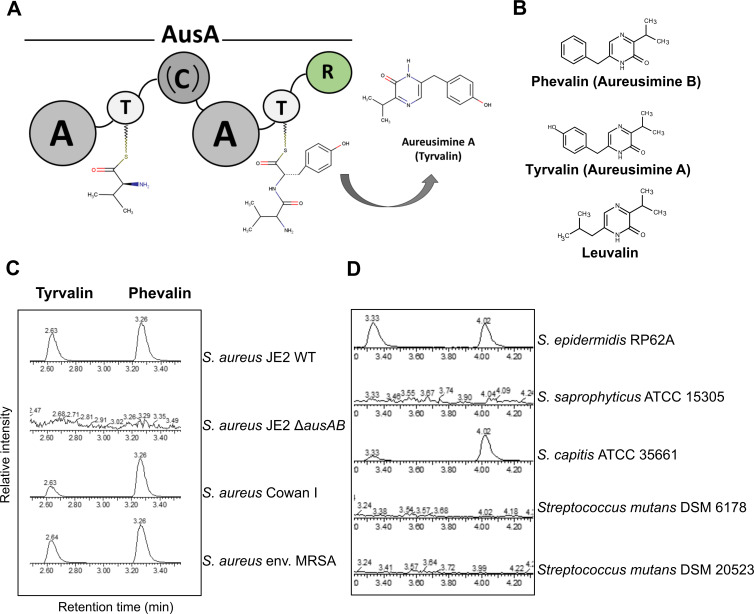 Figure 1
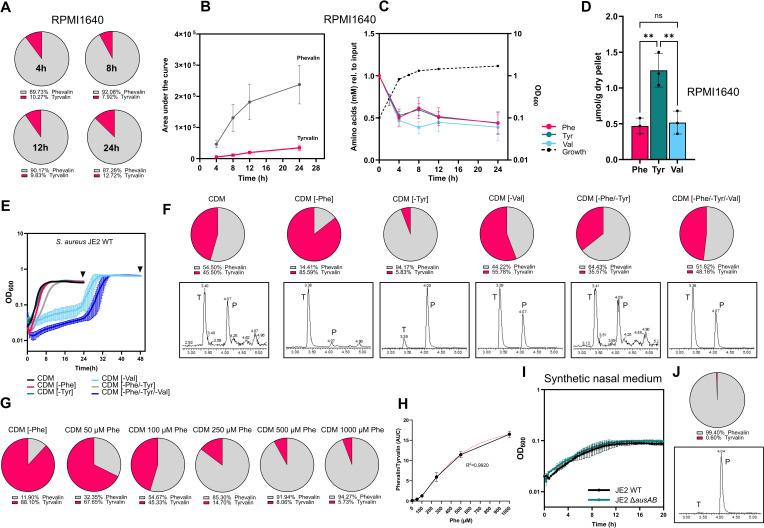 Figure 2
Peer Reviews
No public reviews on file for this paper yet. If you reviewed it on a platform where reviews are public (OpenReview, ICLR, NeurIPS, ICML), you can paste yours below so the community can read it here.
Videos
No videos yet. Explain this paper in a talk, walkthrough, or lecture? Add one.
Taxonomy
TopicsMicrobial Natural Products and Biosynthesis · Antimicrobial Peptides and Activities · Probiotics and Fermented Foods