The archaeal class Nitrososphaeria is a key component of the reproductive microbiome in sponges during gametogenesis
Marta Turon, Vasiliki Koutsouveli, María Conejero, Sergi Taboada, Aida Verdes, José María Lorente-Sorolla, Cristina Díez-Vives, Ana Riesgo

TL;DR
This study shows that the archaeal class Nitrososphaeria is linked to sponge reproduction, especially during early egg development, suggesting microbes may help meet nutritional needs.
Contribution
The study reveals a novel role of Nitrososphaeria archaea in sponge gametogenesis, particularly during previtellogenic stages.
Findings
Reproductive status did not affect microbial diversity in sponges with mature oocytes.
In Geodia macandrewii and Petrosia ficiformis, microbial changes were driven by Nitrososphaeria during previtellogenic stages.
Transcriptomic differences in G. macandrewii suggest immune system changes linked to microbial interactions during reproduction.
Abstract
Sponge-associated microbes play fundamental roles in regulating their hosts’ physiology, yet their contribution to sexual reproduction has been largely overlooked. Most studies have concentrated on the proportion of the microbiome transmitted from parents to offspring, providing little evidence of the putative microbial role during gametogenesis in sponges. Here, we use 16S rRNA gene analysis to assess whether the microbial composition of five gonochoristic sponge species differs between reproductive and non-reproductive individuals and correlate these changes with their gametogenic stages. In sponges with mature oocytes, reproductive status did not influence either beta or alpha microbial diversity. However, in two of the studied species, Geodia macandrewii and Petrosia ficiformis, which presented oocytes at the previtellogenic stage, significant microbial composition changes were…
Genes, proteins, chemicals, diseases, species, mutations and cell lines named across the full text — each resolved to its canonical identifier and authoritative record.
Click any figure to enlarge with its caption.
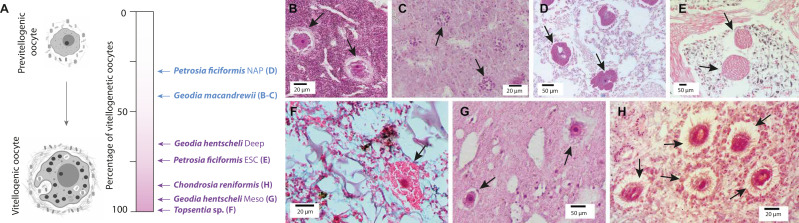 Figure 1
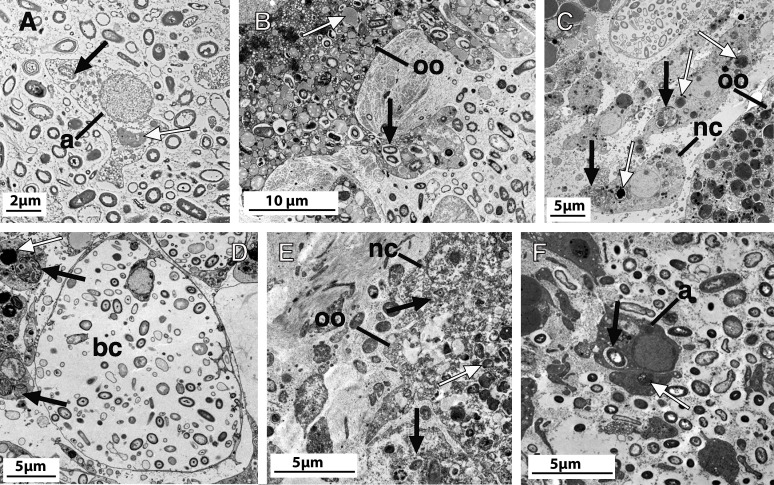 Figure 2
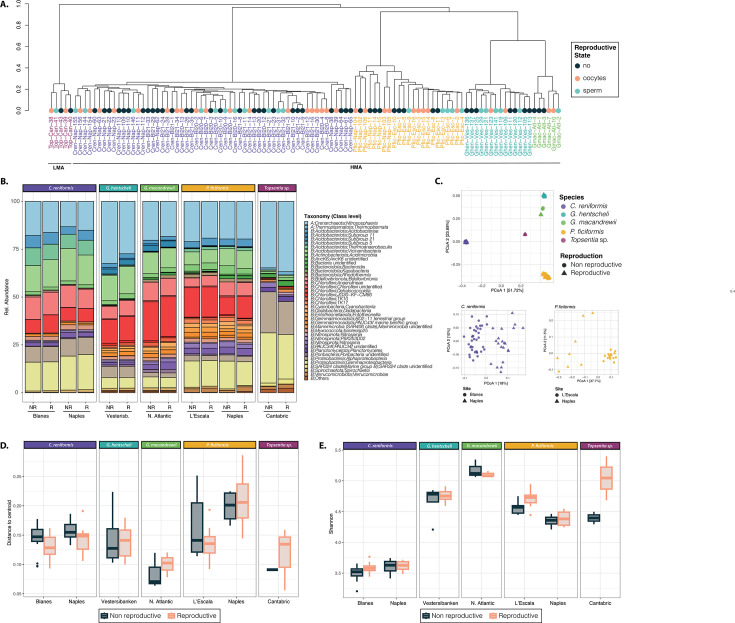 Figure 3
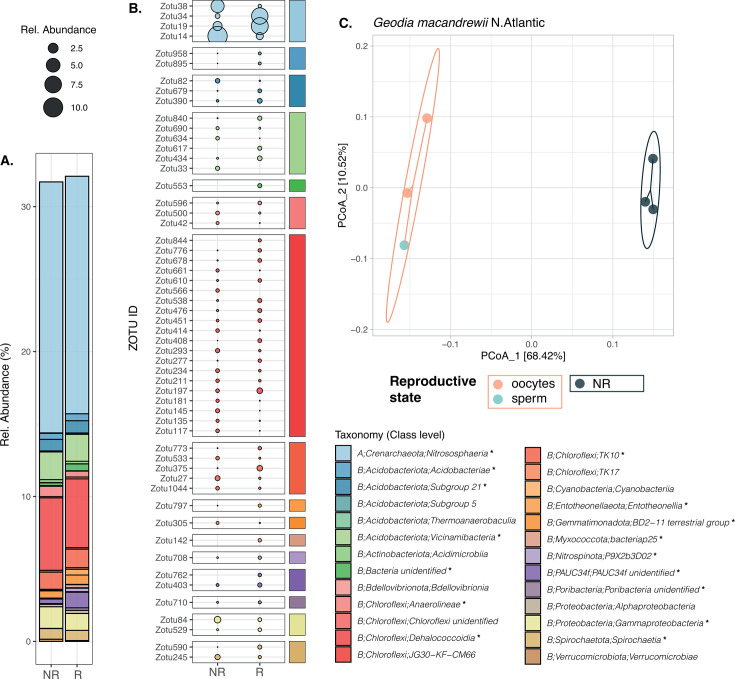 Figure 4
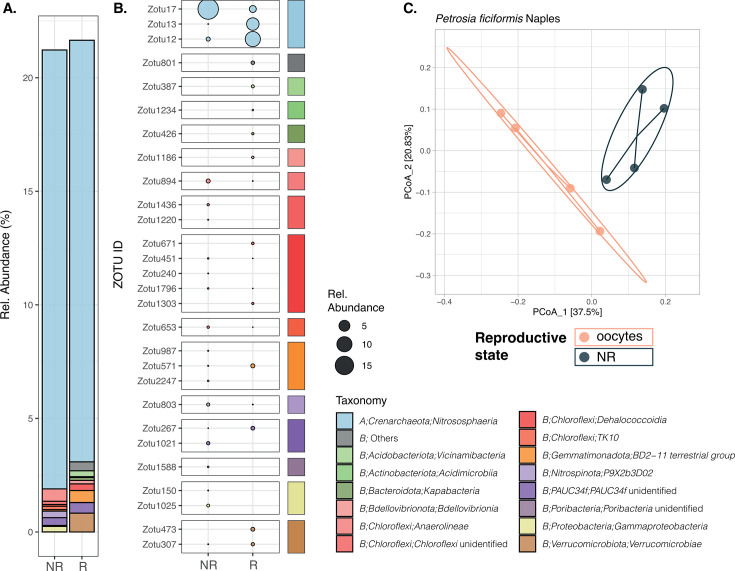 Figure 5
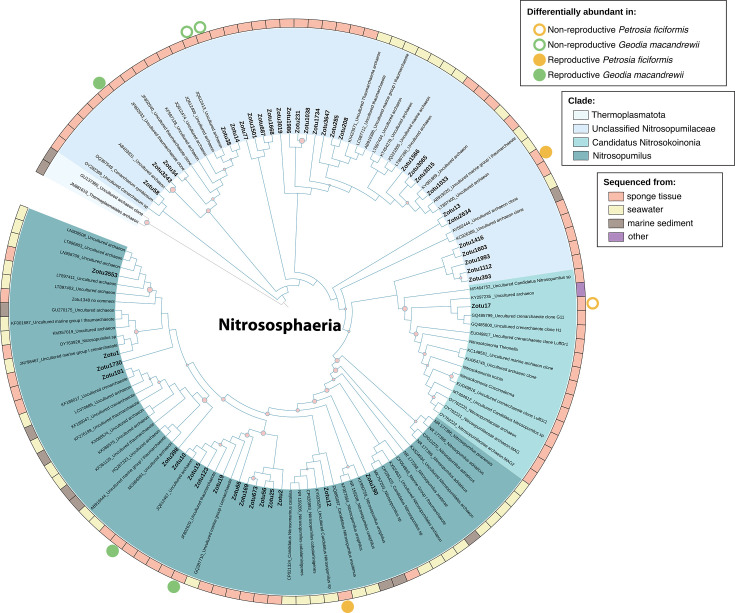 Figure 6
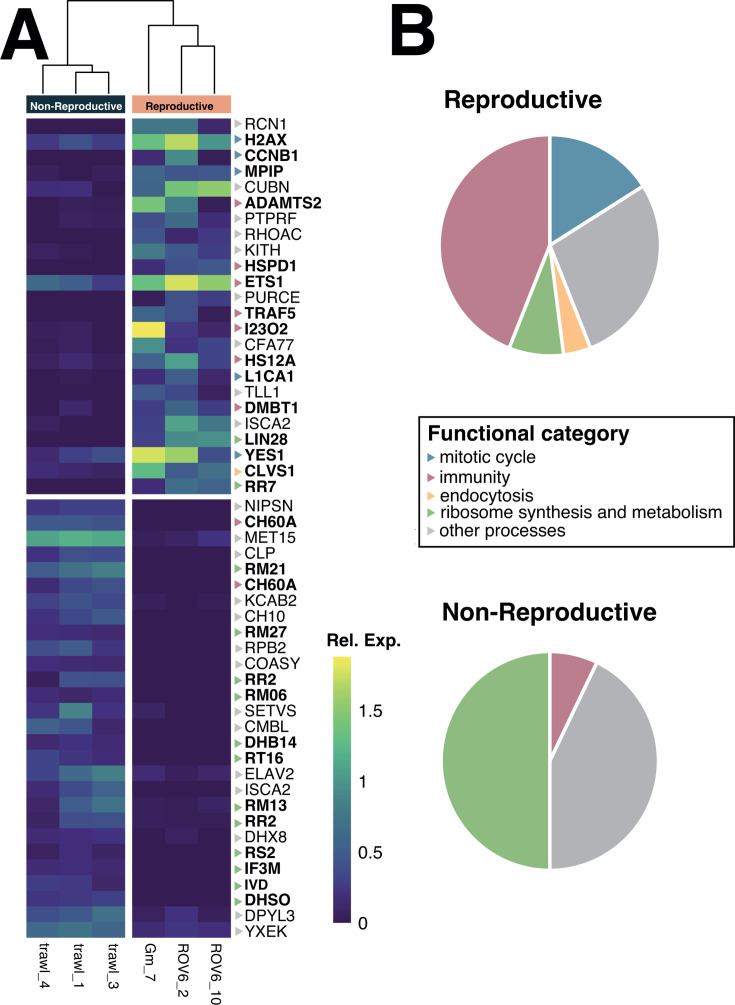 Figure 7
Peer Reviews
No public reviews on file for this paper yet. If you reviewed it on a platform where reviews are public (OpenReview, ICLR, NeurIPS, ICML), you can paste yours below so the community can read it here.
Videos
No videos yet. Explain this paper in a talk, walkthrough, or lecture? Add one.
Taxonomy
TopicsMarine Sponges and Natural Products · Synthetic Organic Chemistry Methods · Microbial Natural Products and Biosynthesis