Futility Monitoring in Clinical Trials
Ana M. Ortega‐Villa, Megan C. Grieco, Kevin Rubenstein, Jing Wang, Michael A. Proschan

TL;DR
This paper explains how to determine when a clinical trial is unlikely to succeed based on early data.
Contribution
The paper provides a tutorial on various statistical tools and concepts for evaluating futility in clinical trials.
Findings
The paper reviews conditional and predictive power as methods for futility assessment.
It introduces reverse conditional power and predicted interval plots as additional tools.
Beta spending functions are discussed for monitoring futility over time.
Abstract
At the beginning of a phase III clinical trial, there is great optimism. After all, the phase II trial results were encouraging. Then, early data from the phase III trial trend in the wrong way, but there is still an opportunity for the trend to reverse and become statistically significant by the end. At what point does optimism become denial of reality? How do we decide when a clinical trial is futile? What does futility even mean? This tutorial reviews different concepts and tools for evaluating futility, including conditional and predictive power, reverse conditional power, predicted interval plots, revised unconditional power, and beta spending functions.
Genes, proteins, chemicals, diseases, species, mutations and cell lines named across the full text — each resolved to its canonical identifier and authoritative record.
Click any figure to enlarge with its caption.
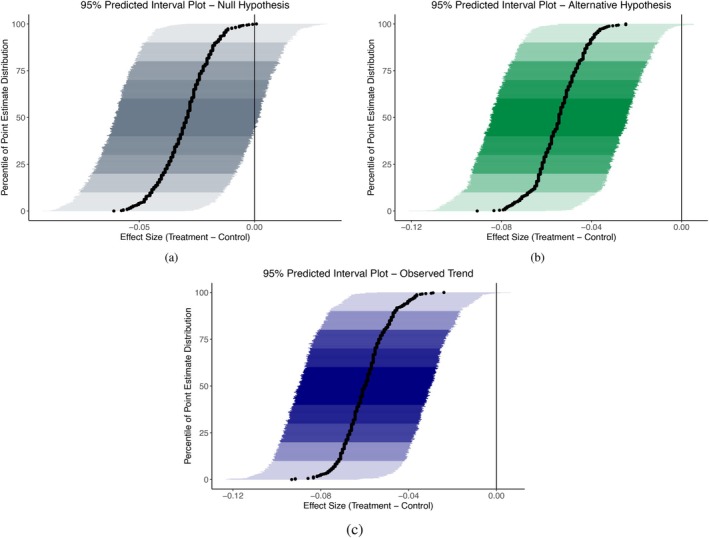 Figure 1
 Figure 2
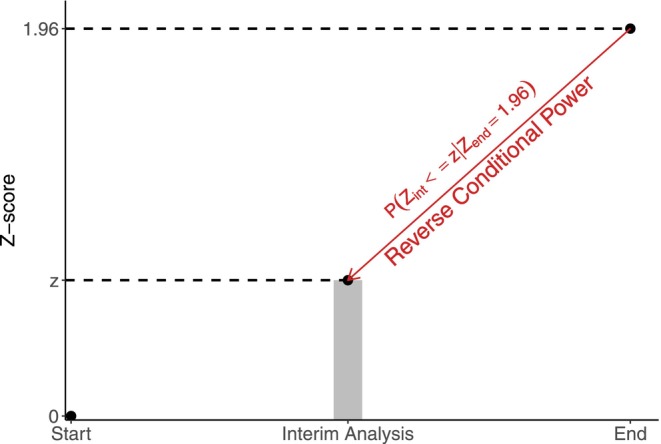 Figure 3
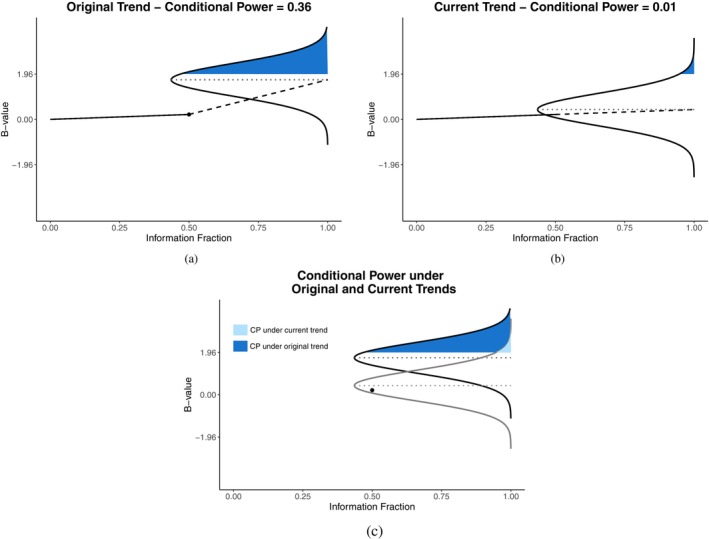 Figure 4
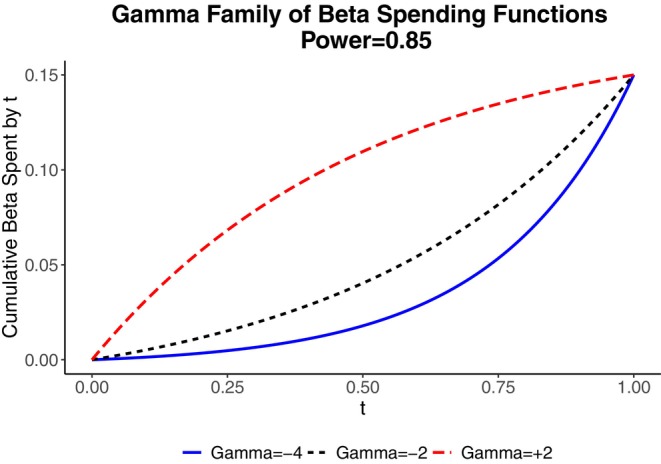 Figure 5
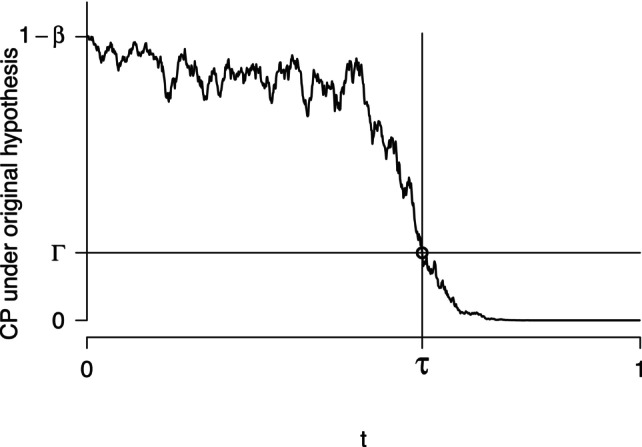 Figure 6
Peer Reviews
No public reviews on file for this paper yet. If you reviewed it on a platform where reviews are public (OpenReview, ICLR, NeurIPS, ICML), you can paste yours below so the community can read it here.
Videos
No videos yet. Explain this paper in a talk, walkthrough, or lecture? Add one.
Taxonomy
TopicsStatistical Methods in Clinical Trials · Reproductive Biology and Fertility · Ovarian function and disorders