Anti-Inflammatory Effects of Polyglycerol Sulfates and Natural Polyanions in Type 2 Inflammation
Clemens Krage, Peyman Malek Mohammadi Nouri, Jens Dernedde, Jayachandran N. Kizhakkedathu, Sarah Hedtrich, Rainer Haag, Katharina Achazi

TL;DR
This paper explores how polyglycerol sulfates and other natural polyanions can reduce type 2 inflammation, which is linked to chronic atopic diseases like asthma and eczema.
Contribution
The study identifies polyglycerol sulfates as inhibitors of TSLP and fibronectin, offering a novel anti-inflammatory strategy for type 2 immune responses.
Findings
Polyglycerol sulfates strongly bind to TSLP and fibronectin, inhibiting type 2 inflammation.
Adding polyglycerol sulfate to inflamed bronchial epithelium models reduced TSLP expression and interleukin 6 secretion.
These findings suggest potential therapeutic applications for managing atopic diseases.
Abstract
Type 2 inflammation is an essential defense mechanism of the innate and adaptive immune systems, but when dysregulated, it can cause chronic atopic diseases like allergic asthma and atopic dermatitis. Thymic stromal lymphopoietin (TSLP) helps drive type 2 inflammation by guiding T cells toward a type 2 helper cell (TH2) subtype and stimulating B cells’ antibody production. Fibronectin (FN) has recently been found at elevated levels in the plasma of children with atopic dermatitis and shown a potential proinflammatory role in bronchial epithelium tissue models. Both proteins’ surface charges suggest potential interaction with charged molecules. Seeking new strategies against type 2 inflammation, we found that negatively charged polyglycerol sulfates strongly bind to TSLP and FN. We confirmed that these molecules inhibit inflammation by reducing the TSLP-mediated type 2 polarization of…
Genes, proteins, chemicals, diseases, species, mutations and cell lines named across the full text — each resolved to its canonical identifier and authoritative record.
Click any figure to enlarge with its caption.
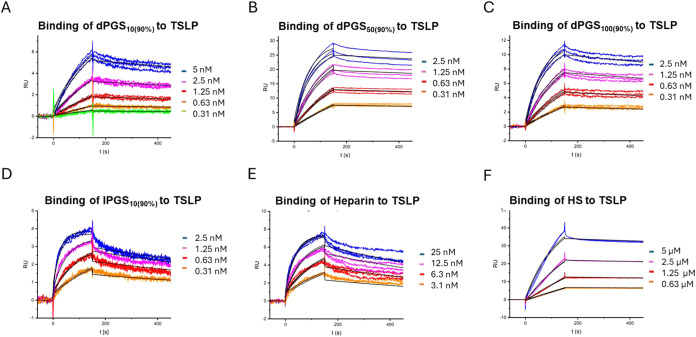 Figure 1
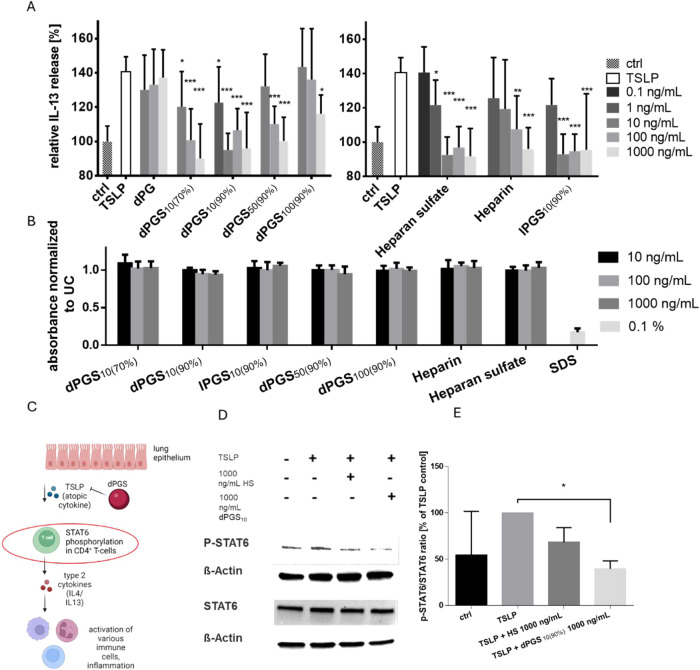 Figure 2
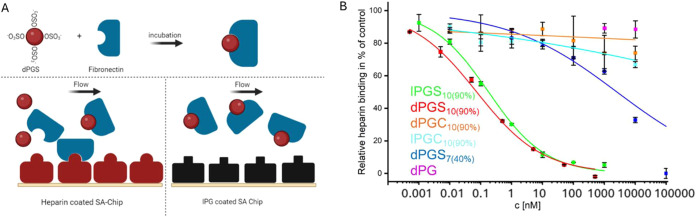 Figure 3
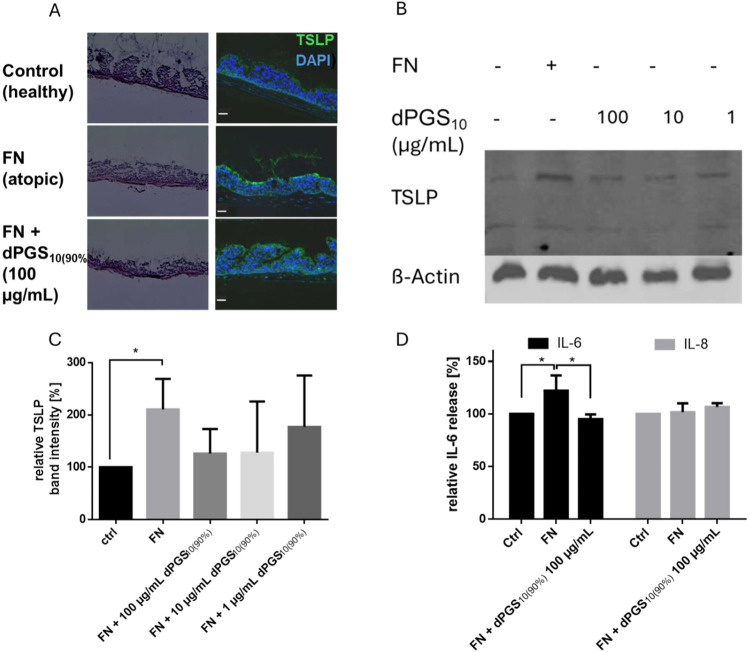 Figure 4
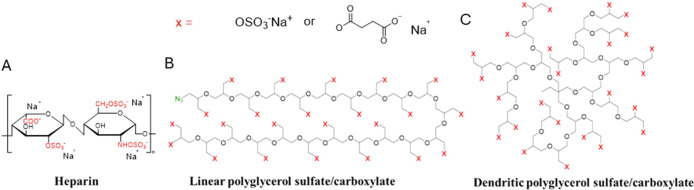 Figure 5
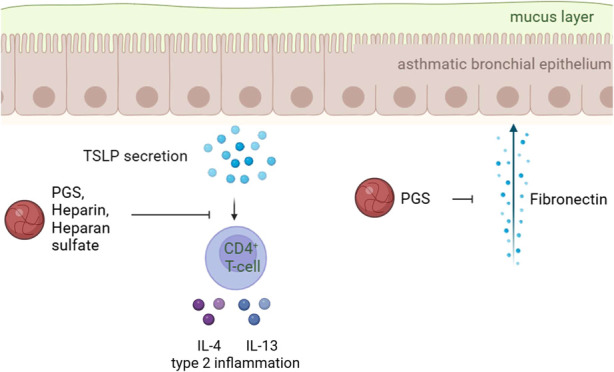 Figure 6
 Figure 7
Peer Reviews
No public reviews on file for this paper yet. If you reviewed it on a platform where reviews are public (OpenReview, ICLR, NeurIPS, ICML), you can paste yours below so the community can read it here.
Videos
No videos yet. Explain this paper in a talk, walkthrough, or lecture? Add one.
Taxonomy
TopicsProteoglycans and glycosaminoglycans research · Dendrimers and Hyperbranched Polymers · RNA Interference and Gene Delivery