Effect of Salt on Synthetic Cationic Antimicrobial Polymer–Cell Interactions
Zachary Benmamoun, Thomas Kinard, Prem Chandar, Joe Jankolovits, William A. Ducker

TL;DR
This study shows how salt affects the action of a cationic antimicrobial polymer on bacteria, reducing its effectiveness but still inhibiting bacterial reproduction.
Contribution
The novel contribution is identifying how salt concentration reversibly alters polymer-cell interactions and antimicrobial efficacy.
Findings
At 0.15 M NaCl or higher, PDADMAC stops killing E. coli but prevents cell reproduction.
Salt reduces PDADMAC adsorption and membrane rigidification in model systems.
Cell growth can restart after PDADMAC removal, indicating a reversible effect.
Abstract
Cationic antiseptics are deployed in a variety of settings, where salinity ranges from almost pure water to hypertonic salt. Here, we examine how dissolved NaCl affects the antimicrobial action of a model antimicrobial, polydiallyldimethylammonium chloride (PDADMAC) to the bacterium Escherichia coli (E. coli). Fluorescence microscopy is used to measure the time course of both the adsorption of PDADMAC to E. coli and the cell viability. NaCl decreases the density of adsorbed PDADMAC and diminishes its efficacy. At NaCl concentrations at or above 0.15 M, PDADMAC no longer kills bacteria but still prevents reproduction by halting the growth in cell length. Reproduction can be restarted if PDADMAC is removed. Fluorescence depolarization measurements show that PDADMAC rigidifies model membranes, but salt reduces the rigidity. We therefore attribute the halt in cell growth to reversible…
Genes, proteins, chemicals, diseases, species, mutations and cell lines named across the full text — each resolved to its canonical identifier and authoritative record.
Click any figure to enlarge with its caption.
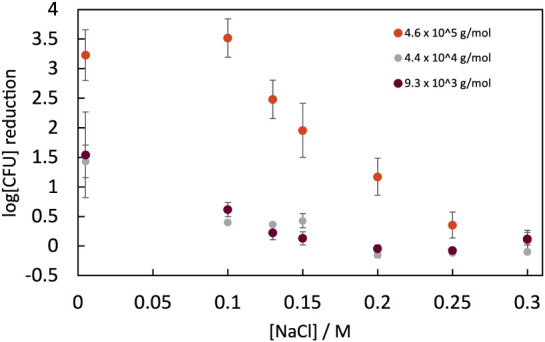 Figure 1
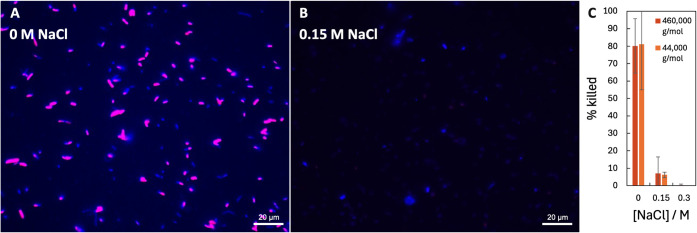 Figure 2
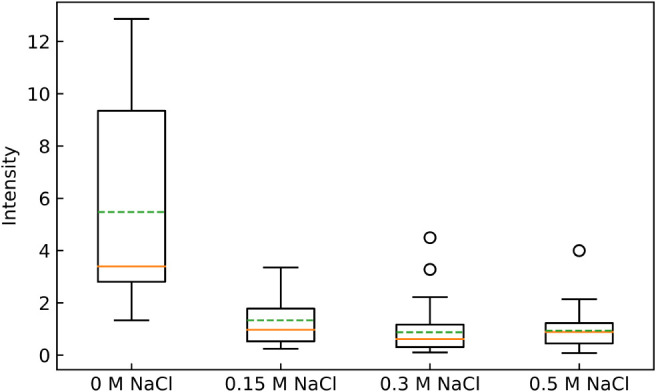 Figure 3
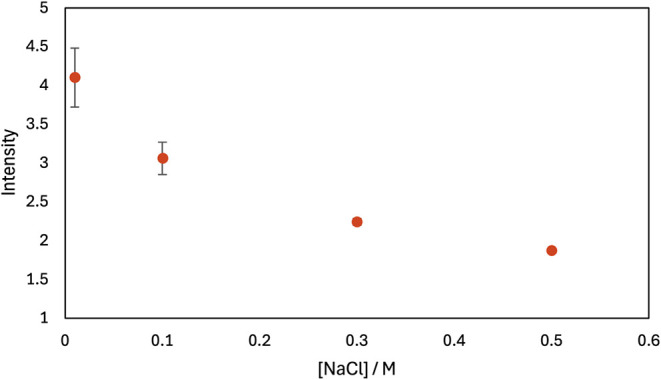 Figure 4
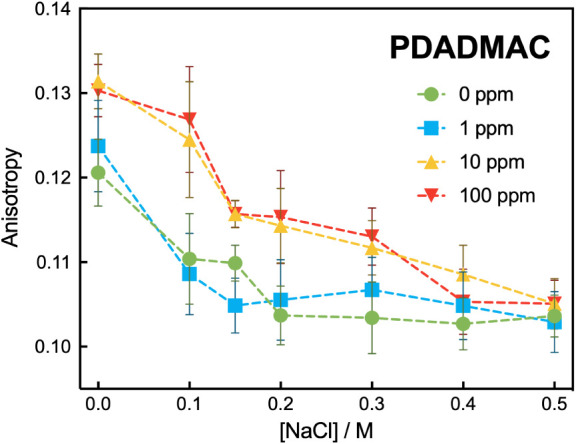 Figure 5
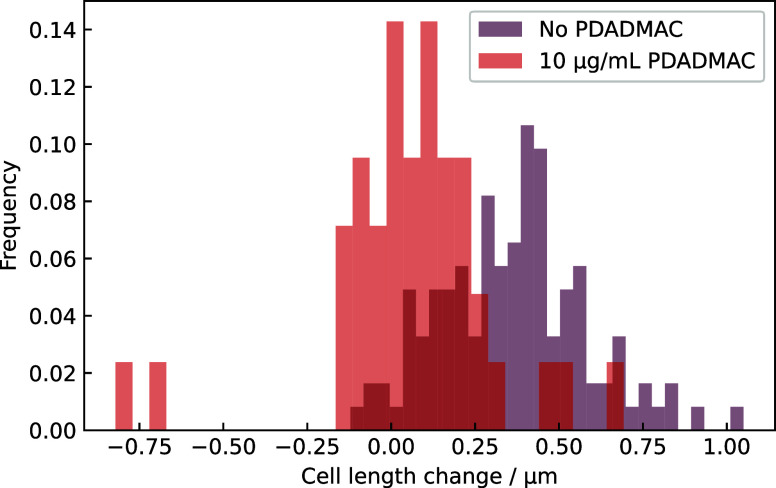 Figure 6
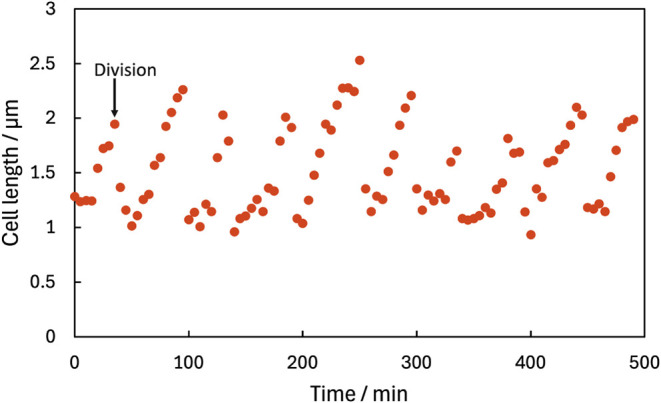 Figure 7
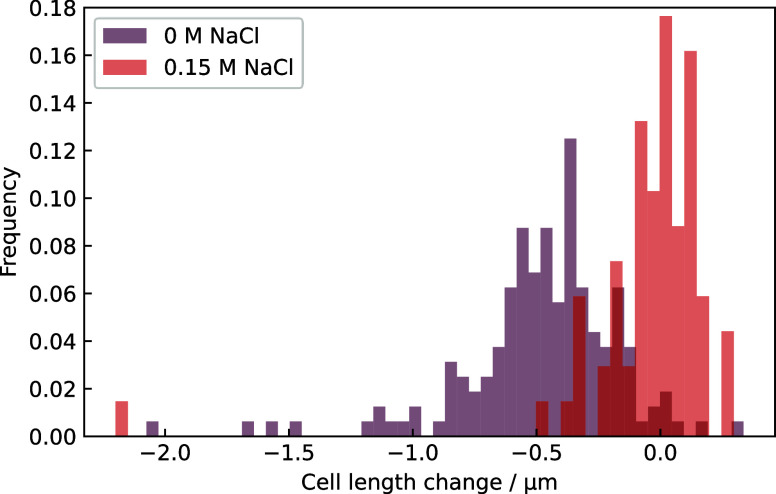 Figure 8
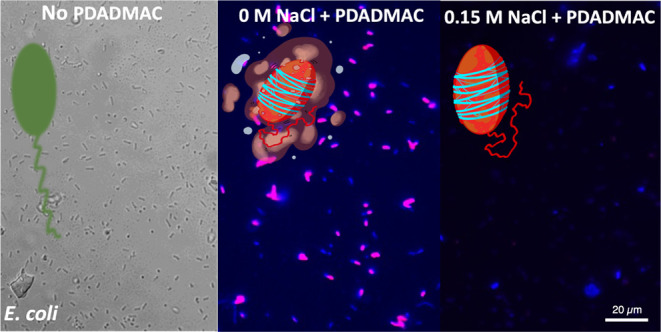 Figure 9
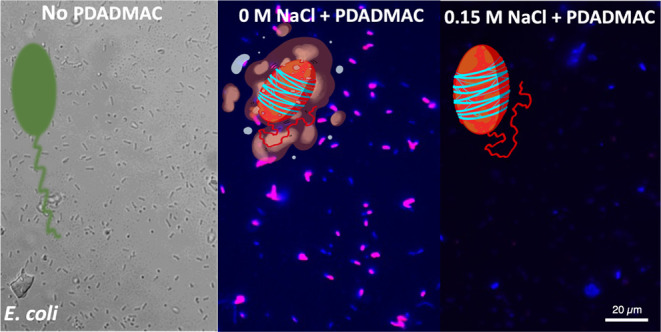 Figure 10
 Figure 11
Peer Reviews
No public reviews on file for this paper yet. If you reviewed it on a platform where reviews are public (OpenReview, ICLR, NeurIPS, ICML), you can paste yours below so the community can read it here.
Videos
No videos yet. Explain this paper in a talk, walkthrough, or lecture? Add one.
Taxonomy
TopicsAntimicrobial agents and applications · Bacterial biofilms and quorum sensing · Antimicrobial Peptides and Activities