Pore-Opening and Ion-Conduction Mechanism in Channelrhodopsins C1C2, ChR2, and iChloC by Computational Electrophysiology and Constant-pH Simulations
Songhwan Hwang, Tillmann Utesch, Caspar Schattenberg, Johannes Vierock, Han Sun

TL;DR
This paper uses computational methods to study how different channelrhodopsins open and conduct ions, providing insights for optogenetics applications.
Contribution
A new computational framework is introduced to determine open-state structures and ion conduction mechanisms in channelrhodopsins.
Findings
Spontaneous ion permeation events were observed in cation-conducting and anion-conducting channelrhodopsins.
Ion binding sites and hydration profiles were analyzed to understand ion selectivity.
The framework enables rational engineering of ion selectivity and conductivity in ChRs.
Abstract
Channelrhodopsins (ChRs) are photoreceptors that function as light-gated ion channels. Over the last two decades, they have become essential tools in optogenetics, enabling precise manipulation of neurons, neural circuits, and animal behavior through light. Although structural studies have provided important mechanistic insights into channelrhodopsins, a detailed understanding of their ion conduction mechanism and selectivity was proven to be challenging due to difficulties in experimentally resolving open-state structures. Here, we employed molecular dynamics (MD)-based computational electrophysiology and constant-pH simulations to obtain the fully open states of three different ChRs. A significant number of spontaneous K+, Na+, and Ca2+ permeation events were observed in the cation-conducting C1C2 and ChR2, as well as Cl– permeations in the anion-conducting iChloC. Analyses of the ion…
Genes, proteins, chemicals, diseases, species, mutations and cell lines named across the full text — each resolved to its canonical identifier and authoritative record.
Click any figure to enlarge with its caption.
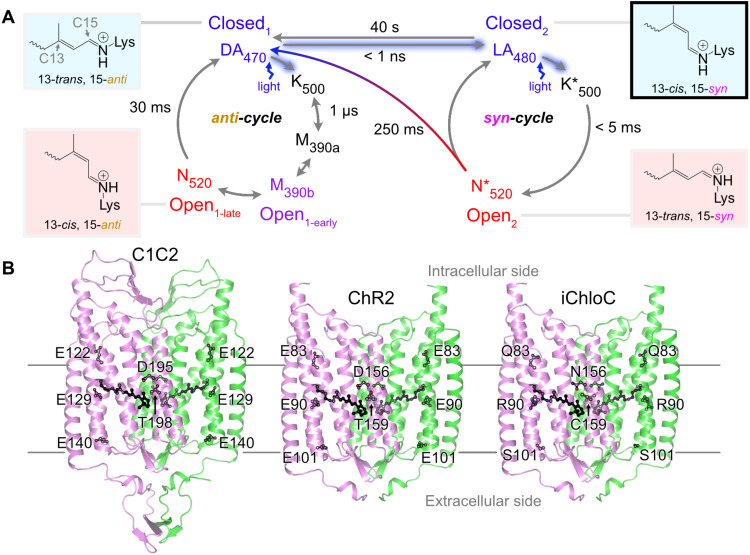 Figure 1
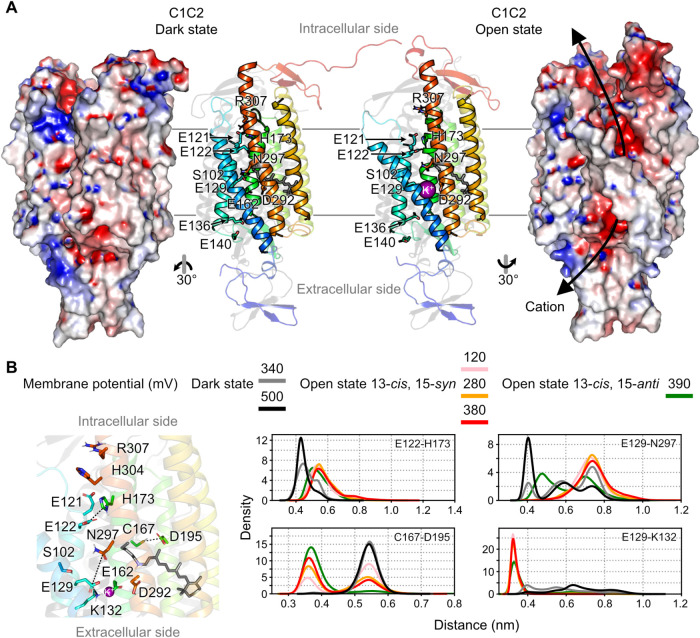 Figure 2
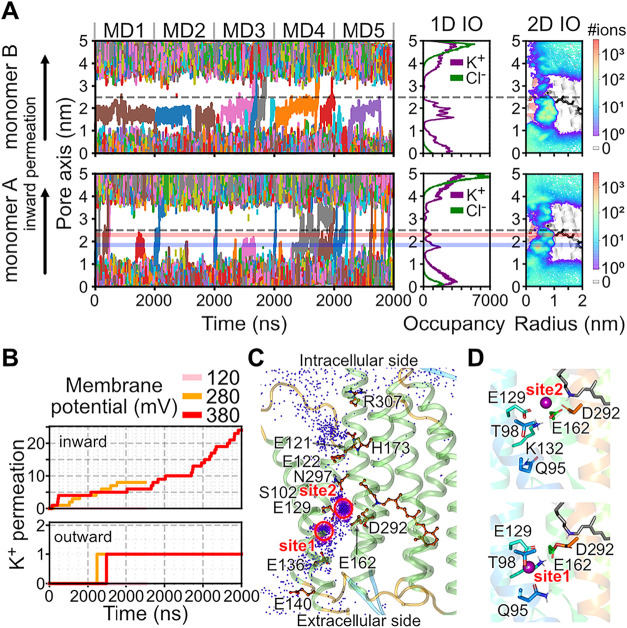 Figure 3
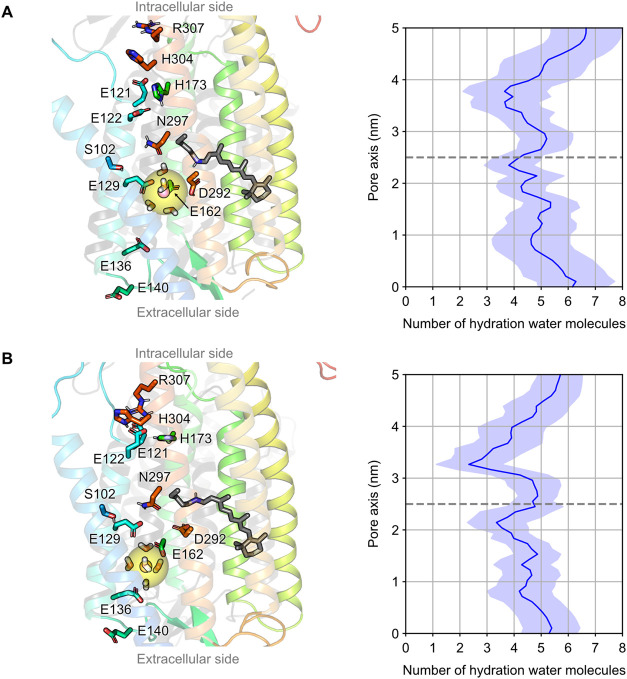 Figure 4
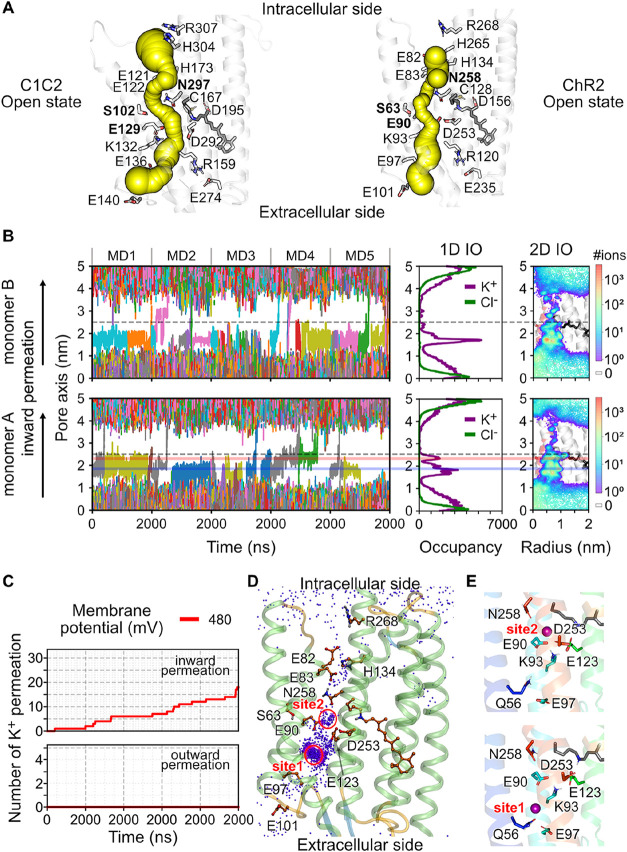 Figure 5
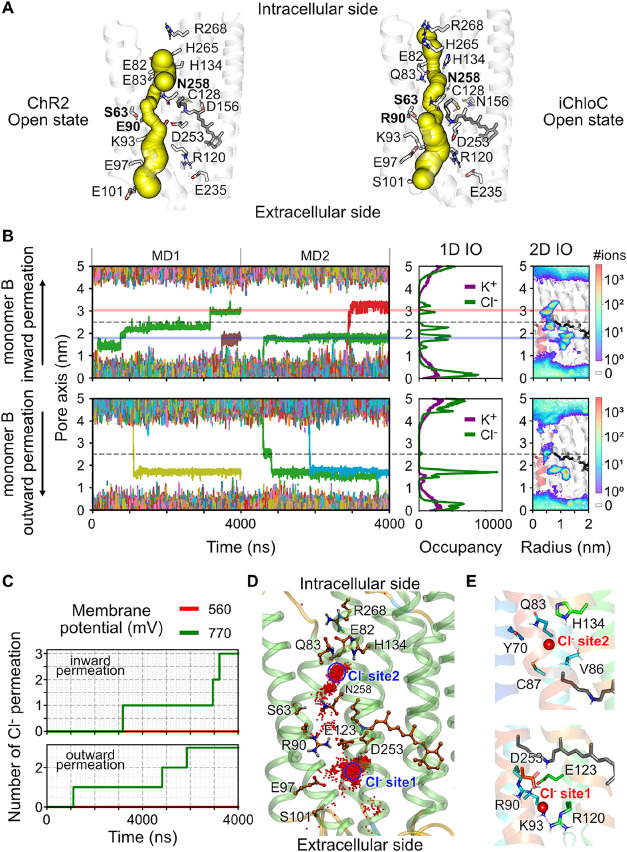 Figure 6
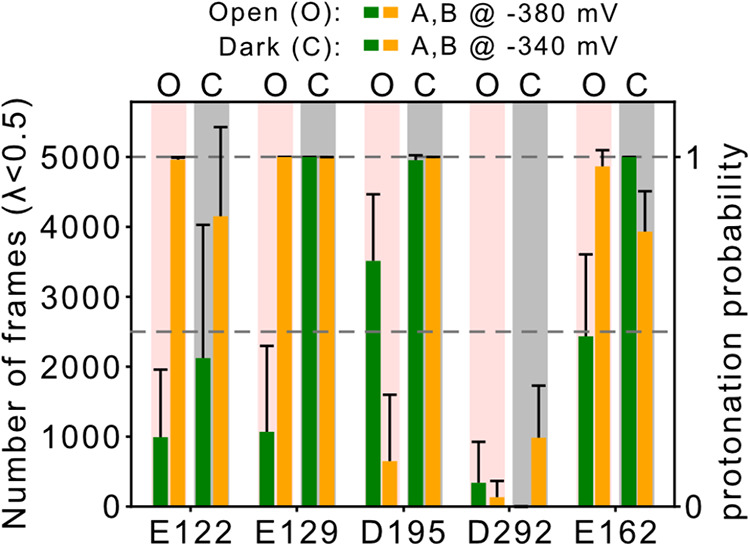 Figure 7
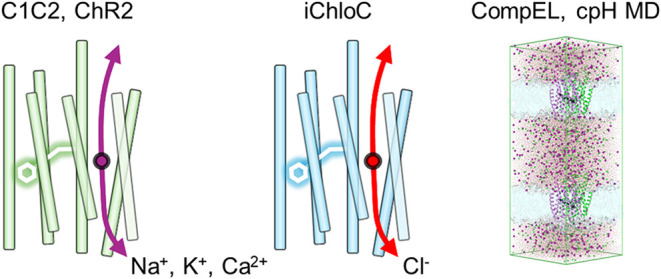 Figure 8
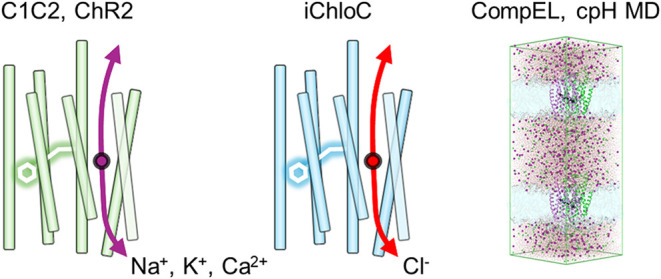 Figure 9
Peer Reviews
No public reviews on file for this paper yet. If you reviewed it on a platform where reviews are public (OpenReview, ICLR, NeurIPS, ICML), you can paste yours below so the community can read it here.
Videos
No videos yet. Explain this paper in a talk, walkthrough, or lecture? Add one.
Taxonomy
TopicsPhotoreceptor and optogenetics research · Neuroscience and Neuropharmacology Research · Lipid Membrane Structure and Behavior