The impact of subunit type, alternative splicing, and auxiliary proteins on AMPA receptor trafficking
Tyler Couch, Tyler W. McCullock, David M. MacLean

TL;DR
This study examines how different factors influence the trafficking of AMPA receptors in the nervous system, identifying subunit type as the most significant contributor.
Contribution
The paper introduces high-throughput methods to assess the impact of subunit type, splicing, and auxiliary proteins on AMPA receptor trafficking.
Findings
GluA2 subunits show better surface expression than GluA1 subunits.
Flip subunits outperform flop variants in surface expression.
Type 1 TARPs enhance surface trafficking, while Type 2 TARPs reduce it.
Abstract
AMPA receptors underlie fast excitatory synaptic transmission in the mammalian nervous system and are critical for the expression of synaptic plasticity. Four genes encode the AMPA receptor subunits, each subject to RNA editing and alternative splicing at multiple positions. In addition, each tetrameric AMPA receptor can harbor up to four auxiliary proteins of which there are multiple types. Subunit type, alternative splicing, and auxiliary proteins are all known to affect AMPA receptor gating and trafficking. However, determining which factors dominate AMPA receptor trafficking requires high-throughput assessment of trafficking across multiple conditions. Here, we deploy two such methods to assess the relative contribution of AMPA receptor subunit type (GluA1 versus GluA2), alternative splicing (flip versus flop), and various transmembrane AMPA receptor regulatory proteins (TARPs) to…
Genes, proteins, chemicals, diseases, species, mutations and cell lines named across the full text — each resolved to its canonical identifier and authoritative record.
Click any figure to enlarge with its caption.
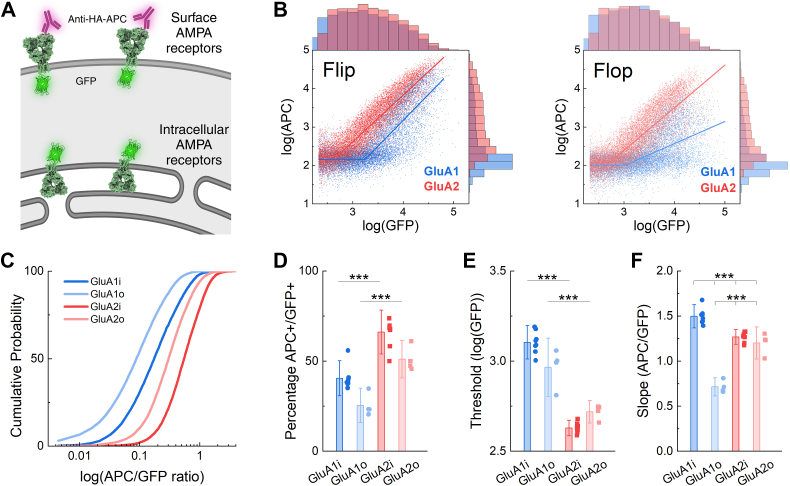 Figure 1
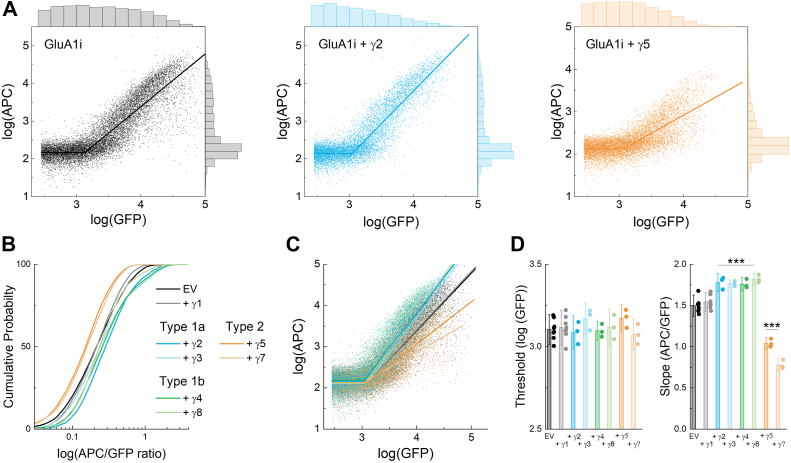 Figure 2
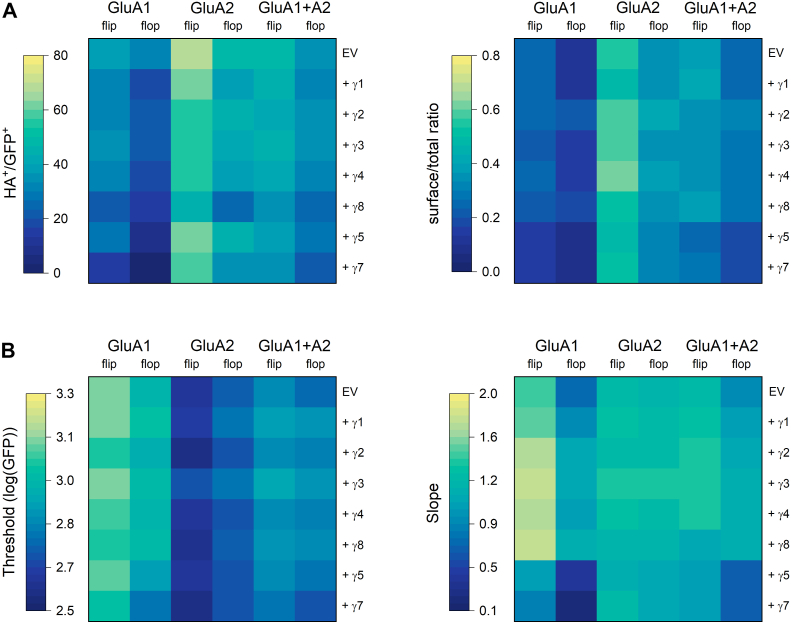 Figure 3
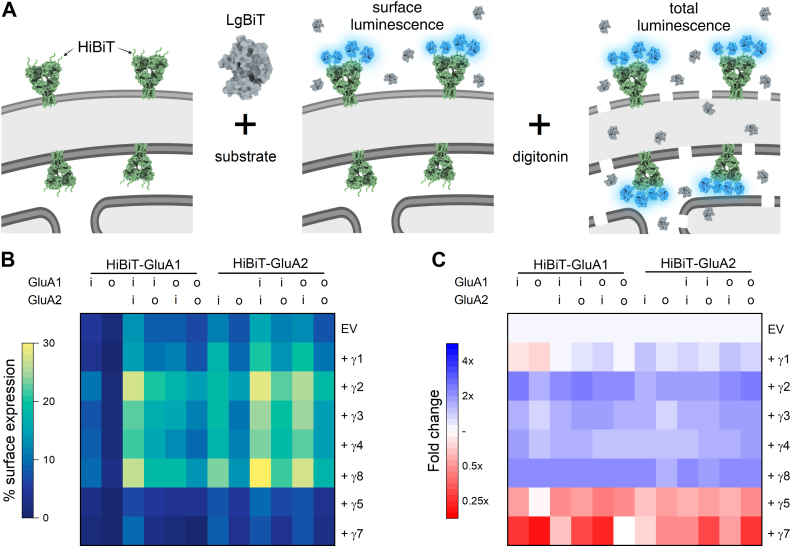 Figure 4
Peer Reviews
No public reviews on file for this paper yet. If you reviewed it on a platform where reviews are public (OpenReview, ICLR, NeurIPS, ICML), you can paste yours below so the community can read it here.
Videos
No videos yet. Explain this paper in a talk, walkthrough, or lecture? Add one.
Taxonomy
TopicsNeuroscience and Neuropharmacology Research · Molecular Sensors and Ion Detection · Chemical Synthesis and Analysis