Separation of sedimentary phytoliths from other biogenic silica particles for triple oxygen isotope analysis
Charlotte Mention, Julie C. Aleman, Jean-Charles Mazur, Yannick Garcin, Christelle Hély, Anne Alexandre

TL;DR
This paper introduces a filtration method to isolate phytoliths from other silica particles in sediments, improving the accuracy of oxygen isotope analysis for reconstructing past atmospheric humidity.
Contribution
A new filtration protocol is developed to separate phytoliths from diatoms and sponge spicules for more accurate triple oxygen isotope analysis.
Findings
Phytolith concentrations increased in 23 out of 31 samples after removing diatom frustules and sponge spicules.
Twenty-nine samples achieved phytolith proportions over 40%, suitable for 17O-excess measurements to reconstruct relative humidity.
Abstract
Phytoliths are amorphous silica particles that precipitate within and between plant cells, and their fossilized morphological assemblages are widely used to reconstruct paleo-vegetation. The triple oxygen isotope composition of phytoliths, expressed by the 17O-excess, is a promising proxy to reconstruct atmospheric relative humidity (RH). However, fossil phytoliths in lake or peat sediments often coexist with diatom frustules and sponge spicules, whose oxygen isotope signatures contribute to the average isotopic composition of biogenic silica, biasing the RH reconstruction. In this case, it is necessary to separate or at least concentrate the phytoliths. We developed a filtration protocol for this purpose. We tested the protocol on 31 lacustrine and peat sedimentary samples from West and Central Africa, and these are the main results:•Phytolith concentrations increased in 23 samples,…
Genes, proteins, chemicals, diseases, species, mutations and cell lines named across the full text — each resolved to its canonical identifier and authoritative record.
Click any figure to enlarge with its caption.
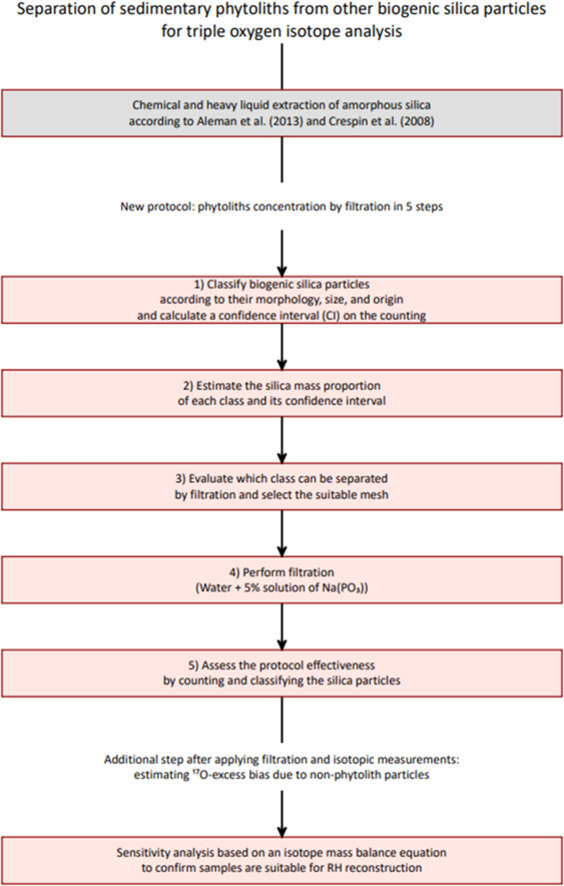 Figure 1
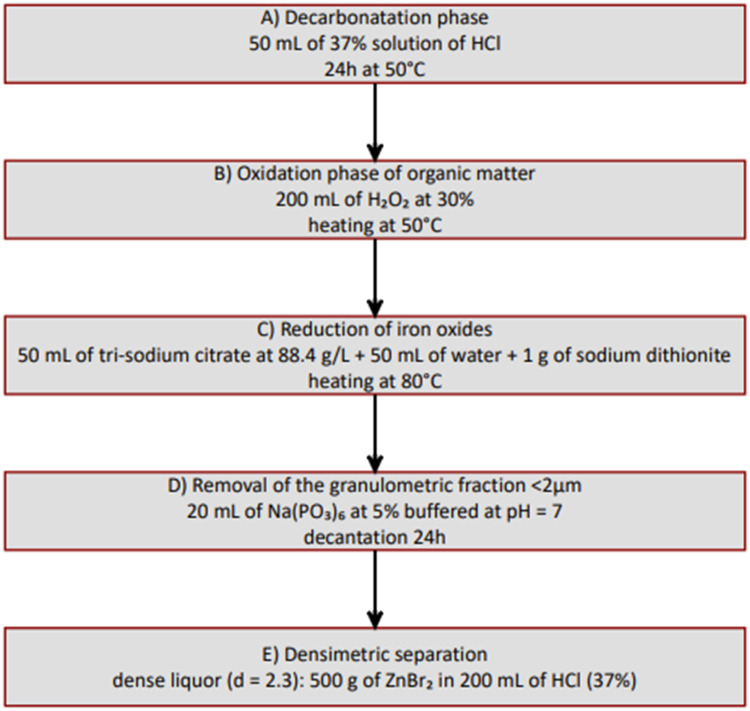 Figure 2
 Figure 3
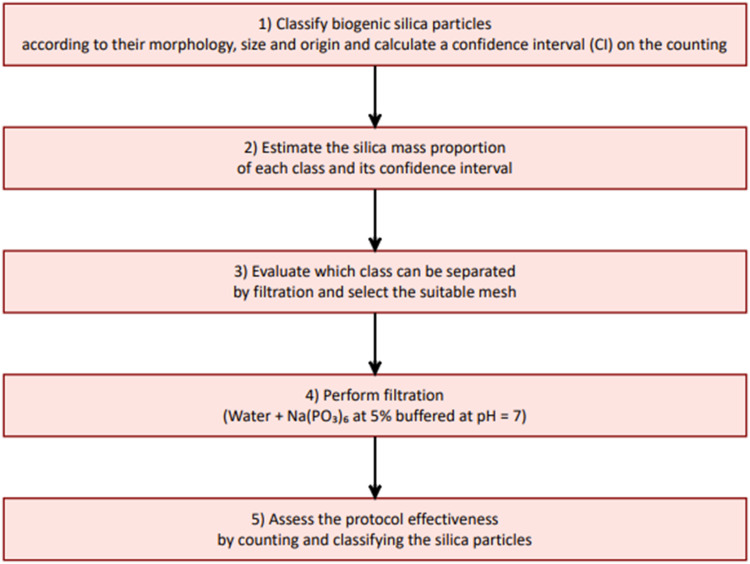 Figure 4
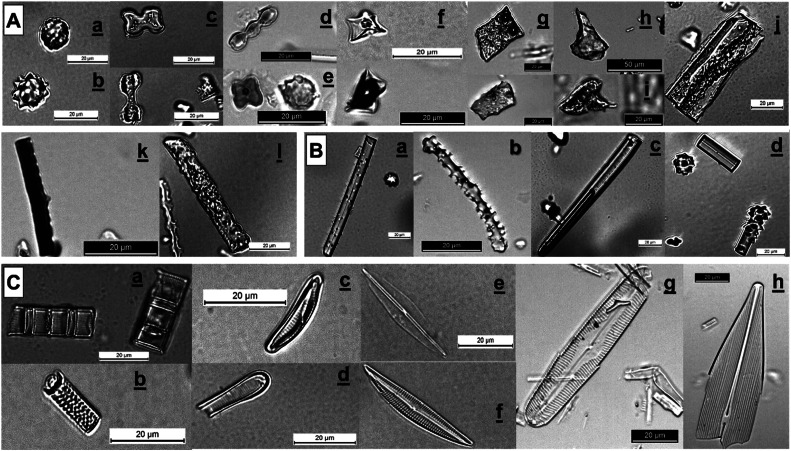 Figure 5
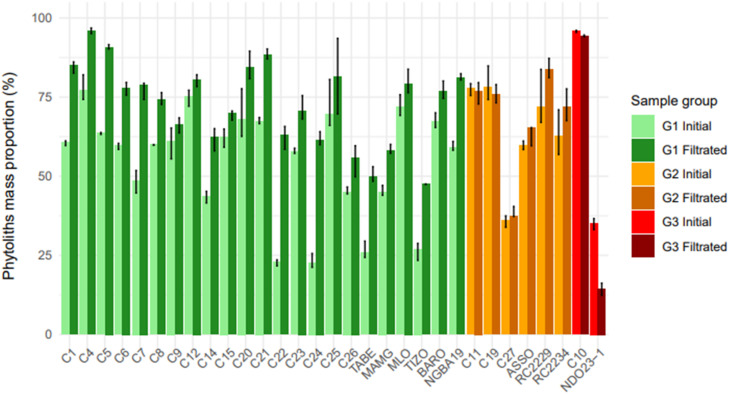 Figure 6
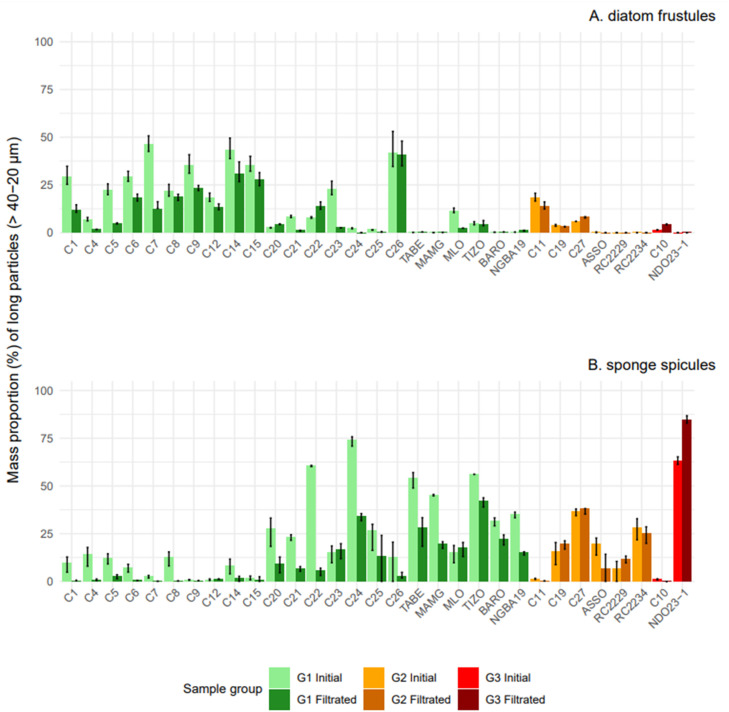 Figure 7
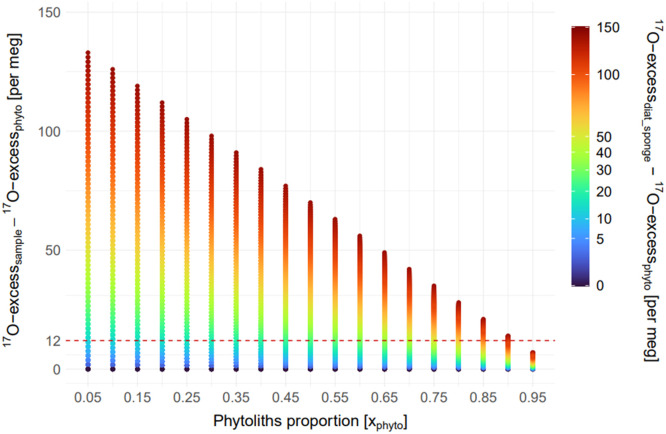 Figure 8
Peer Reviews
No public reviews on file for this paper yet. If you reviewed it on a platform where reviews are public (OpenReview, ICLR, NeurIPS, ICML), you can paste yours below so the community can read it here.
Videos
No videos yet. Explain this paper in a talk, walkthrough, or lecture? Add one.
Taxonomy
TopicsGeology and Paleoclimatology Research · Silicon Effects in Agriculture · Paleontology and Stratigraphy of Fossils