Direct Probe Ionisation Mass Spectrometry for Rapid and Accurate Determination of Perfluoroalkyl and Polyfluoroalkyl Substance Concentrations
Tim P. Sidnell, Simone C. Mathias, David P. Megson, Patrick J. Sears, Madeleine J. Bussemaker

TL;DR
This paper introduces a fast and accurate method using Direct Probe ionisation Mass Spectrometry to measure harmful PFAS chemicals in water without complex equipment.
Contribution
The novel application of DPiMS for quantifying PFAS without chromatography or PTFE contamination.
Findings
DPiMS successfully quantified four PFAS compounds in aqueous samples from 0.5 nM to 200 μM.
The method is faster (≈3.5 min per sample) and avoids PTFE contamination compared to traditional techniques.
Results are comparable to existing methods, with potential for improved sensitivity using triple quadrupole instruments.
Abstract
Analysis of perfluoroalkyl and polyfluoroalkyl substances (PFAS) is typically achieved using chromatographic techniques, such as high‐performance liquid chromatography, combined with mass spectrometry. These techniques can be complex, expensive, time consuming and can lead to inaccurate quantification due to sample container sorption and contamination by polytetrafluoroethylene (PTFE) components. Here, we demonstrate the novel application of a Direct Probe ionisation Mass Spectrometer (DPiMS) to quantify four aqueous anionic PFAS; perfluorooctanoic acid (PFOA), perfluorooctane sulfonic acid (PFOS), perfluorononanoic acid (PFNA) and 1H,1H,2H,2H‐perfluorooctanesulfonic acid (6:2 fluorotelomer surfactant). The DPiMS was operated in both Single Ion Monitoring (SIM) and broad m/z scan range (50–500) modes and the cleaning methodology, ionising voltage and desolvation line heating…
Genes, proteins, chemicals, diseases, species, mutations and cell lines named across the full text — each resolved to its canonical identifier and authoritative record.
Click any figure to enlarge with its caption.
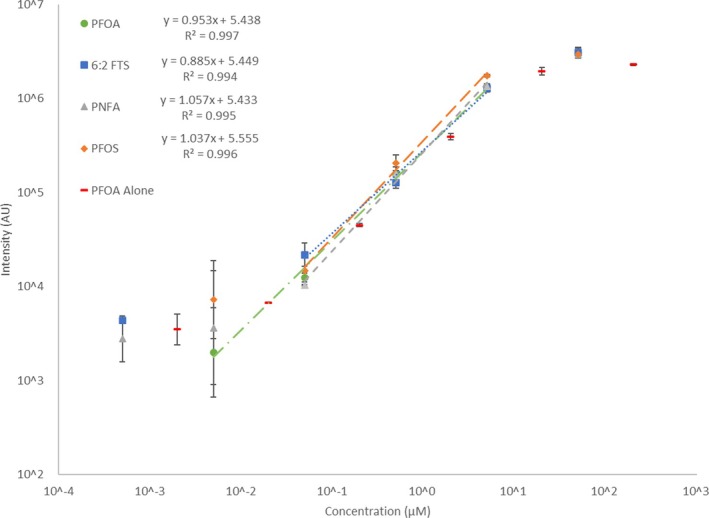 Figure 1
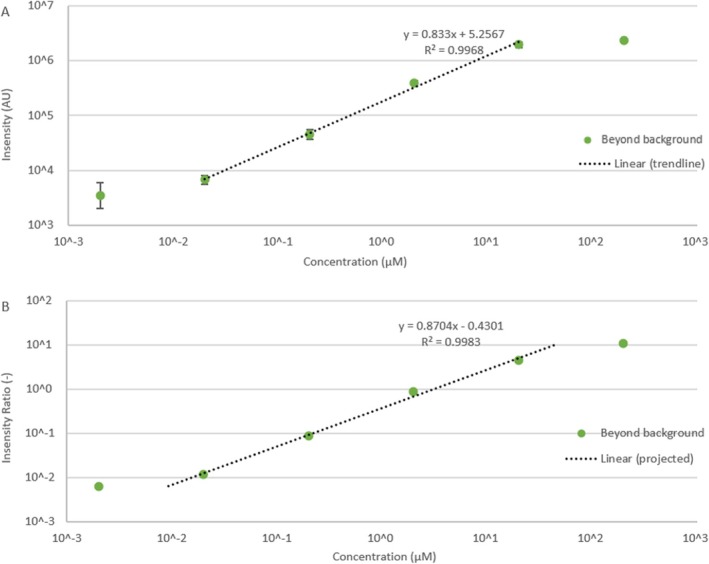 Figure 2
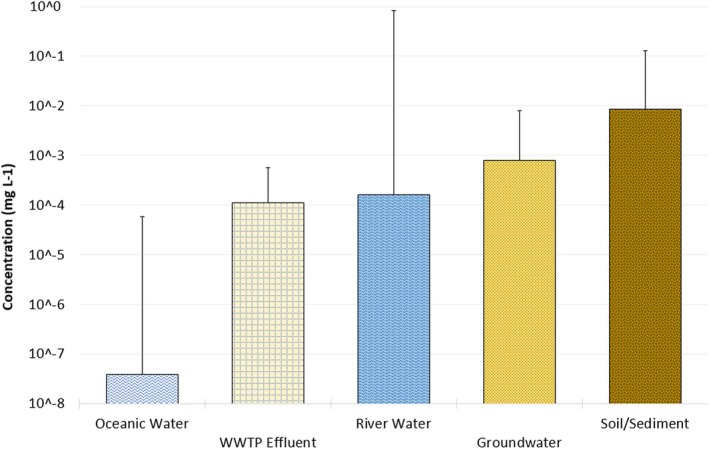 Figure 3
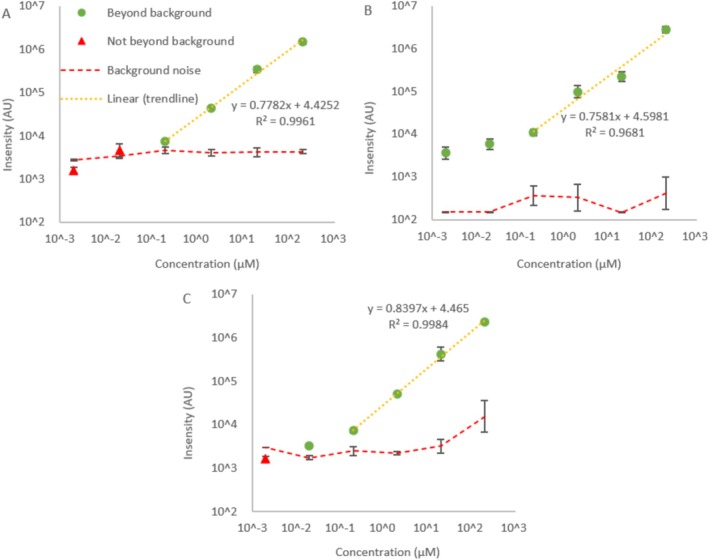 Figure 4
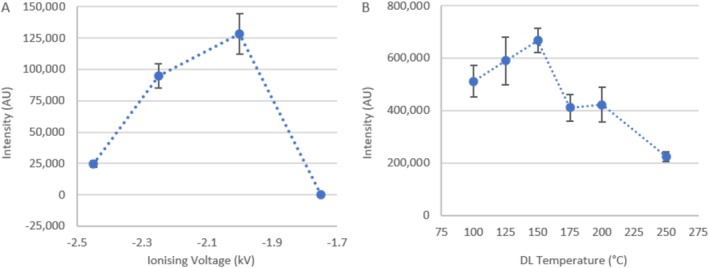 Figure 5
Peer Reviews
No public reviews on file for this paper yet. If you reviewed it on a platform where reviews are public (OpenReview, ICLR, NeurIPS, ICML), you can paste yours below so the community can read it here.
Videos
No videos yet. Explain this paper in a talk, walkthrough, or lecture? Add one.
Taxonomy
TopicsPer- and polyfluoroalkyl substances research · Atmospheric chemistry and aerosols · Toxic Organic Pollutants Impact