Variation in Mortality and Ageing Rate in a Fast‐Paced Species: Insights From 24 Years of Hazel Dormouse (Muscardinus avellanarius) Data
Thomas Bjørneboe Berg, Fernando Colchero, Owen R. Jones, Lene Sanderhoff, Rimvydas Juškaitis

TL;DR
A 24-year study of hazel dormice in Lithuania found that male survival rates exceeded females, and survival changes were linked to environmental factors affecting aging rates, not just early-life mortality.
Contribution
The study provides new insights into how environmental changes affect aging rates in a fast-paced rodent species.
Findings
Male hazel dormice had higher life expectancy than females across all three population phases.
Changes in survival were mainly due to age-independent mortality and aging rates, not juvenile mortality.
Environmental variation can modulate aging rates in species with fast life histories like the Hazel Dormouse.
Abstract
Recent research has found that, among some mammal species, differences in environmental conditions among populations of the same species drive changes in infant and juvenile mortality, but not in the rate of senescence, also known as the rate of ageing. Although this pattern has been confirmed in primates and some carnivores, it remains untested on other taxonomic groups with faster life histories, such as rodents. Here, we analysed age‐specific survival in Hazel Dormouse, using a 24‐year capture‐mark‐recapture data set from Lithuania. We used Bayesian survival trajectory analysis (BaSTA) and tested different models of age‐specific mortality. The population has experienced three distinct demographic phases—increasing (1999–2006), declining (2007–2014) and stable‐low abundance (2015–2022). We divided the dataset into these three periods to assess changes in survival over time. During all…
Genes, proteins, chemicals, diseases, species, mutations and cell lines named across the full text — each resolved to its canonical identifier and authoritative record.
Click any figure to enlarge with its caption.
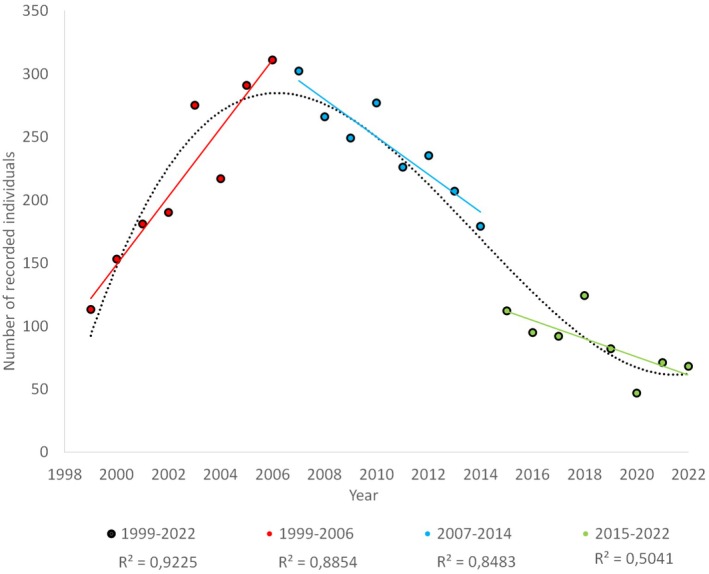 Figure 1
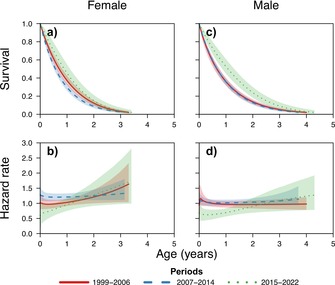 Figure 2
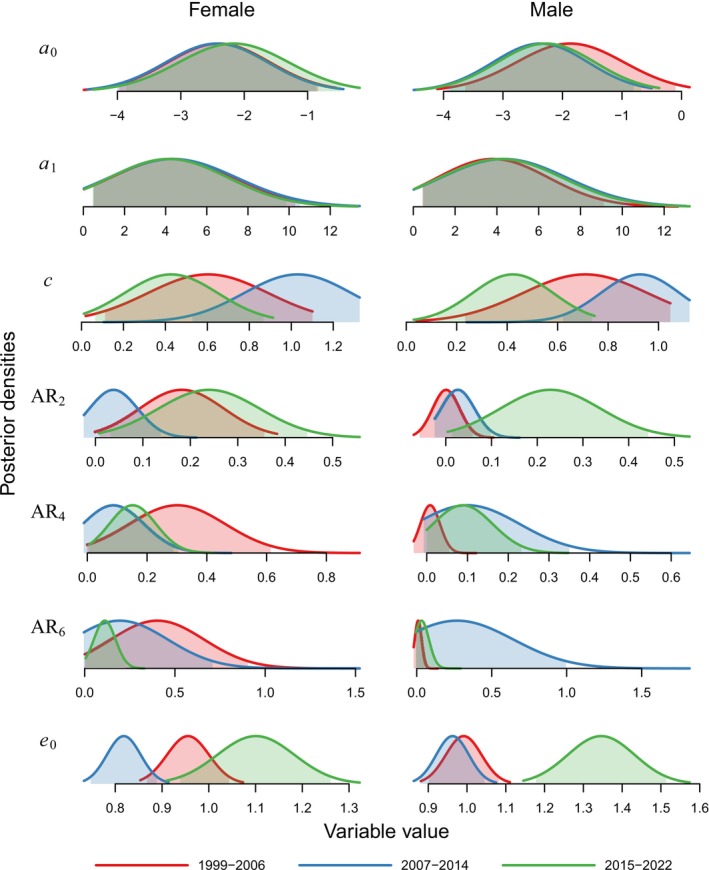 Figure 3
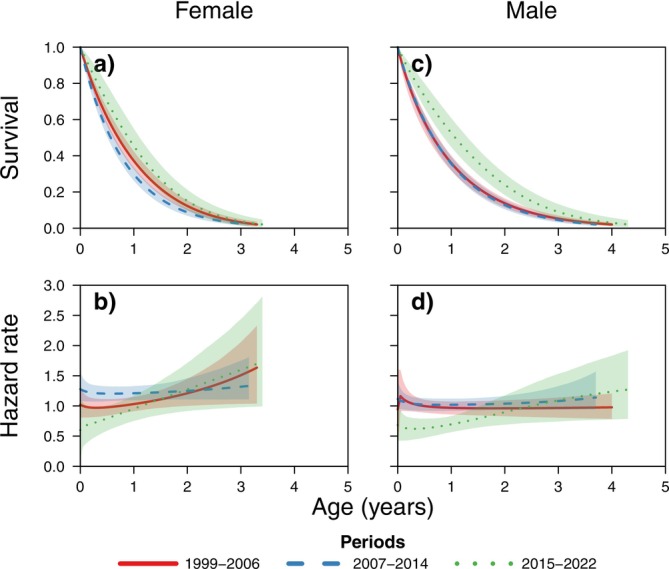 Figure 4
Peer Reviews
No public reviews on file for this paper yet. If you reviewed it on a platform where reviews are public (OpenReview, ICLR, NeurIPS, ICML), you can paste yours below so the community can read it here.
Videos
No videos yet. Explain this paper in a talk, walkthrough, or lecture? Add one.
Taxonomy
TopicsAnimal Ecology and Behavior Studies · Wildlife Ecology and Conservation · Forensic Entomology and Diptera Studies