Hearing Function in Spinal and Bulbar Muscular Atrophy (SBMA): A Case Control Study From a Tertiary Referral Center
Lorenzo Blasi, Leonardo Franz, Alberto Romito, Andrea Fortuna, Giacomo Maria Minicuci, Alen Bebeti, Federica Paredi, Rosario Marchese Ragona, Maria Pennuto, Cosimo de Filippis, Gino Marioni, Gianni Sorarù

TL;DR
This study found that patients with Spinal and Bulbar Muscular Atrophy (SBMA) experience specific hearing impairments not explained by other risk factors.
Contribution
The study provides evidence of disease-specific hearing loss in SBMA through a larger, controlled cohort.
Findings
SBMA patients had significantly higher pure-tone average (PTA) values compared to controls, indicating hearing impairment.
Hearing thresholds were higher in SBMA patients without hearing loss risk factors, except for some intermediate frequencies.
PTA values correlated negatively with CAG repeat number and 6-minute walk test (6MWT) distances.
Abstract
Expanding on earlier findings of auditory involvement from two small‐scale studies, we conducted a comprehensive evaluation of hearing levels in a larger cohort of SBMA patients. Thirty‐six SBMA patients and 36 age‐matched male controls without risk factors for hearing loss underwent a comprehensive audiological assessment, including pure‐tone audiometry at 250, 500, 1000, 2000, 4000, and 8000 Hz frequencies, using both air and bone conduction. The pure‐tone average (PTA) was calculated as the mean threshold at 500, 1000, 2000, and 4000 Hz. A correlation analysis was performed to evaluate the relationship between patients' audiological features and clinical characteristics, including motor disability, as measured by the SBMA functional rating scale (SBMAFRS) and the 6‐min walk test (6MWT). PTA values were significantly higher in SBMA patients compared to healthy controls (Mann–Whitney…
Genes, proteins, chemicals, diseases, species, mutations and cell lines named across the full text — each resolved to its canonical identifier and authoritative record.
Click any figure to enlarge with its caption.
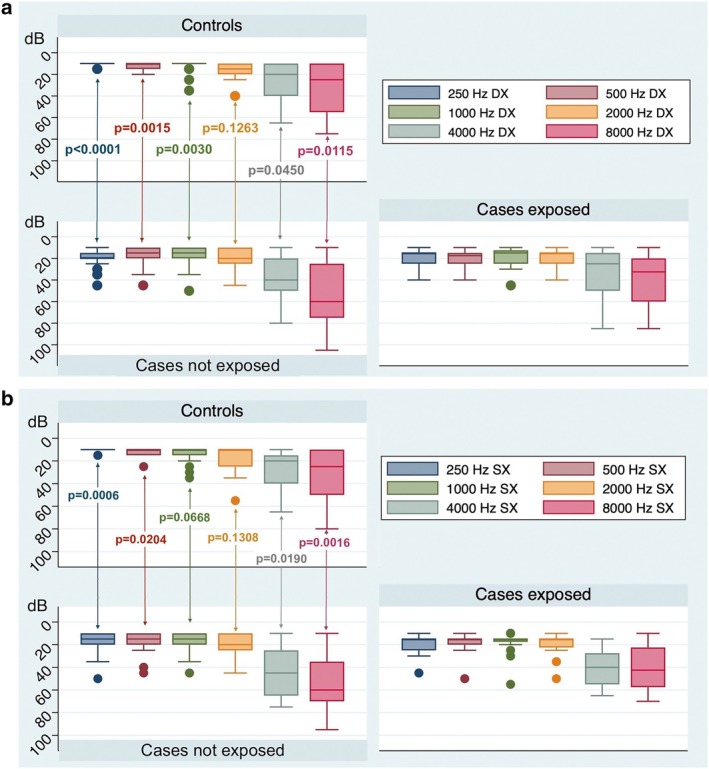 Figure 1
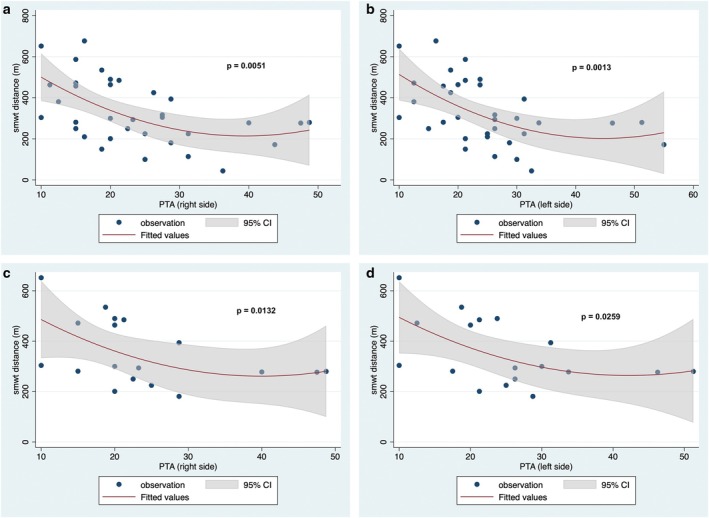 Figure 2
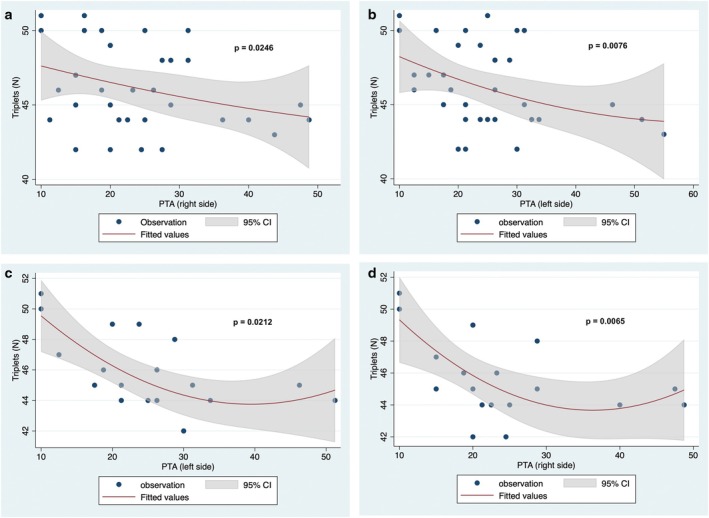 Figure 3
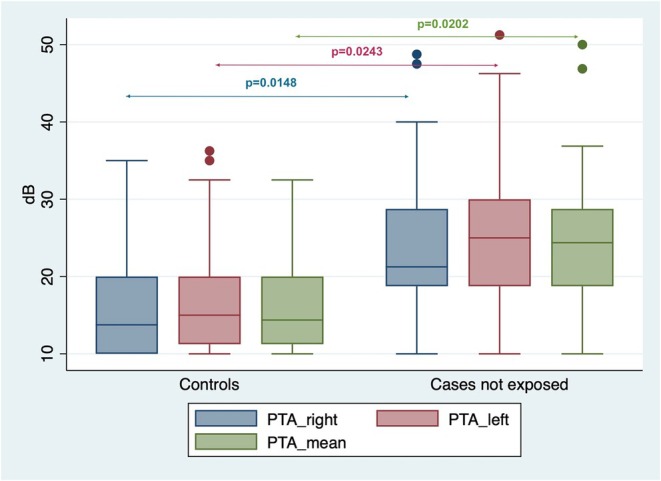 Figure 4
Peer Reviews
No public reviews on file for this paper yet. If you reviewed it on a platform where reviews are public (OpenReview, ICLR, NeurIPS, ICML), you can paste yours below so the community can read it here.
Videos
No videos yet. Explain this paper in a talk, walkthrough, or lecture? Add one.
Taxonomy
TopicsNeurogenetic and Muscular Disorders Research · Genetic Neurodegenerative Diseases · Muscle Physiology and Disorders