Social Isolation Induces Sex‐Specific Differences in Behavior and Gut Microbiota Composition in Stress‐Sensitive Rats
Charlotte Hurst, Gosia Zobel, Wayne Young, Trent Olson, Nabil Parkar, Jeremy Bracegirdle, Rina Hannaford, Rachel C. Anderson, Julie E. Dalziel

TL;DR
Social isolation in stress-sensitive rats caused sex-specific changes in behavior and gut microbiome, with females showing more pronounced effects.
Contribution
This study reveals sex-specific behavioral and microbiome responses to social isolation in stress-sensitive rats.
Findings
Female rats showed more pronounced behavioral and microbiome changes under social isolation.
Social isolation altered the gut microbiome composition in females, with 7 differentially abundant taxa and 49 gene categories.
Behavioral traits correlated with the relative abundance of specific gut microbiome taxa in isolated female rats.
Abstract
Social isolation (SI) is an established rat model of chronic stress. We applied this to the stress‐sensitive Wistar Kyoto (WKY) strain to explore brain‐to‐gut interactions associated with mood. Whether SI stress‐induced behavioral changes are sex‐specific or if they affect the microbiome in WKY is unknown. We hypothesized individually housed (IH) animals would be more anxious than pair‐housed (PH), with sex differences. Male and female rats were either IH or PH from 70 to 112 days old and behavior was assessed in modified open field (OFTmod), elevated plus maze (EPM), and novel object recognition (NOR) tests. Cecal content DNA was analyzed by shotgun metagenome sequencing. IH rats, particularly females, spent more time in the center of the OFTmod where the semi‐novel feed was presented compared to PH group rats. There was a tendency for greater distance traveled, or potential…
Genes, proteins, chemicals, diseases, species, mutations and cell lines named across the full text — each resolved to its canonical identifier and authoritative record.
Click any figure to enlarge with its caption.
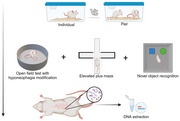 Figure 1
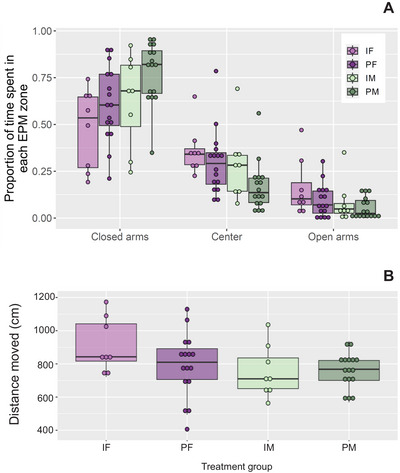 Figure 2
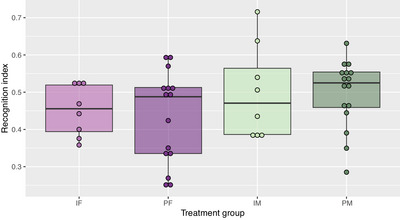 Figure 3
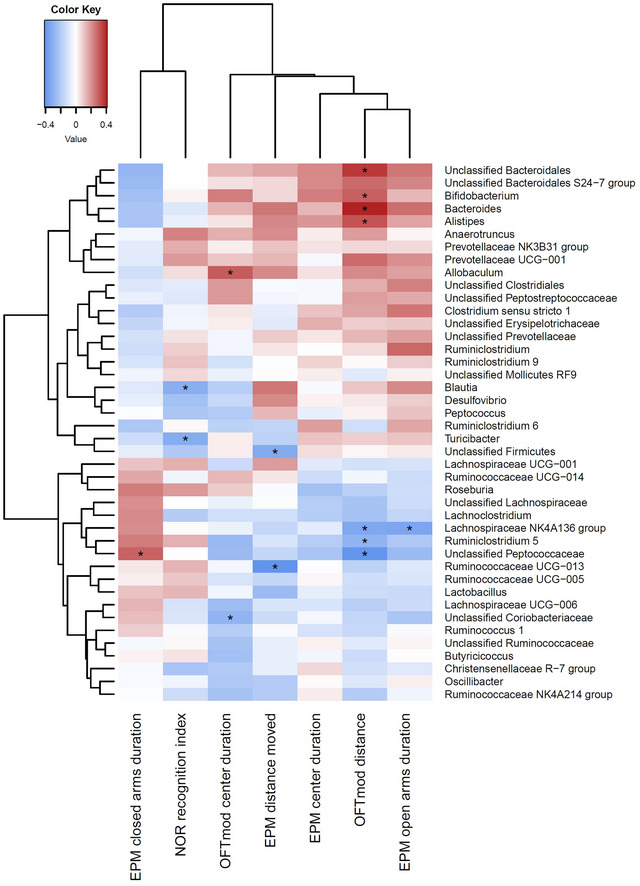 Figure 4
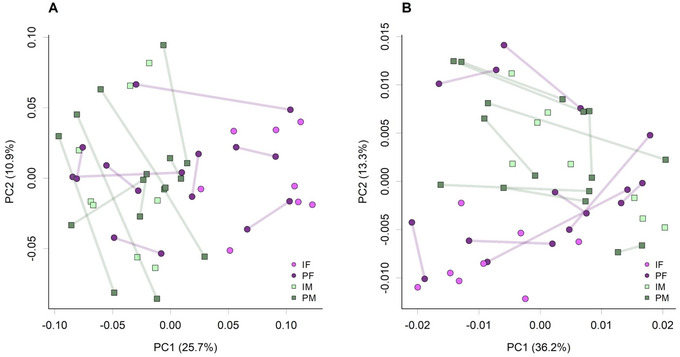 Figure 5
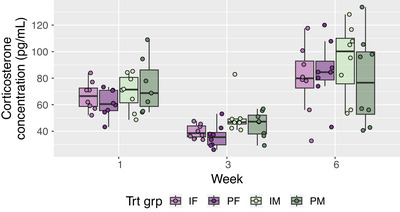 Figure 6
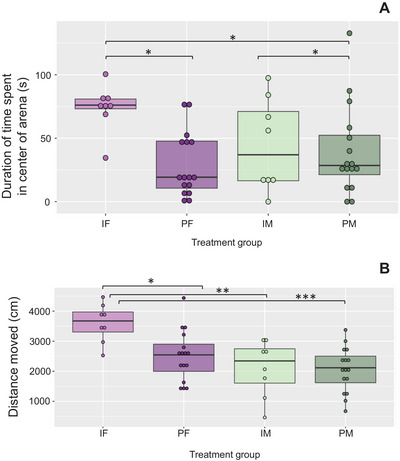 Figure 7
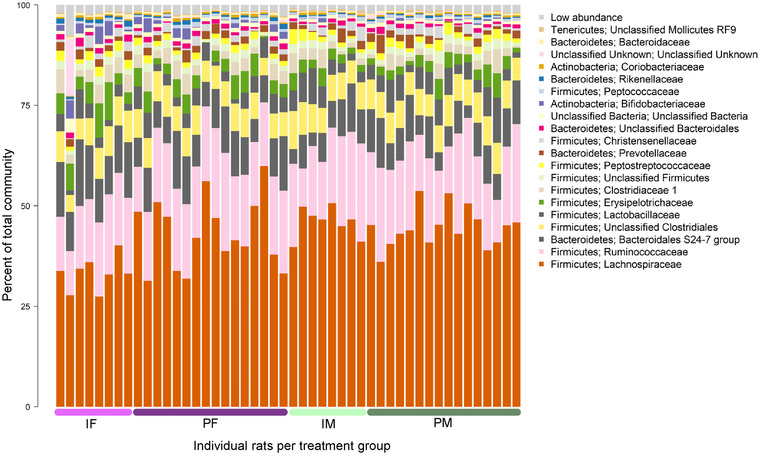 Figure 8
Peer Reviews
No public reviews on file for this paper yet. If you reviewed it on a platform where reviews are public (OpenReview, ICLR, NeurIPS, ICML), you can paste yours below so the community can read it here.
Videos
No videos yet. Explain this paper in a talk, walkthrough, or lecture? Add one.
Taxonomy
TopicsStress Responses and Cortisol · Tryptophan and brain disorders · Gut microbiota and health