Gray Matter Differences in Adolescent Psychiatric Inpatients: A Machine Learning Study of Bipolar Disorder and Other Psychopathologies
Renata Rozovsky, Maria Wolfe, Halimah Abdul‐waalee, Mariah Chobany, Greeshma Malgireddy, Jonathan A. Hart, Brianna Lepore, Farzan Vahedifard, Mary L. Phillips, Boris Birmaher, Alex Skeba, Rasim S. Diler, Michele A. Bertocci

TL;DR
This study uses machine learning to identify brain differences in adolescents with bipolar disorder, helping to improve early diagnosis and treatment.
Contribution
The study introduces a machine learning method to distinguish bipolar disorder from other psychopathologies using gray matter volume patterns in adolescents.
Findings
Classification models achieved up to 79% accuracy in distinguishing BD-I/II from other specified BD.
Key brain regions related to movement, sensory processing, and cognitive control were most discriminative.
Gray matter volume patterns correlated with symptoms like mania, negative affect, and anxiety in all inpatient groups.
Abstract
Bipolar disorder (BD) is among the psychiatric disorders most prone to misdiagnosis, with both false positives and false negatives resulting in treatment delay. We employed a whole‐brain machine learning approach focusing on gray matter volumes (GMVs) to contribute to defining objective biomarkers of BD and discriminating it from other forms of psychopathology, including subthreshold manic presentations without a BD Type I/II diagnosis. Five support vector machine (SVM) models were used to detect differences in GMVs between inpatient adolescents aged 13–17 with BD‐I/II (n = 34), other specified BD (OSB) (n = 106), other non‐bipolar psychopathology (OP) (n = 52), and healthy controls (HC) (n = 27). We examined the most discriminative GMVs and tested their associations with clinical symptoms. Whole‐brain classifiers in the model BD‐I/II versus OSB achieved total accuracy of 79%, (AUC =…
Genes, proteins, chemicals, diseases, species, mutations and cell lines named across the full text — each resolved to its canonical identifier and authoritative record.
Click any figure to enlarge with its caption.
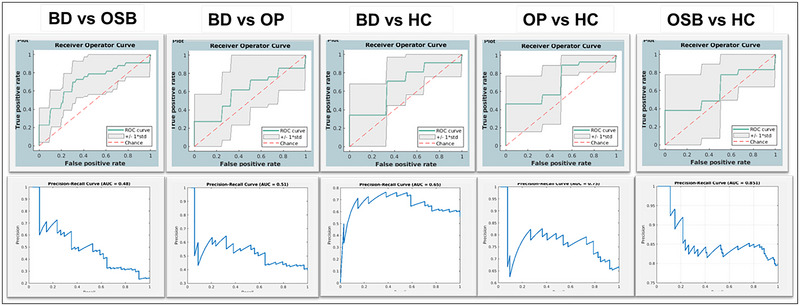 Figure 1
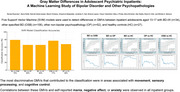 Figure 2
Peer Reviews
No public reviews on file for this paper yet. If you reviewed it on a platform where reviews are public (OpenReview, ICLR, NeurIPS, ICML), you can paste yours below so the community can read it here.
Videos
No videos yet. Explain this paper in a talk, walkthrough, or lecture? Add one.
Taxonomy
TopicsBipolar Disorder and Treatment · Schizophrenia research and treatment · Psychosomatic Disorders and Their Treatments