Dual-mode recognition of tRNAPro isoacceptors by Toxoplasma gondii Prolyl-tRNA synthetase
Indira Rizqita Ivanesthi, Emi Latifah, Shih-Yang Liu, Yi-Kuan Tseng, Hung-Chuan Pan, Chien-Chia Wang

TL;DR
A single enzyme in Toxoplasma gondii can charge two different tRNA types, revealing unique evolutionary adaptations and potential for drug development.
Contribution
Discovery of a single E-type ProRS in Toxoplasma gondii that can functionally charge both E- and P-type tRNAPro isoacceptors.
Findings
TgProRS efficiently aminoacylates both cytosolic and apicoplast tRNAPro isoacceptors.
C72/C73 are dispensable for cytosolic tRNAPro charging, but G72/A73 are crucial for apicoplast tRNAPro.
TgProRS compensates for both cytoplasmic and mitochondrial ProRS activities in yeast.
Abstract
Prolyl-tRNA synthetases (ProRSs) exhibit diverse domain architectures and motifs, evolving into prokaryotic (P-type) and eukaryotic/archaeal (E-type) variants. Both types exhibit high specificity for the recognition and aminoacylation of their cognate tRNAs. Interestingly, the parasitic eukaryote Toxoplasma gondii encodes a single E-type ProRS (TgProRS) but utilizes two distinct tRNAPro isoacceptors: a cytosolic E-type (with C72/C73) and an apicoplast P-type (with G72/A73). Our study demonstrates that TgProRS, despite being classified as an E-type enzyme, efficiently charges both tRNAPro isoacceptors and functionally compensates for yeast cytoplasmic and mitochondrial ProRS activities. Notably, while C72/C73 are dispensable for cytosolic tRNAPro charging, G72/A73 are crucial for apicoplast tRNAPro aminoacylation. Furthermore, Mutations in the motif 2 loop selectively affect E- or P-type…
Genes, proteins, chemicals, diseases, species, mutations and cell lines named across the full text — each resolved to its canonical identifier and authoritative record.
Click any figure to enlarge with its caption.
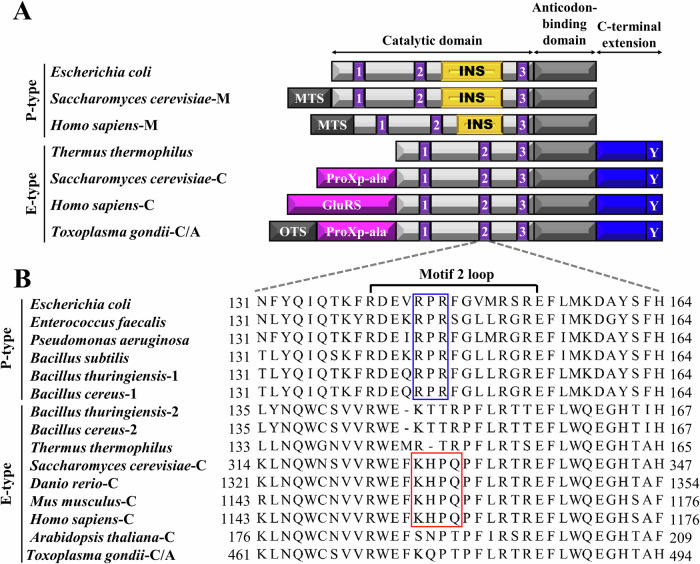 Figure 1
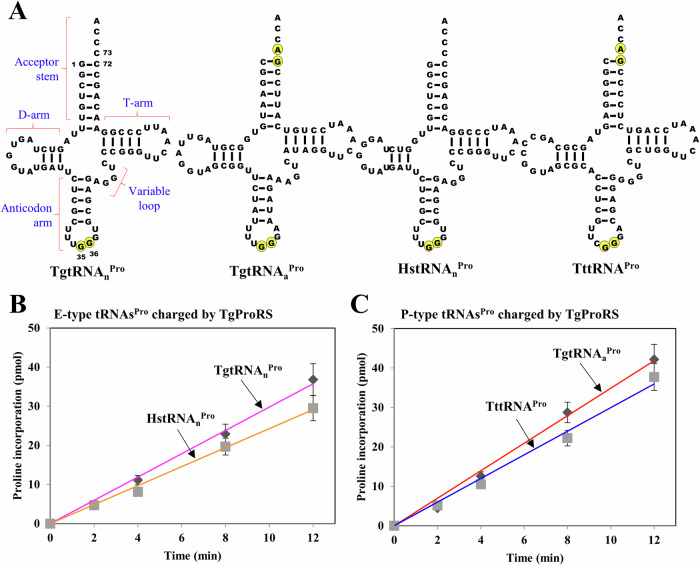 Figure 2
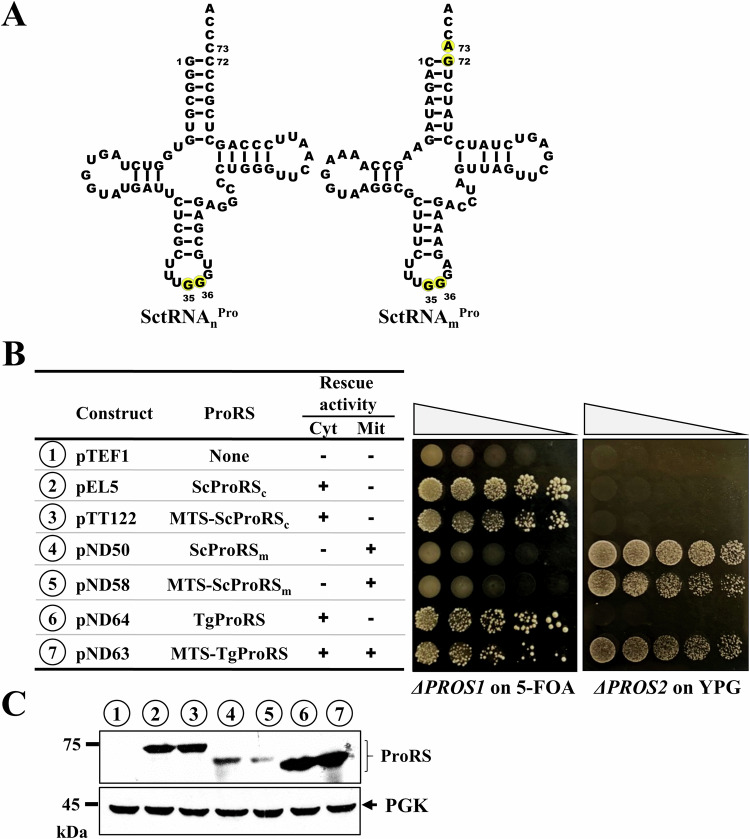 Figure 3
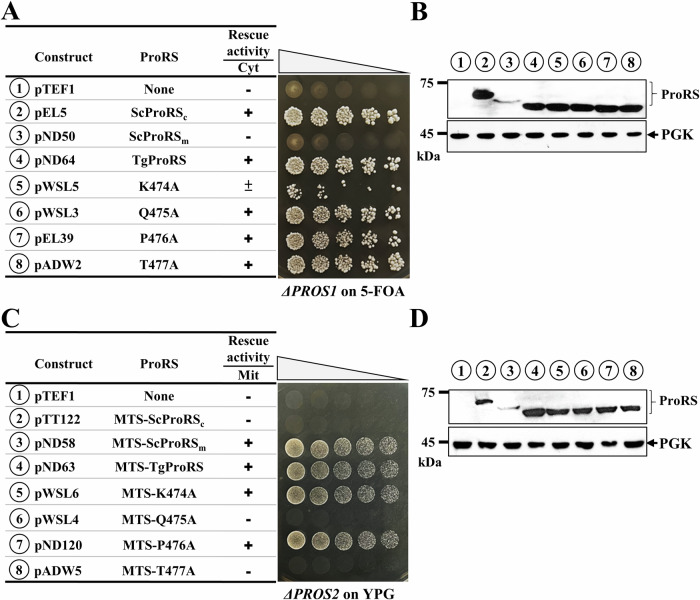 Figure 4
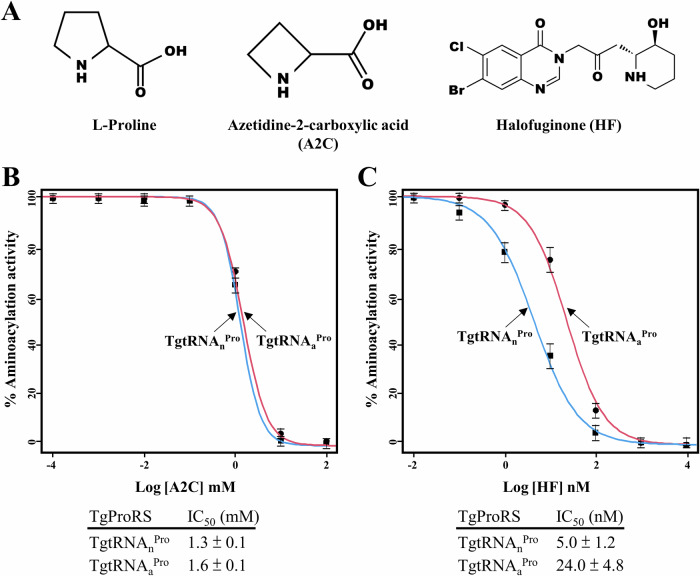 Figure 5
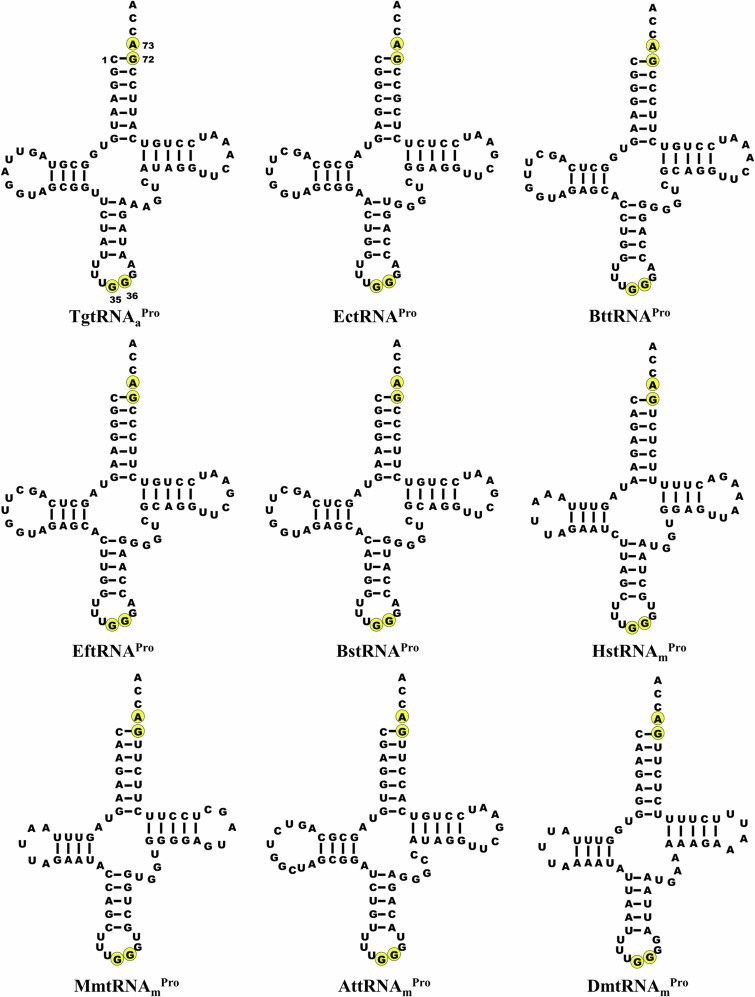 Figure 6
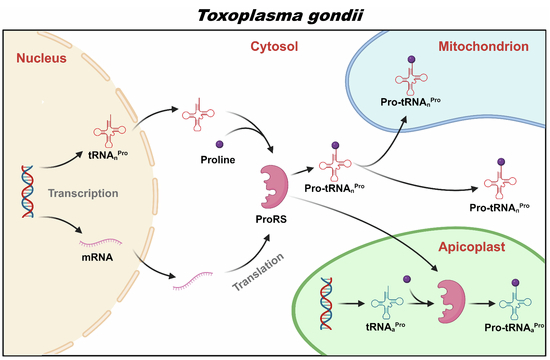 Figure 7
 Figure 8
Peer Reviews
No public reviews on file for this paper yet. If you reviewed it on a platform where reviews are public (OpenReview, ICLR, NeurIPS, ICML), you can paste yours below so the community can read it here.
Videos
No videos yet. Explain this paper in a talk, walkthrough, or lecture? Add one.
Taxonomy
TopicsRNA and protein synthesis mechanisms · RNA modifications and cancer · Genomics and Phylogenetic Studies