Parity Property of Hexagonal Sliding Puzzles
Manuel Estévez, Ray Karpman, Érika Roldán

TL;DR
This paper explores the solvability of hexagonal sliding puzzles and how their shape and number of holes affect their complexity and solvability.
Contribution
The paper introduces new parity properties for hexagonal sliding puzzles and provides solvability criteria based on board shape and hole count.
Findings
Hexagonal puzzles with three or more holes on large boards are always solvable.
Solvability for puzzles with two or more holes depends on parity and tile placement in corners.
Puzzle graphs model configuration spaces of hard tiles on tessellated domains.
Abstract
We study the puzzle graphs of hexagonal sliding puzzles of various shapes, and with various numbers of holes. The puzzle graph is a combinatorial model which captures the solvability and the complexity of sequential mechanical puzzles. Questions relating to the puzzle graph have been previously studied and resolved for the 15 Puzzle, which is the most famous—and unsolvable—square sliding puzzle of all time. It is known that for square puzzles such as the 15 Puzzle, solvability depends on a parity property that splits the puzzle graph into two components. In the case of hexagonal sliding puzzles, we get more interesting parity properties that depend on the shape of the boards and on the missing tiles or holes on the board. We show that for large-enough hexagonal, triangular, or parallelogram-shaped boards with hexagonal tiles, all puzzles with three or more holes are solvable. For…
Genes, proteins, chemicals, diseases, species, mutations and cell lines named across the full text — each resolved to its canonical identifier and authoritative record.
Click any figure to enlarge with its caption.
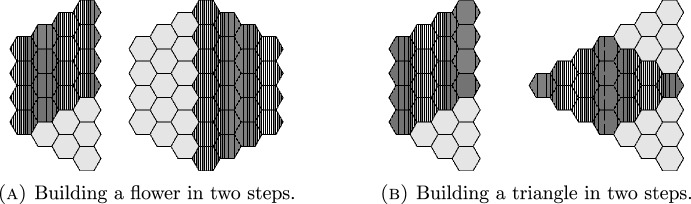 Figure 10
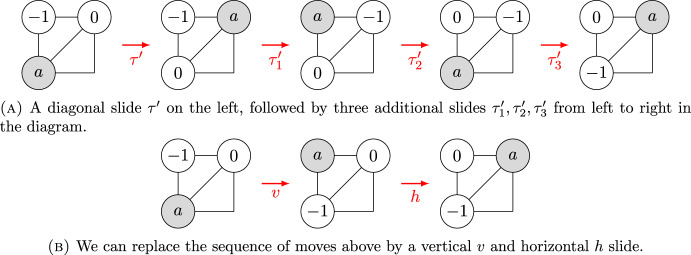 Figure 11
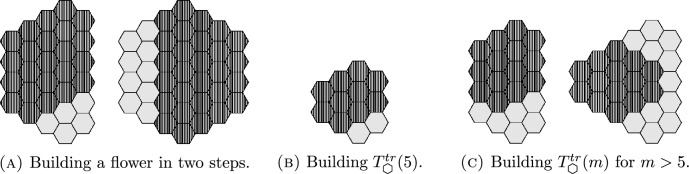 Figure 12
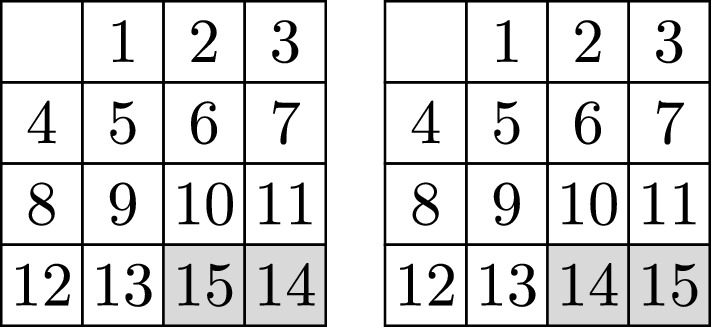 Figure 1
 Figure 2
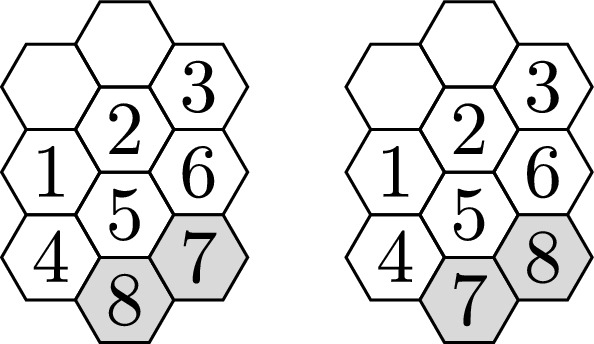 Figure 3
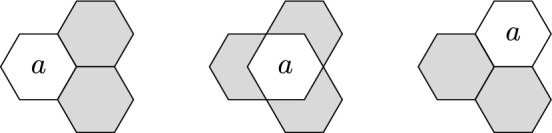 Figure 4
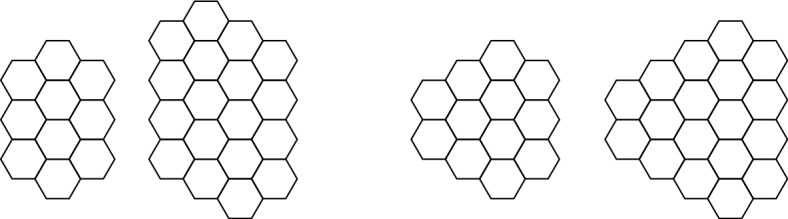 Figure 5
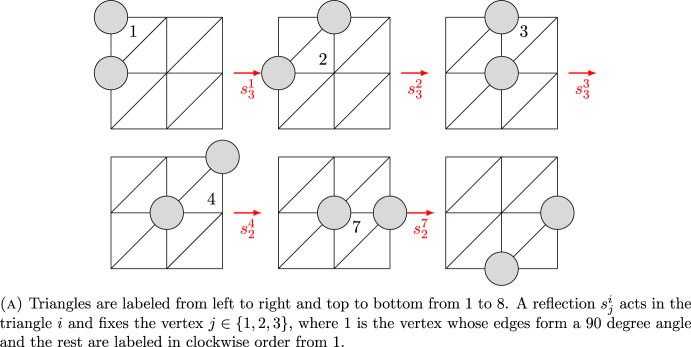 Figure 6
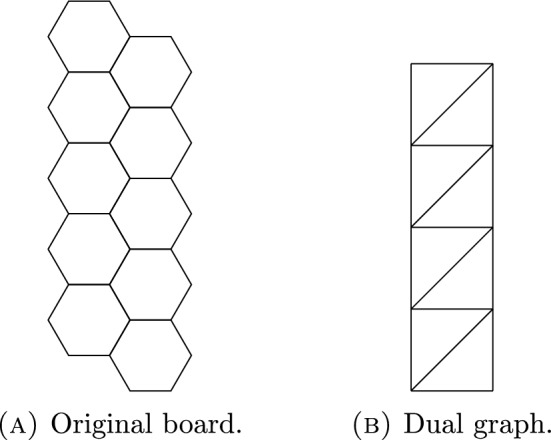 Figure 7
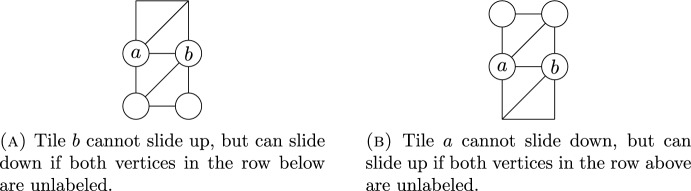 Figure 8
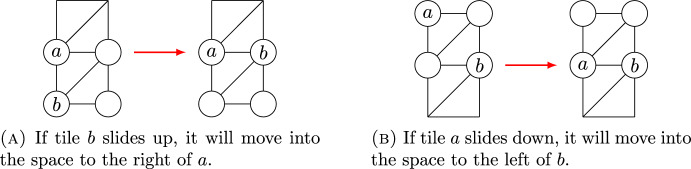 Figure 9
Peer Reviews
No public reviews on file for this paper yet. If you reviewed it on a platform where reviews are public (OpenReview, ICLR, NeurIPS, ICML), you can paste yours below so the community can read it here.
Videos
No videos yet. Explain this paper in a talk, walkthrough, or lecture? Add one.
Taxonomy
TopicsAdvanced Numerical Analysis Techniques · Computational Geometry and Mesh Generation · Metal Forming Simulation Techniques