Postural stability during illusory self-motion—interactions of vision and touch
Yingjia Yu, Avijit Bakshi, Alexander S. Panic, Paul DiZio, James R. Lackner

TL;DR
This study explores how visual illusions of motion and touch interact to affect balance, revealing that both types of sensory input influence postural stability differently.
Contribution
The paper introduces new insights into how motion perception and tactile feedback jointly affect postural control during visual illusions.
Findings
Motion phase and tactile feedback significantly influence postural regulation.
Motion order affects stochastic balance metrics but not classical ones.
Visual motion illusions alter touch forces and postural sway even after motion stops.
Abstract
The role of vision in stabilizing balance has long been recognized, and previous studies have shown that non-supportive fingertip touch can enhance postural stability. However, the interaction between haptic feedback and the illusion of self-motion remains underexplored. We investigated how different phases of visual motion (no motion, visual motion, self-rotation and displacement illusion), motion order (stationary first vs. motion first), and fingertip cutaneous feedback jointly influence balance and the dynamics of haptic contact. Using a head-mounted display, we presented a virtual room that rotated around the standing participants’ vertical axis. Participants viewing the rotating scene soon experience illusory self-motion and displacement. We examined how the moving visual scene destabilized posture and how it interacted with tactile cues that typically stabilize balance. Our…
Genes, proteins, chemicals, diseases, species, mutations and cell lines named across the full text — each resolved to its canonical identifier and authoritative record.
Click any figure to enlarge with its caption.
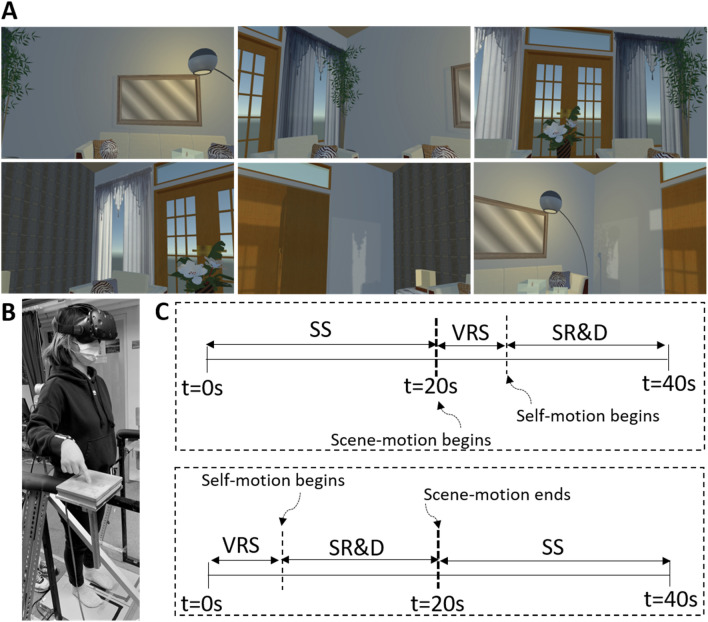 Figure 1
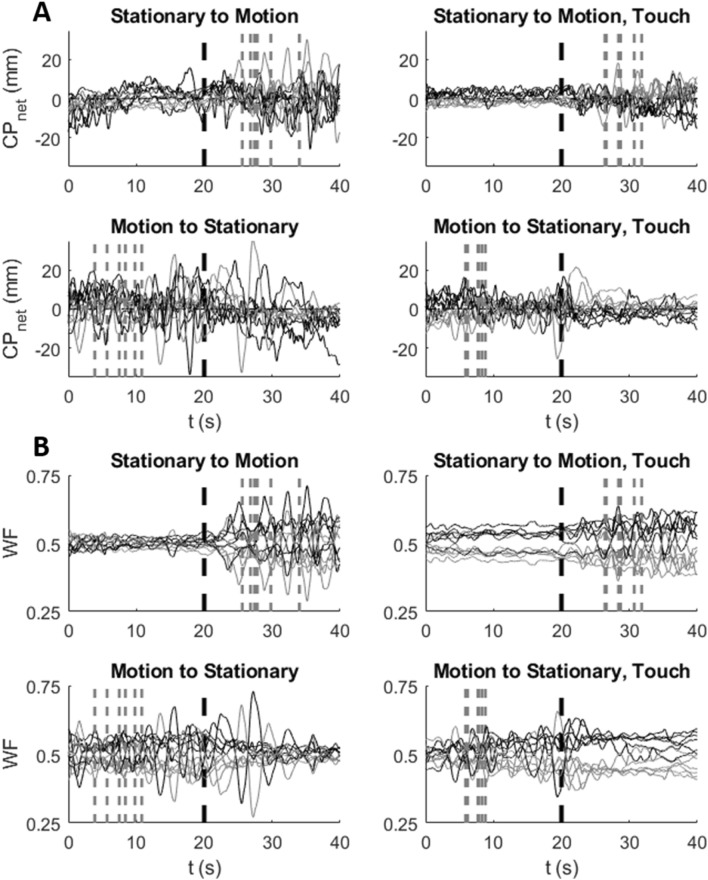 Figure 2
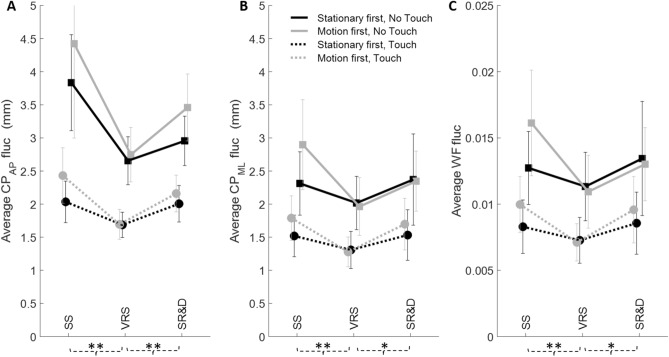 Figure 3
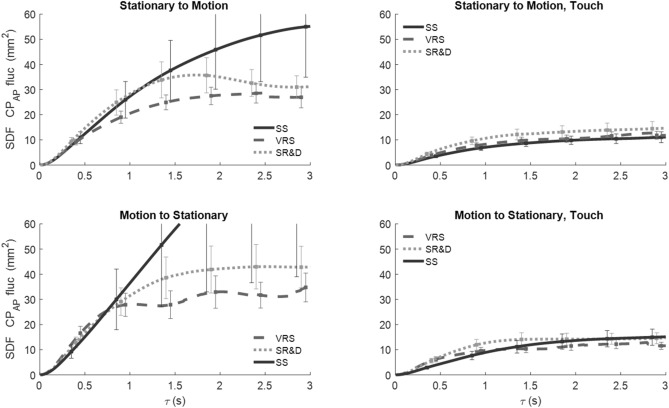 Figure 4
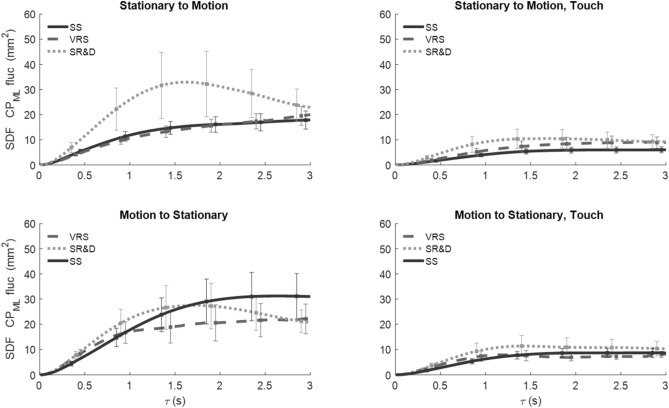 Figure 5
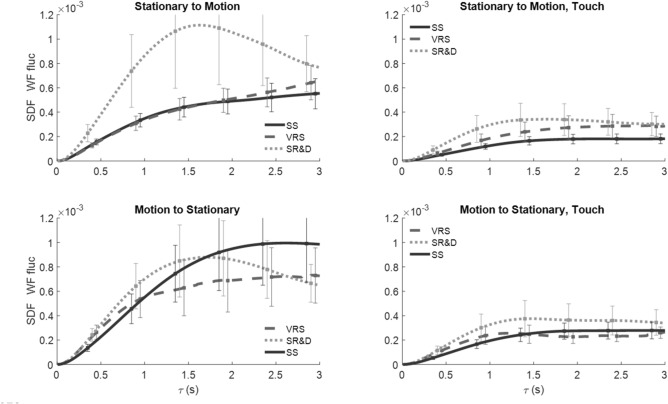 Figure 6
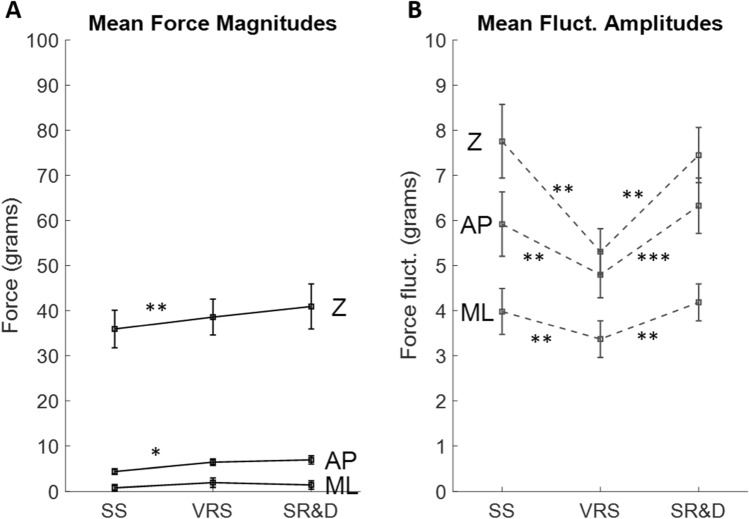 Figure 7
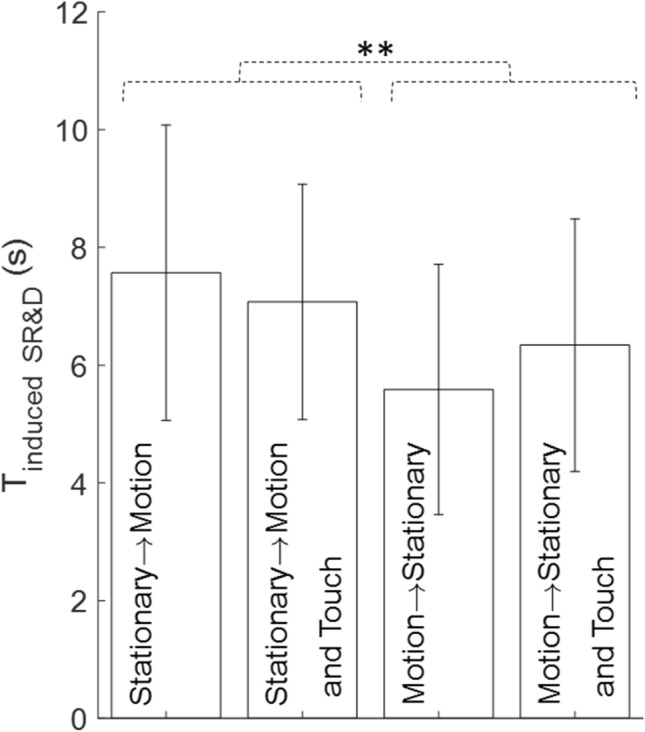 Figure 8
Peer Reviews
No public reviews on file for this paper yet. If you reviewed it on a platform where reviews are public (OpenReview, ICLR, NeurIPS, ICML), you can paste yours below so the community can read it here.
Videos
No videos yet. Explain this paper in a talk, walkthrough, or lecture? Add one.
Taxonomy
TopicsMotor Control and Adaptation · Visual perception and processing mechanisms · Tactile and Sensory Interactions