Stress hyperglycemia indexes and early neurological deterioration in spontaneous intracerebral hemorrhage
Carmelo Tiberio Currò, Federica Ferrari, Giovanni Merlino, Stefan Moraru, Francesco Bax, Fedra Kuris, Lorenzo Nesi, Mariarosaria Valente, Elena Ballante, Nicola d’Altilia, Cristina Rascunà, Andrea Morotti, Federico Mazzacane, Anna Maria Cavallini

TL;DR
This study finds that new stress hyperglycemia indexes can predict early neurological deterioration in patients with spontaneous brain hemorrhage.
Contribution
The study introduces and validates new stress hyperglycemia indexes as predictors of neurological decline in intracerebral hemorrhage patients.
Findings
Early neurological deterioration occurred in 12.3% of intracerebral hemorrhage patients.
Glycemic gap, stress hyperglycemia ratio, and glucose-glycated hemoglobin ratio predicted deterioration better than admission glycemia.
Optimized cutoffs for these indexes showed moderate sensitivity and specificity for detecting deterioration.
Abstract
To evaluate the relationship of early neurological deterioration (END) with admission glycemia (aG) and new stress hyperglycemia indexes in spontaneous intracerebral hemorrhage (ICH) patients. The present retrospective study included 171 ICH patients from two stroke centers. END was defined as an increase ≥ 4 points in National Institutes of Health Stroke Scale and/or a decrease ≥ 2 points in Glasgow Coma Scale within 72 hours from admission. The included stress hyperglycemia indexes were glycemic gap (GGAP), stress hyperglycemia ratio (SHR), and glucose-glycated hemoglobin ratio. GGAP was calculated as aG – 28,7*glycated hemoglobin + 46,7; SHR as aG / (28,7*glycated hemoglobin – 46,7); Glucose-glycated hemoglobin ratio as aG / glycated hemoglobin. We performed univariate and multivariate analyses for END. The receiver operating characteristic curves were built for END-related glycemic…
Genes, proteins, chemicals, diseases, species, mutations and cell lines named across the full text — each resolved to its canonical identifier and authoritative record.
Click any figure to enlarge with its caption.
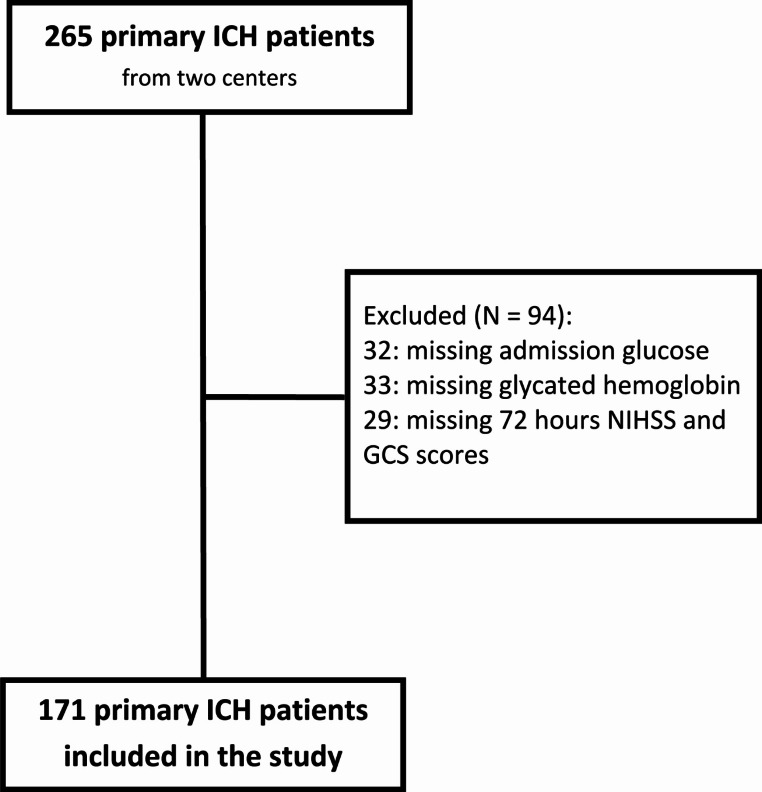 Figure 1
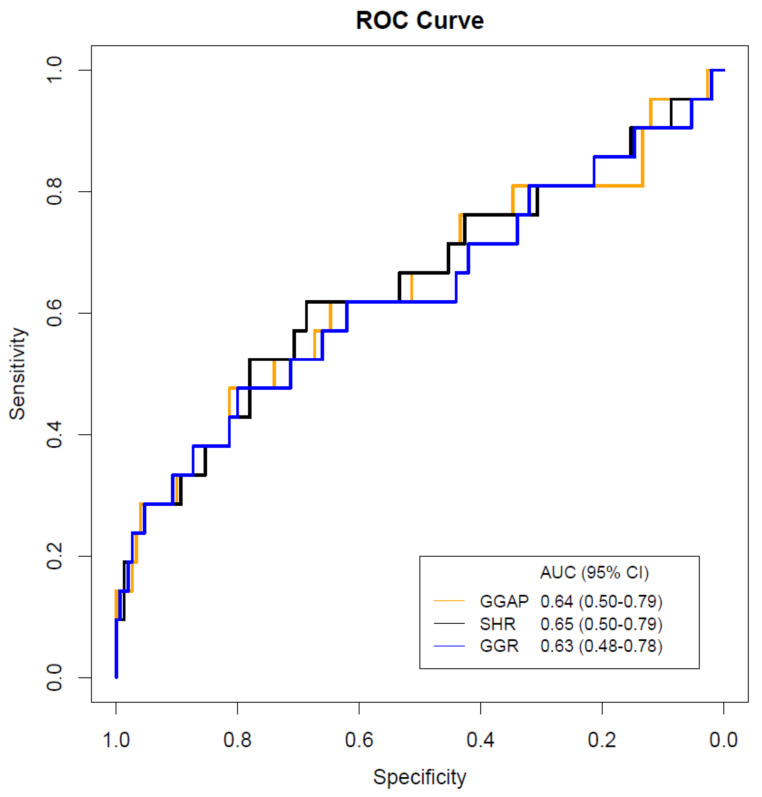 Figure 2
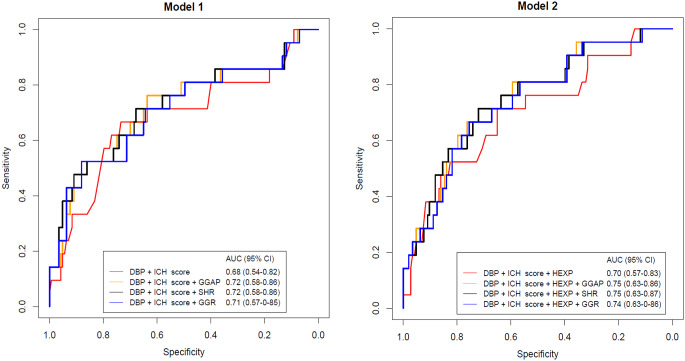 Figure 3
Peer Reviews
No public reviews on file for this paper yet. If you reviewed it on a platform where reviews are public (OpenReview, ICLR, NeurIPS, ICML), you can paste yours below so the community can read it here.
Videos
No videos yet. Explain this paper in a talk, walkthrough, or lecture? Add one.
Taxonomy
TopicsIntracerebral and Subarachnoid Hemorrhage Research · Neurological and metabolic disorders · Traumatic Brain Injury and Neurovascular Disturbances