Influence of pre-transplant estimated glomerular filtration rate (eGFR) on clinical outcomes after allogeneic hematopoietic cell transplantation
DP Nurse, H. Li, D. Cenin, S. Patel, D. Dima, J. Edwards, S. Farlow, A. Bragg, A. Mehdi, R. Hanna, SJ Rotz, D. Jagadeesh, AT Gerds, RM Dean, B. Pohlman, BK Hamilton, C. Brunstein, M. Kalaycio, CS Sauter, RM Sobecks

TL;DR
This study shows that lower kidney function before a bone marrow transplant increases the risk of transplant-related death, highlighting the importance of preserving kidney health before the procedure.
Contribution
The study identifies a specific eGFR threshold (<70 ml/min) associated with increased transplant-related mortality in the contemporary era of allogeneic hematopoietic cell transplantation.
Findings
Patients with pre-transplant eGFR <70 ml/min had the highest risk for non-relapse mortality (p < 0.0001).
Multivariate analysis confirmed that eGFR <70 ml/min was significantly associated with increased transplant-related mortality.
Higher eGFR categories showed no significant differences in mortality risk.
Abstract
Pretransplant renal dysfunction has historically been associated with increased non-relapse mortality (NRM) and inferior overall survival. Novel approaches in conditioning and GVHD prophylaxis have reduced the toxicity of transplant over time, however, the impact of pre-transplant eGFR in the contemporary era is unknown. The aim of this study was to identify a pre-transplant eGFR value associated with increased transplant-related mortality. This retrospective study was performed using data from 724 adult patients who underwent first allogeneic hematopoietic cell transplant (alloHCT) from January 2012 through December 2021. The optimal pre-transplant eGFR value for risk of NRM was identified using Cox-restricted cubic spline plot analysis. Those with an eGFR <70 ml/min had the highest risk for NRM (p < 0.0001). Multivariate analysis confirmed that the risk of NRM remained significantly…
Genes, proteins, chemicals, diseases, species, mutations and cell lines named across the full text — each resolved to its canonical identifier and authoritative record.
Click any figure to enlarge with its caption.
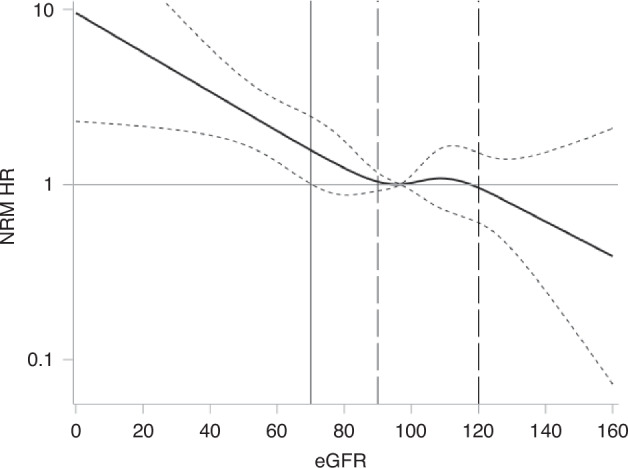 Figure 1
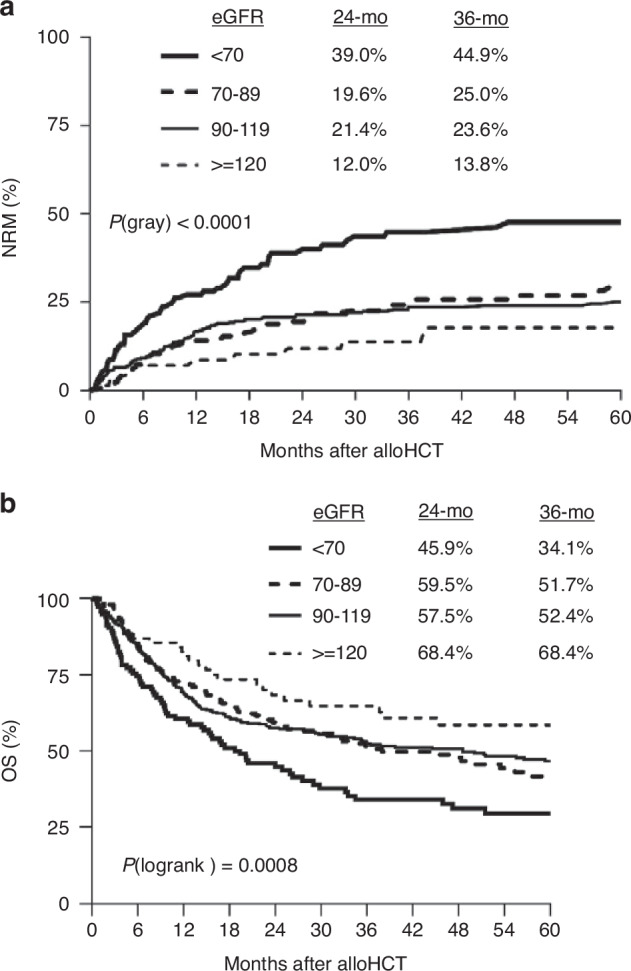 Figure 2
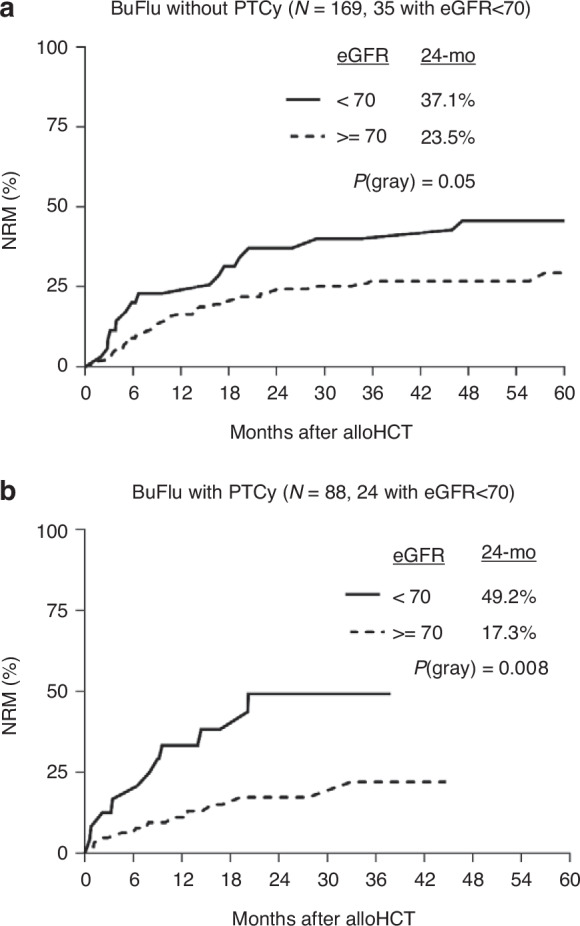 Figure 3
Peer Reviews
No public reviews on file for this paper yet. If you reviewed it on a platform where reviews are public (OpenReview, ICLR, NeurIPS, ICML), you can paste yours below so the community can read it here.
Videos
No videos yet. Explain this paper in a talk, walkthrough, or lecture? Add one.
Taxonomy
TopicsRenal Transplantation Outcomes and Treatments · Renal Diseases and Glomerulopathies · Hematopoietic Stem Cell Transplantation