The relationship between physical activity, orthostatic blood pressure reactions and subclinical atherosclerosis: the Swedish CArdioPulmonary bioImage Study (SCAPIS)
Isabella Kharraziha, Ensieh Memarian, Örjan Ekblom, Anders Gottsäter, Gunnar Engström, Viktor Hamrefors

TL;DR
This study explores how physical activity affects blood pressure changes when standing and its link to early signs of heart disease in middle-aged people.
Contribution
The study investigates how physical activity modifies orthostatic blood pressure responses and their connection to subclinical atherosclerosis.
Findings
Higher physical activity is linked to less systolic blood pressure increase and more diastolic increase upon standing.
Physically active individuals are less likely to have orthostatic hypertension but more likely to have orthostatic hypotension.
Physical activity does not modify the relationship between orthostatic blood pressure responses and subclinical atherosclerosis.
Abstract
An abnormal blood pressure (BP) response on standing is associated with atherosclerotic cardiovascular disease (CVD). The role of physical activity (PA) on orthostatic BP-reactions and its relation to subclinical atherosclerosis is unclear. We aimed to assess the association between PA and orthostatic BP-reactions, and whether PA modifies the relationship between orthostatic BP-reactions and subclinical atherosclerosis. A total of 5,396 middle aged subjects from the population-based SCAPIS-study were included. Associations between orthostatic BP-response and accelerometer-derived PA were studied using linear regression. Interaction analyses were performed to study modifying effects of PA on the relationship between orthostatic BP-response and subclinical coronary atherosclerosis, assessed by coronary artery calcium score (CACS). Moderate to vigorous PA (MVPA) was associated with less…
Genes, proteins, chemicals, diseases, species, mutations and cell lines named across the full text — each resolved to its canonical identifier and authoritative record.
Click any figure to enlarge with its caption.
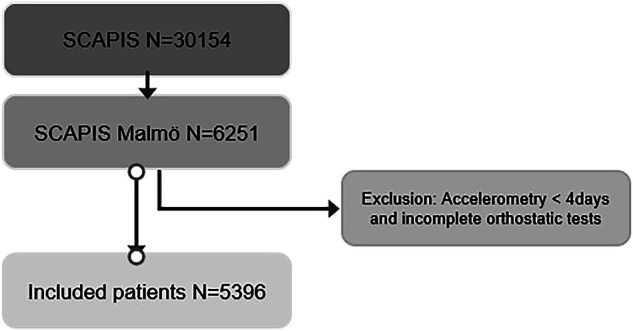 Figure 1
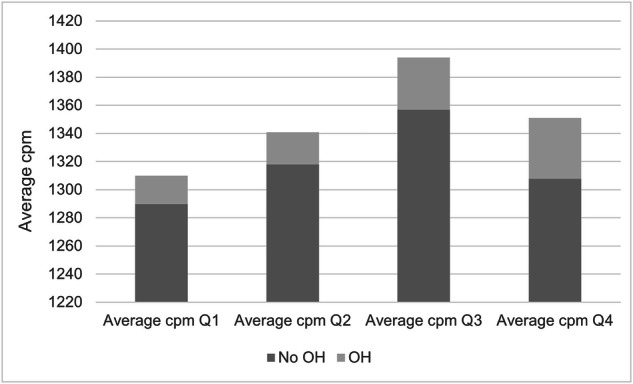 Figure 2
Peer Reviews
No public reviews on file for this paper yet. If you reviewed it on a platform where reviews are public (OpenReview, ICLR, NeurIPS, ICML), you can paste yours below so the community can read it here.
Videos
No videos yet. Explain this paper in a talk, walkthrough, or lecture? Add one.
Taxonomy
TopicsCardiovascular Syncope and Autonomic Disorders · Heart Rate Variability and Autonomic Control · Blood Pressure and Hypertension Studies