High-grade non-muscle invasive urothelial carcinoma in dogs and humans share specific expression of integrin α5β1
Roberta Lucianò, Maurizio Colecchia, Francesca Sanvito, Irene Locatelli, Chiara Venegoni, Alessia Di Coste, Davide Danilo Zani, Angelica Stranieri, Chiara Giudice, Antonella Rigillo, Matteo Gambini, Francesco Montorsi, Andrea Salonia, Marco Moschini, Massimo Alfano

TL;DR
This study finds that a specific protein, integrin α5β1, is uniquely expressed in high-grade bladder cancer in both humans and dogs, suggesting a shared marker for this disease.
Contribution
The study identifies integrin α5β1 as a specific marker for high-grade non-muscle invasive bladder cancer in both human and canine urothelial carcinoma.
Findings
Integrin α5β1 is specifically expressed in malignant cells of high-grade non-muscle invasive bladder cancer in 81% of human and all canine cases.
The marker is not expressed in non-tumor tissues or lower-grade bladder cancers in either species.
This shared expression suggests potential for targeted drug delivery and improved clinical strategies in both human and canine bladder cancer.
Abstract
Urothelial carcinoma (UC) accounts for more than 90% of all bladder cancers both in humans and dogs. Human and canine UC share many genetic mutations and tumor markers and clinical and therapeutic interventions. The unmet clinical needs are similar such as the early detection and treatment of the high-grade residual disease responsible for tumor recurrence and progression. The aim of this study was to investigate the expression of the α5β1 integrin and its specificity in high-grade UC in humans and dogs, a marker recently reported in the human bladder in situ carcinoma and murine model of orthotopic bladder cancer. Expression of integrin α5β1 was established by immunohistochemistry in 67 human bladder samples [four non-tumor tissues, 10 low-grade, 10 intermediate-grade, and 43 high-grade non-muscle invasive bladder cancer (NMIBC)] and 12 canine bladder tumor specimens. The α5β1…
Genes, proteins, chemicals, diseases, species, mutations and cell lines named across the full text — each resolved to its canonical identifier and authoritative record.
Click any figure to enlarge with its caption.
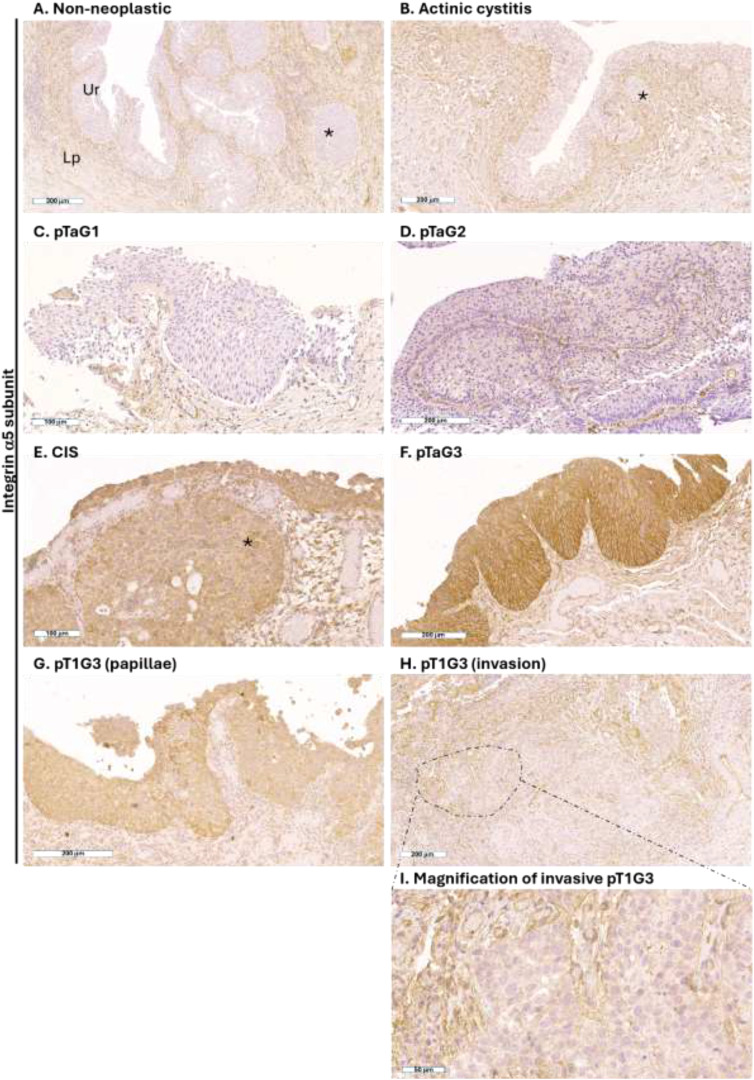 Figure 1
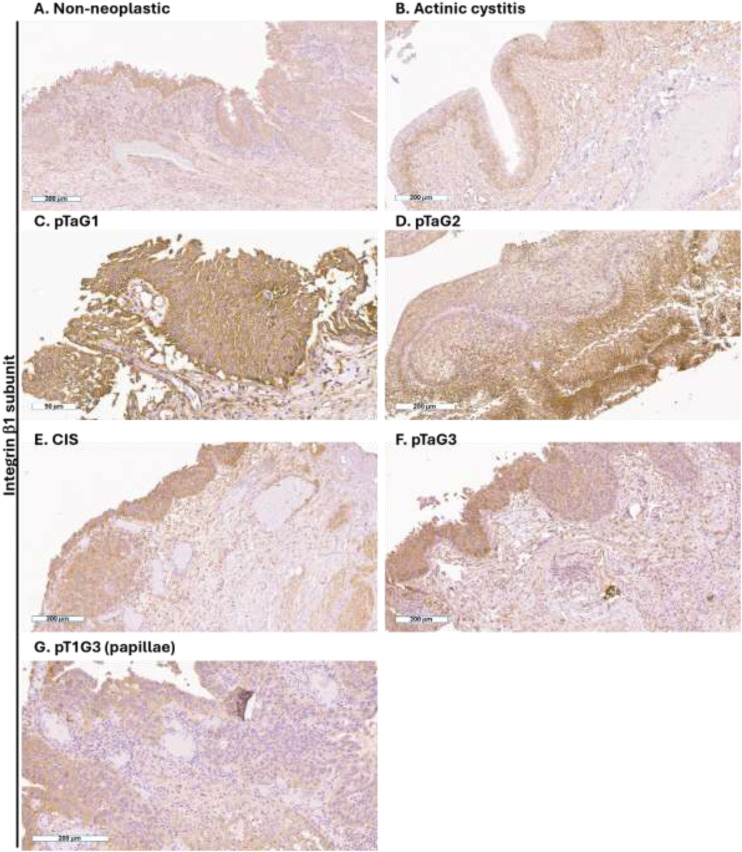 Figure 2
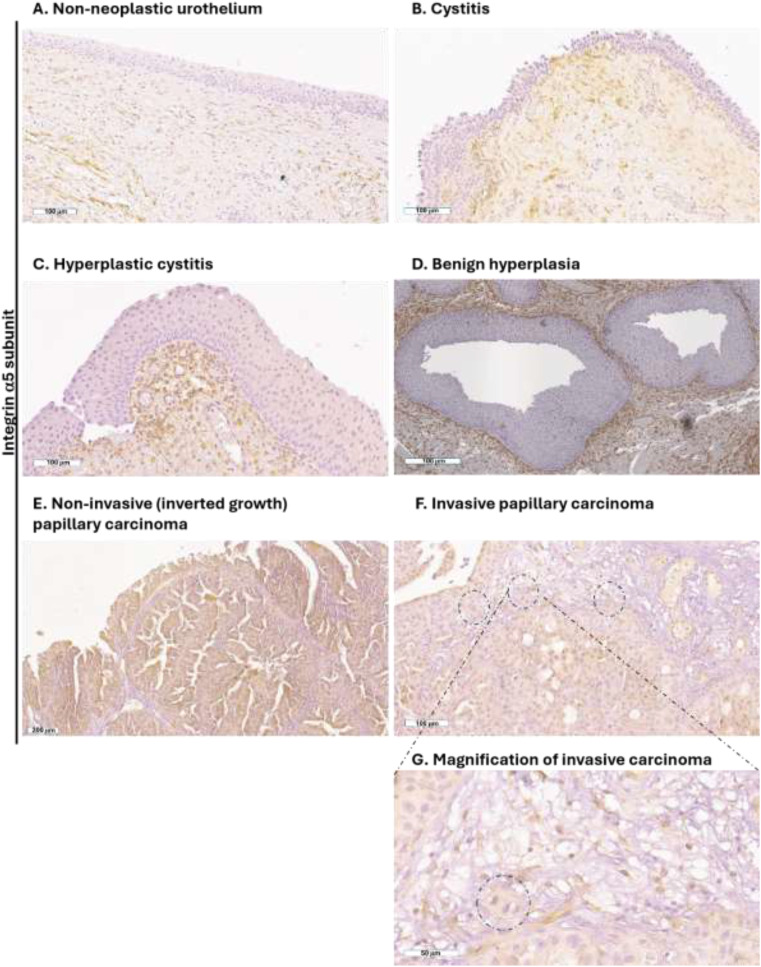 Figure 3
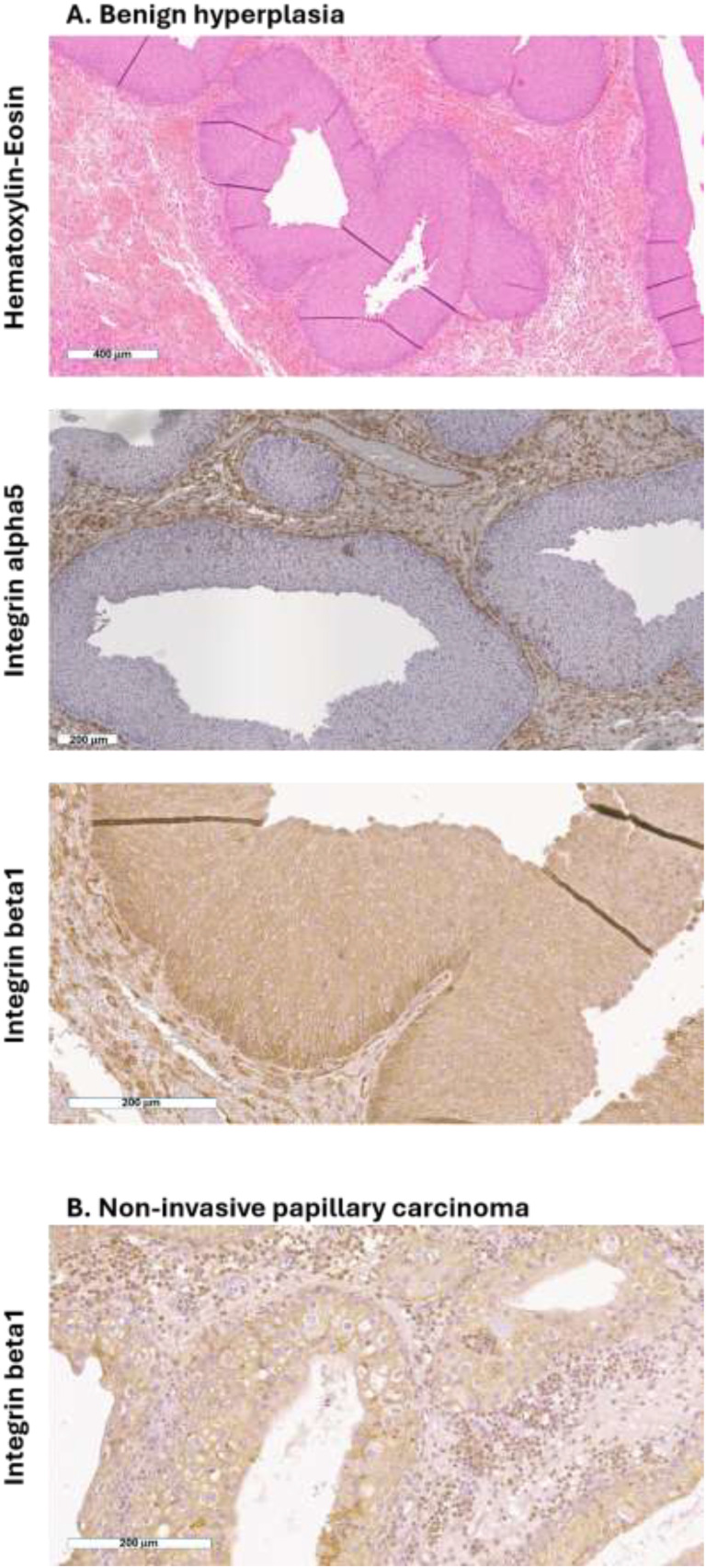 Figure 4
Peer Reviews
No public reviews on file for this paper yet. If you reviewed it on a platform where reviews are public (OpenReview, ICLR, NeurIPS, ICML), you can paste yours below so the community can read it here.
Videos
No videos yet. Explain this paper in a talk, walkthrough, or lecture? Add one.
Taxonomy
TopicsBladder and Urothelial Cancer Treatments · Epigenetics and DNA Methylation · Cancer Immunotherapy and Biomarkers