A Case of Perforated Peritonitis Caused by the Migration of a Single‐Puncture Gastric Wall Fixation Device Following Percutaneous Endoscopic Gastrostomy
Yuu Kodama, Yuji Mizokami, Hidemitsu Nishizawa, Gen Maeda, Gen Kimura, Yuzo Toyama, Shingo Asahara, Ryuji Nagahama, Hideki Sunagawa

TL;DR
An elderly man developed peritonitis after a medical device used in a stomach procedure migrated and caused a stomach wall tear.
Contribution
This is the first reported case of peritonitis caused by T-fastener migration outside the gastric wall.
Findings
A single-puncture gastric wall fixation device migrated and caused gastric perforation.
The patient required emergency surgery due to acute peritonitis six days after the procedure.
Abstract
We report an uncommon case of perforated peritonitis resulting from the migration of a single‐puncture gastric wall fixation device following percutaneous endoscopic gastrostomy. An 83‐year‐old male developed acute peritonitis 6 days post‐procedure, requiring emergency surgery. One fixation device was found embedded in the abdominal wall, and gastric perforation was identified. To our knowledge, this is the first reported case of peritonitis caused by T‐fastener migration outside the gastric wall.
Genes, proteins, chemicals, diseases, species, mutations and cell lines named across the full text — each resolved to its canonical identifier and authoritative record.
Click any figure to enlarge with its caption.
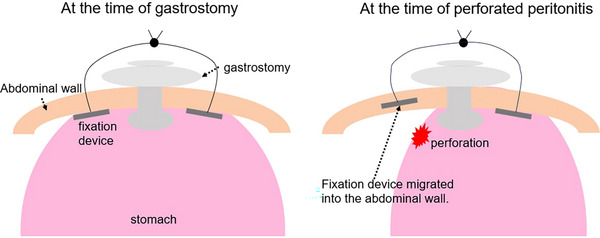 Figure 1
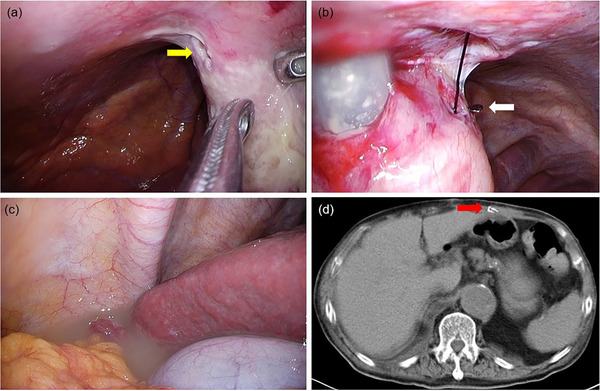 Figure 2
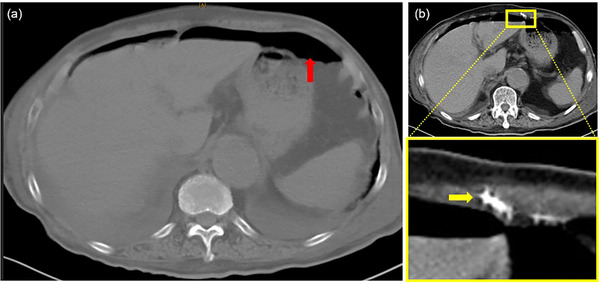 Figure 3
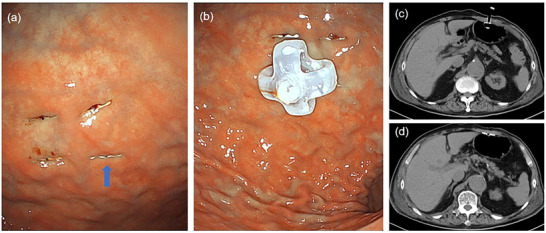 Figure 4
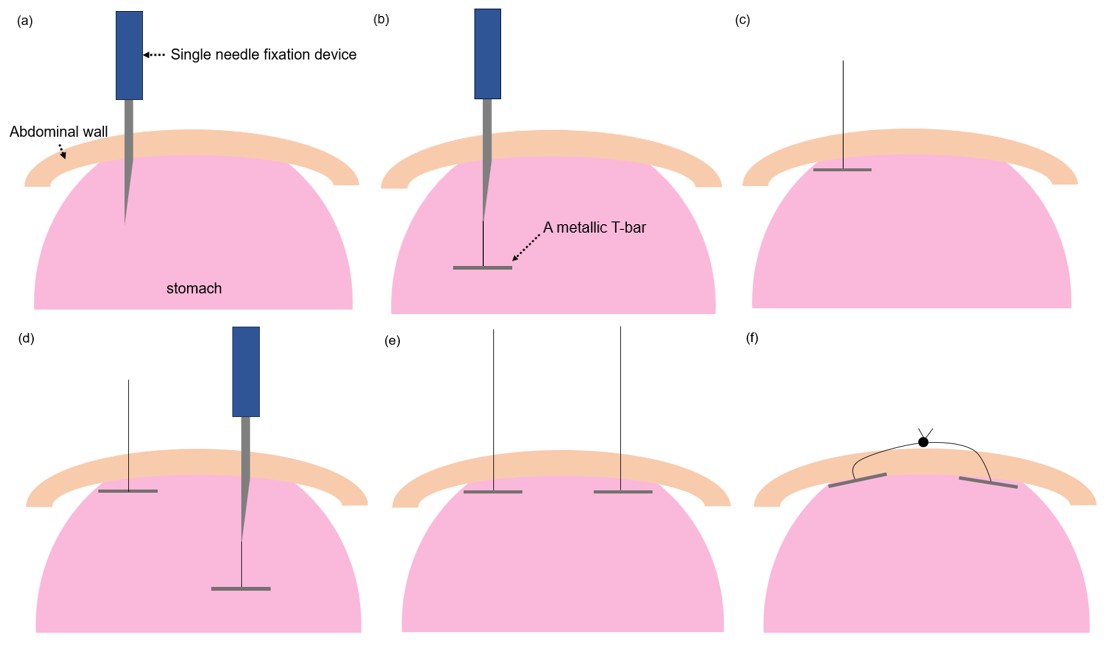 Figure 5
 Figure 6
Peer Reviews
No public reviews on file for this paper yet. If you reviewed it on a platform where reviews are public (OpenReview, ICLR, NeurIPS, ICML), you can paste yours below so the community can read it here.
Videos
No videos yet. Explain this paper in a talk, walkthrough, or lecture? Add one.
Taxonomy
TopicsClinical Nutrition and Gastroenterology · Esophageal and GI Pathology · Abdominal Surgery and Complications