Tracking free water in human body by magnetic resonance imaging: new insights on the network pathways
Lu Sun, Liting Wang, Le He, Changsong Liu, Fengshan Bai

TL;DR
This study uses MRI to map free water pathways in the human body, revealing a network similar to systems in the brain and peripheral tissues.
Contribution
The novel use of magnetic resonance hydrography to non-invasively visualize macroscopic free water networks in the human body.
Findings
Free water forms interconnected pathways visible via MRI under natural conditions.
Slow water flow was observed in saturation bands near blood vessels and nerves.
The network resembles peripheral interstitial and glymphatic systems, suggesting physiological and pathological relevance.
Abstract
Water is the most indispensable material for life. Although extensive research has been carried out at the microscopic level, including studies focusing on transport and molecular effects, the macroscopic water system of the human body is still unclear. In this study, the distribution of free water in the human body under natural conditions was non-invasively depicted by magnetic resonance hydrography sequences. Spatial saturation technique was used to explore the dynamic properties of free water. Imaging and post-processing results reveal that abundant free water formed a macroscopic network consisting of interconnected pathways. The slow flow trajectories of some waterways were captured in the saturation band. The free-water channels enclosed or bordered the space around blood vessels and nerves or traversed the tissues. This spatial relationship is similar to the fluid flow patterns…
Genes, proteins, chemicals, diseases, species, mutations and cell lines named across the full text — each resolved to its canonical identifier and authoritative record.
Click any figure to enlarge with its caption.
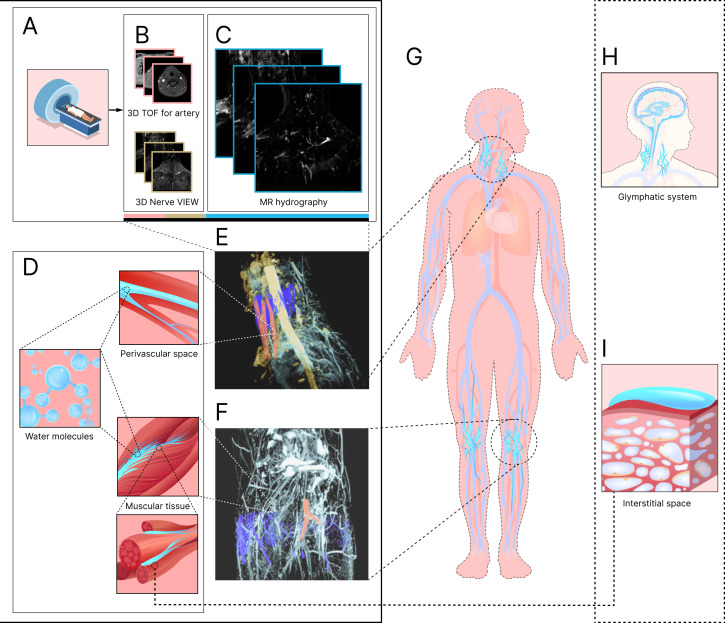 Figure 1
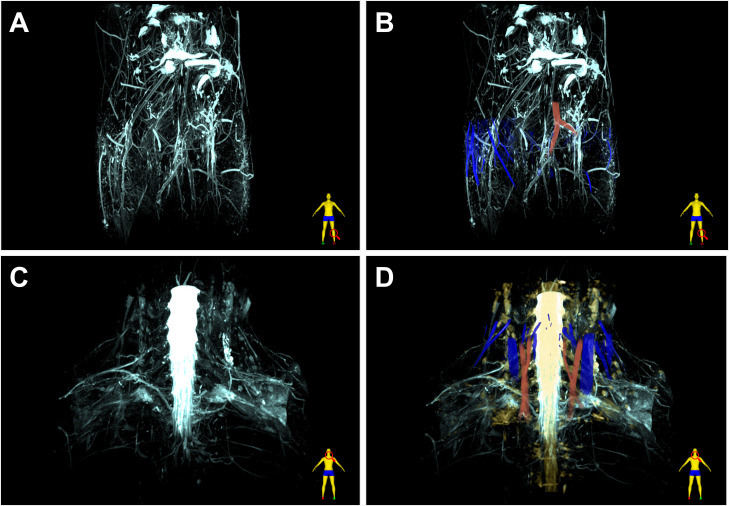 Figure 2
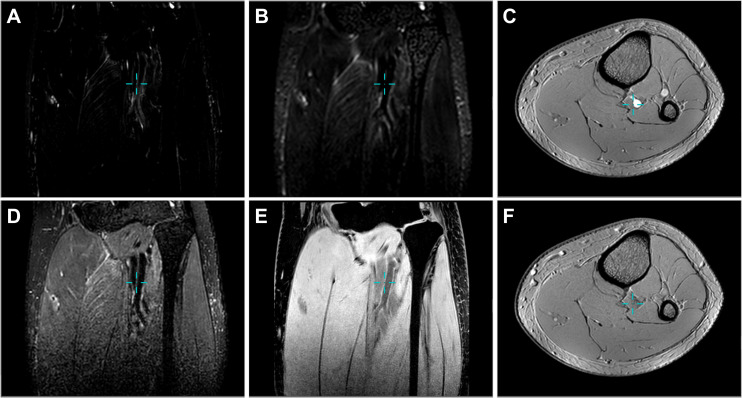 Figure 3
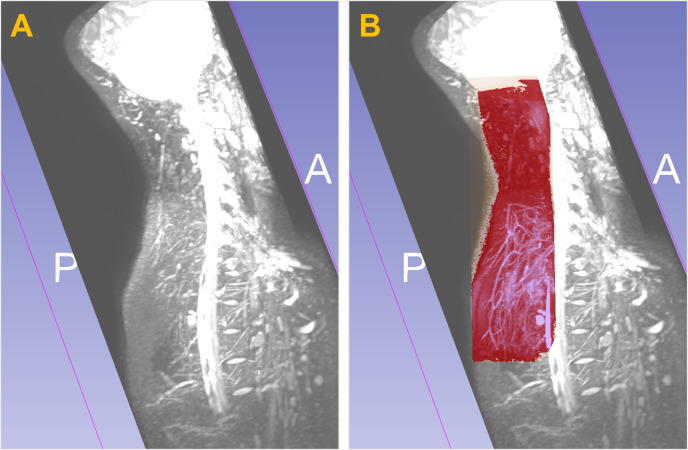 Figure 4
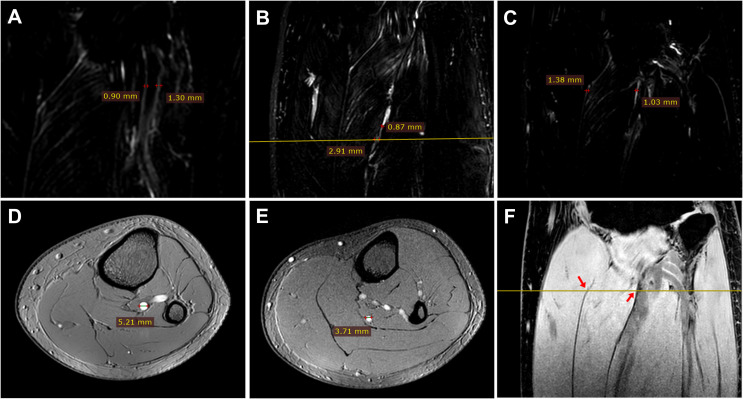 Figure 5
Peer Reviews
No public reviews on file for this paper yet. If you reviewed it on a platform where reviews are public (OpenReview, ICLR, NeurIPS, ICML), you can paste yours below so the community can read it here.
Videos
No videos yet. Explain this paper in a talk, walkthrough, or lecture? Add one.
Taxonomy
TopicsFunctional Brain Connectivity Studies · Advanced MRI Techniques and Applications · Atomic and Subatomic Physics Research