Prevalence of musculoskeletal symptoms from online learning during the COVID-19 epidemic: a systematic review and meta-analysis
Tanawat Gotum, Orawan Keeratisiroj, Wutthichai Jariya, Mati Pääsuke, Orawan Keeratisiroj, Anna Zalewska

TL;DR
This study finds that online learning during the pandemic is linked to high rates of neck and back pain in students.
Contribution
A meta-analysis quantifying musculoskeletal symptom prevalence in online learners during the pandemic.
Findings
Neck pain prevalence was 51% (95% CI: 36–66%) among online students.
Lower back pain prevalence was 51% (95% CI: 42–59%).
Shoulder pain prevalence was 36% (95% CI: 26–47%).
Abstract
The objective of this research was to assess the prevalence of musculoskeletal symptoms in online students. A systematic review and meta-analysis were performed by searching the PubMed, Cochrane Library, SCOPUS, Web of Science, ScienceDirect, ProQuest, CINAHL plus with full text, and Wiley InterScience databases. A total of 3,749 studies were identified between January 2020 and December 2023. The Joanna Briggs Tool for studies reporting prevalence was used to assess the quality of studies. Jamovi 2.4 was used in the meta-analysis. Sixteen studies were included and used for the meta-analysis. There were 6 studies of high quality, 9 studies of medium quality and 1 study of low quality. The areas with the highest prevalence of musculoskeletal pain were the neck (51%, 95% CI = 36–66%), lower back (51%, 95% CI = 42–59%) and shoulder (36%, 95% CI = 26–47%). The shift to online learning…
Genes, proteins, chemicals, diseases, species, mutations and cell lines named across the full text — each resolved to its canonical identifier and authoritative record.
Click any figure to enlarge with its caption.
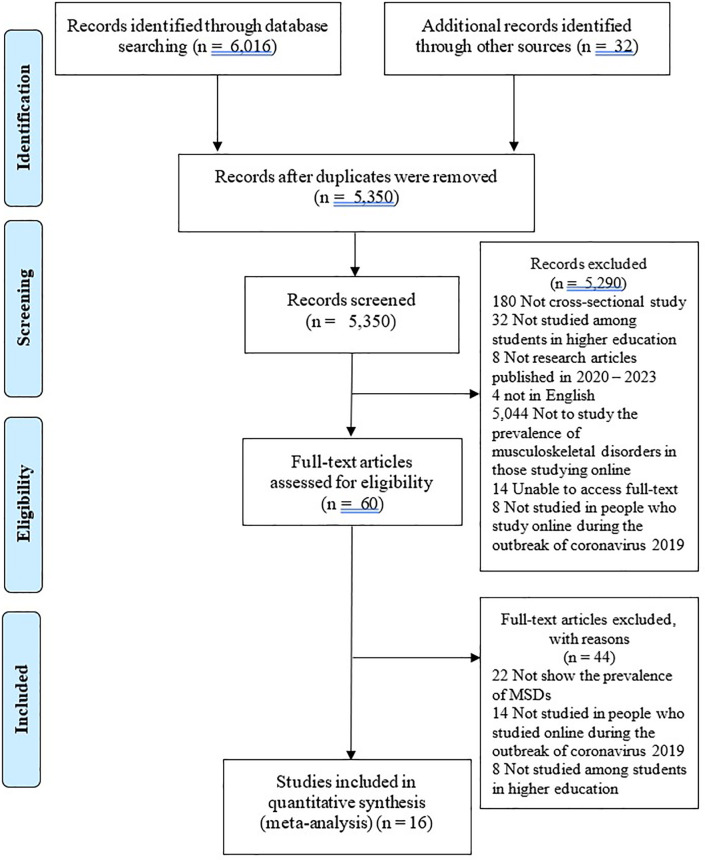 Figure 1
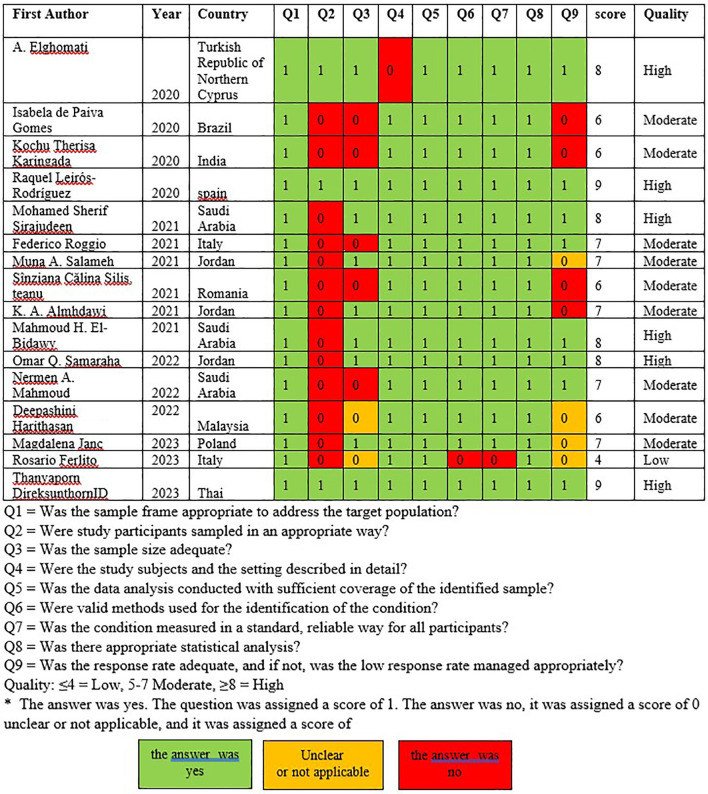 Figure 2
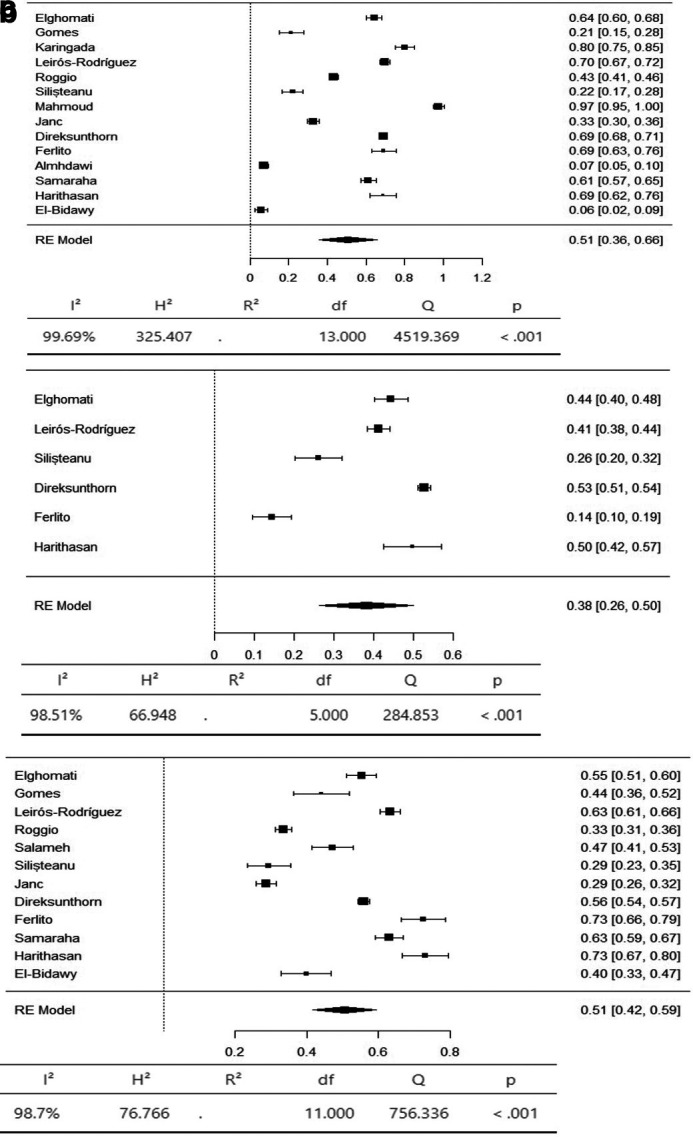 Figure 3
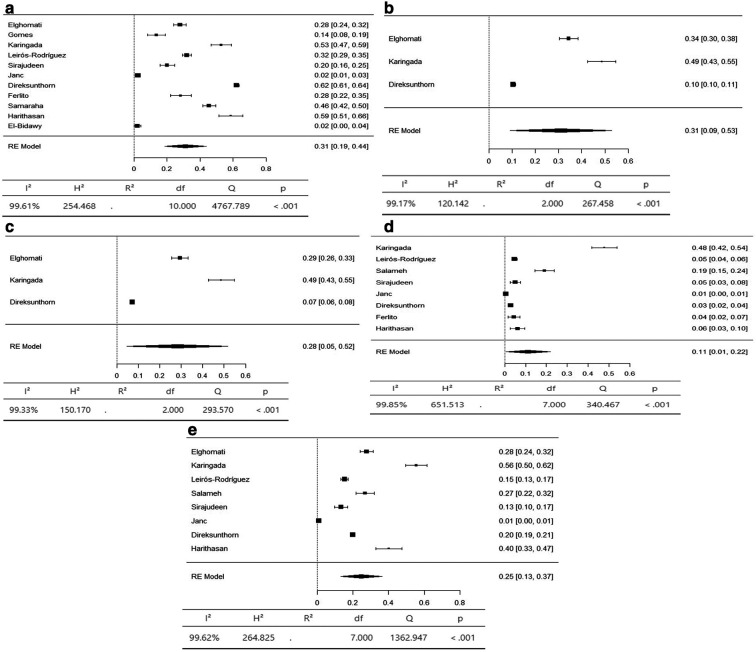 Figure 4
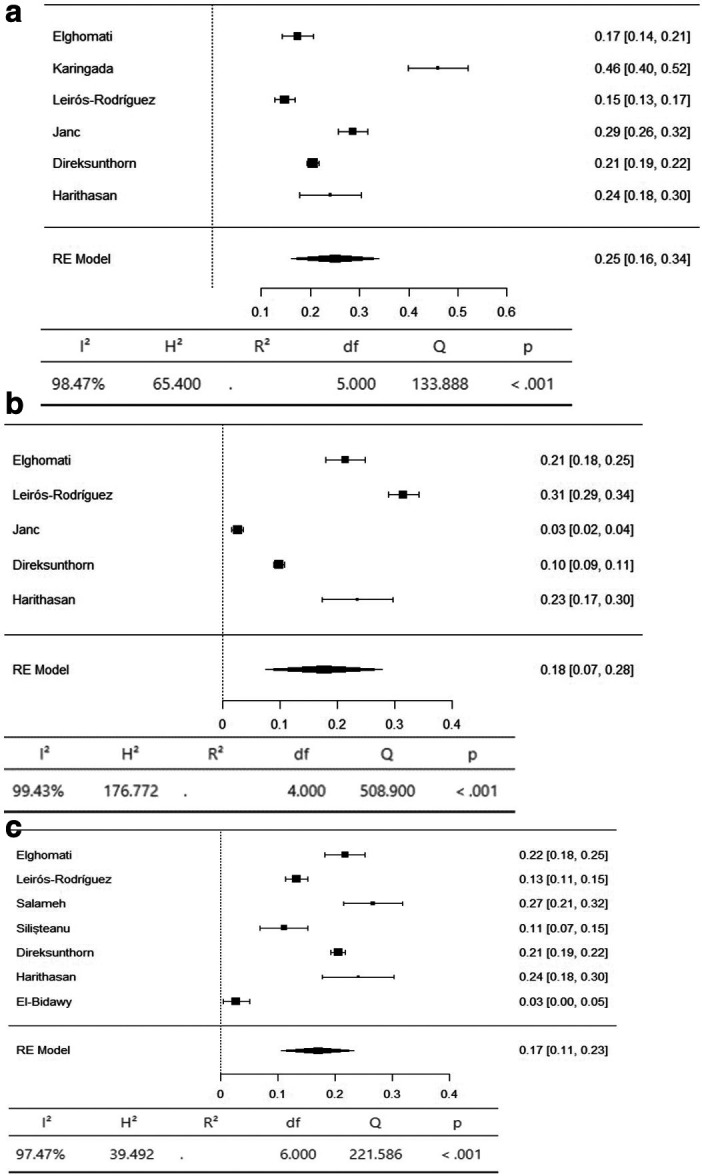 Figure 5
| No. | Author | Year | country | Period of data collection | Tool for MSD | Period for pain | Sampling frame | Sample size | Age (yrs) | Respons rate | Duration of use/online |
|---|---|---|---|---|---|---|---|---|---|---|---|
| 1 | Elghomati | 2022 | Turkish Republic of Northern Cyprus | 1 and 22October 2020 | Cornell musculoskeletal discomfort questionnaire | 1 week | The Eastern Mediterranean University (EMU) | 544 | 24.6 (range 17-33) | 90.67% | Smartphone
|
| 2 | Gomes | 2021 | Brazil | December 2020 | Standardized Nordic Musculoskeletal Questionnaire | 1 week | Medical student | 154 | 22 (Range 18-34) | 32% | >4 hours = 86 (55.8%); bettween 2 and 4 hours = 39 (25.3%); <2 hours = 29 (18.9%) |
| 3 | Karingada | 2022 | India | 15 July and 10 August 2020 | Self-reported MSD (Not standard tool) | 3 months | Undergraduate students in India | 261 | 19.32 ± 2.37 (Range 20-25) | 37.28% | |
| 4 | Leirós-Rodríguez | 2020 | spain | 16 March and 11 May, 2020 | Standardized
| 7 Days, 12 months & during lockdown months | Two Spanish universities (Universidad de León and Universidad de Valladolid | 1,198 | 22.8 ± 5.9 | 3.8% | |
| 5 | Roggio | 2021 | Italy | 8 February to 21 March 2021 | Not standard tool (
| 4/9/12 months | Italian university students | 1,654 | 22.51 ± 3.12 | 80.92% | |
| 6 | Salameh | 2022 | Jordan | July to September 2021 | Not standart tool | The study targeted undergraduate medical students | 282 | 18-22 | 100% | < 6 hr (49/282)
| |
| 7 | Silișteanu | 2022 | Romania | 2021 for a period of 5 months | Not standard tool | during online education | The College of Physical Education and Sports of the University of Suceava | 218 | 18-40 | 52.91% | |
| 8 | Sirajudeen | 2022 | Saudi Arabia | March and May 2021 | Standardized Nordic musculoskeletal questionnaire | 12 months | University students in the Kingdom of Saudi Arabia during the COVID-19 pandemic | 313 | 22.6 ±4.08 (Ranged 18–45) | 82.37% | About an hour 2 (0.6%)
|
| 9 | Nermen | 2022 | Saudi Arabia | April 2022 to July 2022 |
Vernon Mior’s Neck Disability Index (NDI) Roland–Morris Disability Questionnaire (for LBP) | Nursing students | 120 | 21.4 ± 1.7 | 100% | Mean of 9.1 (±4.6 SD) study hours per week
| |
| 10 | Magdalena Janc | 2023 | Poland | July 2020 and October 2020
| The Nordic Musculoskeletal Questionnaire | The study was student status at one of the three universities | 914 | 21.7 ± 2.2 | 100% | ||
| 11 | Direksunthorn | 2023 | Thai | April to June 2022 | The Nordic Musculoskeletal Questionnaire | Nursing students | 3,705 | 17–25 | 80.23% | ||
| 12 | Ferlito 1 | 2023 | Italy | 30 August 2021, and concluding on 4 October 2021 | Modified questionnaire | 1-6 months
| Study in physiotherapy at the universities of Catania, Messina, and Palermo | 201 | between 22 and 25 | 100% | Spending 15–22 hr per week distance learning, followed by 7–14 hr for 27.4%, 23–30 hr for 10.4%, and a small minority (4.5%) who spent more than 30 hr |
| 13 | Almhdawi | 2021 | Jordan | 2020 to June 2021 | Neck Disability Index (NDI) | Medical, dentistry, pharmacy, and nursing students at multiple Jordanian universities | 485 | 20.6 ± 2.0 | 100% | ||
| 14 | Samaraha | 2022 | Jordan | May and August 2021 | Modified Nordic Musculoskeletal questionnaire | 1 week and 12 months | Two Jordanian universities’ medical students | 593 | 20.89 ± 2.13 | 100% | |
| 15 | Harithasan | 2022 | Malaysia | The Standardized Nordic Questionnaire | 1 week | Undergraduate students | 179 | 18-25 | 100% | ||
| 16 | El-Bidawy | 2021 | Saudi Arabia | The self administered structured online questionnaire consisted of 25 questions | 6 weeks | Medical students | 188 | 18-30 | 100% |
| Anatomical site | Number of studies | Sample size | I 2 | Tau 2 | Effect size (95%CI) |
|
|---|---|---|---|---|---|---|
| Neck | 14 | 10,414 | 99.69 | 0.0818 | 0.36-0.66% | <0.001 |
| Upper back | 6 | 6,958 | 98.20 | 0.0168 | 0.26-0.47% | <0.001 |
| Lower back | 12 | 9,830 | 99.69 | 0.0818 | 0.49-0.51% | <0.001 |
| Shoulders | 11 | 8,250 | 99.61 | 0.0447 | 0.19-0.44% | <0.001 |
| Upper arms | 3 | 4,510 | 99.17 | 0.0368 | 0.09-0.53% | <0.001 |
| Elbows | 8 | 7,053 | 99.85 | 0.0236 | 0.0.1-0.22% | <0.001 |
| Lower arm | 3 | 4,510 | 99.33 | 0.0428 | 0.05-0.52% | <0.001 |
| Wrists/Hands | 8 | 7,396 | 99.62 | 0.0279 | 0.13-0.37% | <0.001 |
| Hips/Thighs | 6 | 6,801 | 98.47 | 0.0118 | 0.16-0.34% | <0.001 |
| Knees | 5 | 6,540 | 99.43 | 0.0132 | 0.07-0.28% | <0.001 |
| Ankles/Foots | 7 | 6,314 | 97.47 | 0.0068 | 0.11-0.23% | <0.001 |
Peer Reviews
No public reviews on file for this paper yet. If you reviewed it on a platform where reviews are public (OpenReview, ICLR, NeurIPS, ICML), you can paste yours below so the community can read it here.
Videos
No videos yet. Explain this paper in a talk, walkthrough, or lecture? Add one.
Taxonomy
TopicsOccupational Health and Performance · Musculoskeletal pain and rehabilitation · Ergonomics and Musculoskeletal Disorders
Introduction
The coronavirus disease 2019 (COVID-19) pandemic has emerged as a global health crisis due to its widespread transmission and ease of airborne contagion. With more than 703 million confirmed cases and 774 million fatalities worldwide as of December 31, 2023, ^ 1 ^ countries around the globe have implemented stringent measures to curb the spread of the virus. Among these measures, city lockdowns have emerged as a prominent strategy to contain the COVID-19 pandemic. However, these lockdowns have significantly impacted the daily lives of individuals worldwide. ^ 2 ^ City lockdowns or lockdowns restrict public movement, border crossings, and dine-in services at restaurants, fundamentally altering people’s daily routines globally. The impact extends to both work and education, with working professionals transitioning to remote work arrangements and students shifting to online learning platforms. ^ 3 ^
As the COVID-19 pandemic continues to spread unabated across many countries, including Thailand, educational institutions have adopted online learning strategies to mitigate the risk of infection. ^ 4 ^ Online learning has significantly impacted students’ daily lives, as they engage in virtual instruction via electronic devices connected to the internet. Instead of traditional classroom settings, students spend time in front of computers, smartphones, or tablets, typically for 6-8 hours per day, 3-5 days per week. This shift to remote learning has led to a substantial decrease in physical activity among students. A study by the Thai Center for Knowledge Development on Physical Activity revealed that even in normal circumstances, Thai children engage in sedentary behavior for more than 13 hours per day. However, the COVID-19 pandemic has exacerbated this issue, with sedentary behavior increasing to 14 hours per day for Thai children. This sedentary lifestyle is largely attributed to the shift toward online learning and prolonged screen time. ^ 5 ^ The World Health Organization recommends that children engage in at least 60 minutes of physical activity daily. ^ 6 ^ Data collected in Thailand over the past decade indicate that only 26% of Thai children meet these physical activity guidelines. Notably, during the COVID-19 pandemic, since 2020, the proportion of Thai children meeting the recommended physical activity standards has further declined to 17%. ^ 5 ^ International studies have also documented a decline in physical activity among university students and younger people during the COVID-19 pandemic. A study in Indonesia revealed that university students’ physical activity levels decreased to an average of 60.92 minutes per week during the pandemic. ^ 7 ^ Similarly, a German study involving 1,711 children and adolescents revealed a reduction in sports participation among those aged 4-17 years during the pandemic. ^ 8 ^ Furthermore, an Italian study revealed a decrease in physical activity among university students during the pandemic, with lower levels of physical activity associated with an increased risk of musculoskeletal pain onset and worsening pain symptoms. ^ 9 ^
Prolonged physical inactivity or maintaining a static posture for extended periods can lead to musculoskeletal problems, including fatigue, localized pain, and other symptoms. ^ 10 ^ This issue extends beyond students and affects teachers as well. Research investigating musculoskeletal disorders (MSDs) among students engaged in online learning during the COVID-19 pandemic has revealed an increased prevalence of muscle aches and pains among this population. A study involving a sample of 261 students who transitioned to online learning during the pandemic revealed that 80% of participants reported experiencing headaches, eye strain, and neck pain following online classes. ^ 11 ^ A study in Iran compared musculoskeletal symptoms among 220 faculty members at Yazd University before and during the COVID-19 pandemic using the Standardized Nordic Questionnaire. The findings revealed a statistically significant increase in musculoskeletal complaints among university faculty during the pandemic. ^ 12 ^ MSDs are a prevalent global health concern. A study in the United States involving 654 university students reported a 12.5% prevalence of joint disorders among participants. ^ 13 ^ Another study among computer-using university students reported that 23% of respondents had used medication to manage musculoskeletal symptoms. ^ 14 ^ A South African study involving 145 participants revealed a high prevalence of musculoskeletal pain (89.7%) among university students. ^ 15 ^ Additionally, a Chinese study among first-year university students revealed a significant association between prolonged internet use and musculoskeletal pain. ^ 16 ^ These findings collectively demonstrate the increased prevalence of MSDs among online learners across various countries.
Musculoskeletal injuries can be classified into two main categories: acute and cumulative. Acute injuries result from a direct impact or force, such as a blow or crush, while cumulative injuries develop gradually over time due to repetitive or prolonged postures or activities. ^ 17 ^ Online learning, for instance, can contribute to cumulative musculoskeletal injuries. A study in Jordan examining neck pain among online learners using smartphones revealed that 43.9% of students who spent 10-30% of their day engaged in online learning reported neck pain. ^ 18 ^ Additionally, a study investigating the causes of musculoskeletal symptoms during lockdown measures revealed that among 319 participants aged 18-60 years who were confined to their homes, the most common reasons for pain were increased phone usage (43.7%), prolonged sitting (41.3%), and lack of physical activity (29.4%). The most prevalent pain locations were the lower back (62.2%), neck (48%), and upper back (35.4%). ^ 19 ^ MSDs can cause pain in muscles, tendons, bones, or joints throughout the body and can significantly impact daily life if severe. These disorders can affect individuals of all ages, including children, not just those in the working population. ^ 20 ^
MSDs have been extensively studied in various occupations, including athletes (e.g., runners, ^ 21 ^ ballet dancers ^ 22 ^ and healthcare workers (e.g., dentists, ^ 23 ^ nurses ^ 24 ^). However, a systematic review and meta-analysis of MSD prevalence among online learners during the COVID-19 pandemic has not yet been conducted. Therefore, this study aimed to systematically review and meta-analyze the prevalence of MSDs among online learners during the COVID-19 pandemic to quantify the magnitude of the problem and inform future research directions.
Methods
Protocol and registration
This study is reported following the NEW Preferred Reporting Items for Systematic reviews and Meta-Analyses (PRISMA) guidelines. ^ 25 ^ The study protocol was registered in the International Prospective Register of Systematic Reviews (PROSPERO) (Registration number: CRD42022335229).
Search strategies
The search for relevant studies was conducted in electronic databases, including Medline via PubMed, Cochrane Library, Wiley InterScience, SCOPUS, ProQuest, and SciendDirect. The search included studies published between January 2020 and December 2023. Keywords were searched individually and in combination using Boolean operators such as “OR” and “AND.” The following medical subject headings (MeSH) were used: Prevalence, Musculoskeletal, Low back pain, School student, College student, University student, Adolescent, Online Learning, Distance Education, Distance Learning, Online Education, Remote Learning, COVID-19, Computer, and Smartphone (Extended data: Supplementary file 1).
The eligibility criteria
Research articles meeting the following criteria were included in the study: 1) target population: university students; 2) study context: online learning during the COVID-19 pandemic; 3) research objective: to investigate the prevalence of MSDs among online learners; 4) study design: cross-sectional study; 5) publication date: January 2020 to December 2023; 6) language: English; and 7) publication type: peer-reviewed journal.
Exclusion criteria: 1) Nonreporting of prevalence: Research articles that did not report the prevalence of MSDs among online learners were excluded. 2) Inaccessible full-text: Research articles for which the full text could not be accessed were excluded.
Study Selection and Data Extraction
Two independent reviewers (TG and OK) screened the search results, initially assessing potential studies based on titles and abstracts. For studies that appeared to meet the inclusion criteria, the full-text articles were retrieved. Any discrepancies in the screening reports were resolved through consensus with a third reviewer (WJ).
Data were extracted from articles that met the inclusion and exclusion criteria for further analysis. The data extracted included author, year, country, sampling frame, study sample size, response rate, period of data collection, tool for MSDs, period for pain, prevalence of symptoms, and duration of use/online.
Quality Assessment of Included Studies
The Joanna Briggs Institute (JBI) critical appraisal checklist for prevalence studies was used to evaluate the methodological quality of the included studies. ^ 26 ^ This tool assesses studies based on nine questions. A score of 1 is awarded for each “yes” answer, while a score of 0 is given for “no,” “unclear,” or “not applicable” responses. Overall quality scores ≤ 4, 5-7, and ≥ 8 were considered low, moderate, and high, respectively. Two reviewers (TG and OK) independently conducted the quality assessments, and any discrepancies were resolved through discussion.
Data Analysis
Jamovi 2.4 was used in the meta-analysis. Prevalence estimates for MSDs were calculated using percentages and 95% confidence intervals (CIs). Heterogeneity of the included studies was assessed using Cochran’s Q test with a significance level of 0.05. If there was significant heterogeneity between studies ( p value < 0.05), a random effects model was used to estimate the pooled prevalence. For studies with nonsignificant heterogeneity ( p value ≥ 0.05), a fixed-effects model was used to calculate the pooled prevalence.
Publication bias was evaluated using funnel plots, Egger’s test, with a significance level of 0.05. If publication bias was detected, efforts were made to identify and report potential sources of bias.
Results
Study selection and characteristics
The search yielded 6,016 articles and an additional 32 articles from the reference checking of the collected studies. After checking for duplicates and applying the inclusion and exclusion criteria, 5,350 articles remained. Based on the title and abstract, 60 articles remained. After a thorough review of the full-text articles, 16 articles remained. These were entered into the article assessment and meta-analysis ( Figure 1). ^ 25 ^
*The PRISMA flow chart of the study selection process.
25*
As shown in Table 1, the characteristics of the study population were as follows: medical students (n = 5), ^ 27 ^ ^–^ ^ 31 ^ nursing students (n = 3), ^ 31 ^ ^–^ ^ 33 ^ dental students (n = 1), ^ 29 ^ pharmacy students (n = 1), ^ 29 ^ physical therapy students (n = 1), ^ 34 ^ physical education and sports students (n = 1), ^ 35 ^ and university students without specified faculty (n = 6). ^ 32 ^ ^,^ ^ 36 ^ ^–^ ^ 40 ^ The sample sizes of these studies ranged from 120 to 3,705 participants. The mean age was 22 years (Extended data: Supplementary file 2).
Study quality
Assessment of the research quality by two researchers (TG and OK) revealed that there were six high-quality studies, nine moderate-quality studies, and one low-quality study. The studies investigating musculoskeletal symptoms were conducted in six European countries, ^ 34 ^ ^–^ ^ 36 ^ ^,^ ^ 38 ^ ^,^ ^ 39 ^ ^,^ ^ 41 ^ nine Asian countries, ^ 29 ^ ^–^ ^ 33 ^ ^,^ ^ 37 ^ ^,^ ^ 40 ^ ^,^ ^ 42 ^ and one South American country ( Figure 2). ^ 27 ^
Assessment of study quality.
Meta-analysis
A meta-analysis was conducted to determine the prevalence of musculoskeletal symptoms in 9 body regions according to the Standardized Nordic Questionnaire (SNQ). ^ 43 ^ Additional body regions were added to align with the prevalence reported in the reviewed articles, including the upper arm and lower arm, for a total of 11 regions. The results are presented for three groups: 1) axial body: neck, upper back, and lower back; 2) upper limbs: shoulder, upper arm, lower arm, elbow, and wrist/hand; and 3) lower limbs: hip/thigh, knee, and ankle/foot.
The axial body region had the highest prevalence of musculoskeletal symptoms, with the neck (95% CI 36-66%) and lower back (95% CI 42-59%) having an equal prevalence of 51%. The prevalence of hypertension in the upper back was 36% (95% CI 26–47%) ( Figure 3). The upper limbs had the highest prevalence of musculoskeletal symptoms, with the shoulder (95% CI 19-44%) and upper arm (95% CI 9-53%) having an equal prevalence of 31%. The lower arm had a prevalence of 28% (95% CI 5-52%). The elbow had the lowest prevalence of musculoskeletal symptoms, at 11% (95% CI 1 - 22%) ( Figure 4). The lower limbs had the highest prevalence of injuries, with the hip having a prevalence of 25% (95% CI 16–34%). The prevalence of knee involvement was 18% (95% CI 7-28%), and the prevalence of ankle/foot involvement was 17% (95% CI 11-23%) ( Figure 5).
Forest plots displaying the meta-analysis for the prevalence of symptoms in the axial body.
Forest plots displaying the meta-analysis for the prevalence of symptoms in the upper limbs.
Forest plots displaying the meta-analysis for the prevalence of symptoms in the lower limbs.
Subgroup analyses were conducted for the axial body (neck, upper back, lower back) to examine the heterogeneity between studies. The heterogeneity was not significant for any of the subgroups (I ^2^ = 99.69-98.20). Egger’s regression test was used to assess publication bias. No evidence of publication bias was found in the meta-analysis of the overall prevalence of pain ( p value < 0.001). Similarly, no evidence of publication bias was found for the upper limbs (shoulder, upper arm, elbow, forearm, wrist/hand) (I ^2^ = 99.85-99.17, p value < 0.001) or lower limbs (hip, knee, lower leg) (I ^2^ = 99.43-97.47, p value < 0.001) (Extended data: Supplementary file 3 and Table 2).
Discussion
This systematic review and meta-analysis aimed to investigate the prevalence of musculoskeletal symptoms in different body regions among individuals engaged in online learning during the COVID-19 pandemic. A total of 16 studies were included, comprising six high-quality studies, nine moderate-quality studies, and one low-quality study. The studies were conducted in six European countries, nine Asian countries, and one South American country. The sample sizes ranged from 120 to 3,705 participants.
The results of this meta-analysis on the prevalence of musculoskeletal symptoms among individuals engaged in online learning during the COVID-19 pandemic revealed that the most frequently reported pain locations were the neck, lower back, and shoulders. The least frequently reported pain locations were the upper arm, lower arm, and knee. These findings are consistent with previous studies on musculoskeletal injuries among work-from-home employees during the COVID-19 pandemic, which reported prevalence rates of 20.3-76.9% for neck pain, 19.5-74.1% for lower back pain, and 3.0-72.9% for shoulder pain. ^ 44 ^ Additionally, a study conducted among students and faculty members of the Faculty of Public Health in Thailand reported a 34% prevalence of upper arm pain during periods of online learning and work from home, ^ 45 ^ which is similar to the findings of our meta-analysis.
For the lower limbs, the results of this study revealed that the most prevalent musculoskeletal symptom was located in the hip, with an overall prevalence of 25% [95% confidence interval (CI) 16–34%]. This finding is consistent with a study conducted among online teachers during the COVID-19 pandemic in Brazil, which reported a prevalence of hip pain of 25%. ^ 46 ^ This is likely due to prolonged sitting in the same position during online learning, which can lead to more hip pain than in other areas, such as the knee and ankle/foot, which are more commonly associated with pain in athletes. ^ 47 ^
Musculoskeletal pain in students can arise from various factors, including poor posture, prolonged sitting or standing, improper ergonomics, ^ 48 ^ stress, ^ 40 ^ and lack of physical activity. ^ 9 ^ Studies investigating online learning environments suggest a potential association between prolonged screen time and poor posture. ^ 28 ^ ^,^ ^ 49 ^ This finding aligns with established research demonstrating that maintaining a hunched posture during prolonged reading, texting, or laptop use can strain muscles and lead to pain in the neck, back, and shoulders. ^ 39 ^ ^,^ ^ 50 ^ ^,^ ^ 51 ^ Notably, the current study did not examine the specific risk factors associated with musculoskeletal pain in this online learning population.
Studies conducted prior to the COVID-19 outbreak have established the prevalence of musculoskeletal pain. ^ 52 ^ However, the COVID-19 pandemic appears to have significantly increased its prevalence. Reports indicate an increase in the prevalence of musculoskeletal pain, ranging from 15.60% to 64.40%, possibly attributable to increased screen time and reduced physical activity levels associated with lockdowns. ^ 53 ^ While respiratory complications are well established in patients with COVID-19, musculoskeletal manifestations are increasingly being recognized. ^ 54 ^ ^,^ ^ 55 ^ During the acute phase, patients with COVID-19 may experience fatigue, myalgia, arthralgia, back pain, and chest pain. These symptoms can also persist after contracting COVID-19. ^ 56 ^ The specific causes of musculoskeletal involvement in patients with COVID-19, potentially including viral effects, medications, and immobilization, remain under investigation. ^ 57 ^ ^,^ ^ 58 ^ Emerging evidence suggests an increased prevalence of musculoskeletal symptoms during COVID-19 infection.
This systematic review has some limitations that should be considered. First, the causes of musculoskeletal pain resulting from online learning have not yet been adequately studied, as insufficient and diverse research is available. However, there is a clear understanding of the causes of MSDs from online learning, which are primarily related to physical ergonomic factors. ^ 59 ^ Second, the study designs included in this review were cross-sectional, which means that the duration of online learning that leads to musculoskeletal pain could not be analyzed. Finally, this study could not analyze ergonomic factors to identify the types of devices involved. Therefore, further research is needed to investigate the duration of online learning that contributes to musculoskeletal pain. This information could be used to develop guidelines for dividing online learning into appropriate periods throughout the day to minimize musculoskeletal injuries among students. Additionally, further research is needed to examine the types of electronic devices that have the greatest impact on musculoskeletal injuries. This information could be used to inform recommendations for device selection and usage to reduce the risk of musculoskeletal injuries among students.
Conclusion
The shift to online learning is another factor that may affect musculoskeletal pain in students. However, there is insufficient evidence to determine the specific duration of online learning per day that begins to impact the presence of musculoskeletal injuries in learners.
Implications for Rehabilitation
- •Setting up an ergonomic workspace at home (chair height, monitor position, etc.) and maintaining good posture while using electronic devices.
- •Encourage teachers to incorporate short physical activity breaks into online lessons. This could involve simple stretches, standing desks, or short bursts of jumping jacks.
- •Develop resources or guidelines for students on recognizing early signs of discomfort and appropriate self-care strategies (e.g., applying heat/ice, modifying postures, etc.).
Author contributions
TG, OK and WJ designed the study. TG and OK acquired the data. TG and OK analyzed and interpreted the data. TG and OK wrote the initial draft. All authors critically reviewed and approved the final manuscript. All authors had final responsibility for the decision to submit for publication.
The reference list from the paper itself. Each links out to its DOI / PubMed record.
- 1organization wh: WHO coronavirus (COVID-19) dashboard. World health organization;2022 [updated 31 May 2022]. Reference Source
- 2Onyeaka H Anumudu CK Al-Sharify ZT : COVID-19 pandemic: a review of the global lockdown and its far-reaching effects. Sci. Prog. 2021;104(2):00368504211019854. 10.1177/00368504211019854 34061685 PMC 10454957 · doi ↗ · pubmed ↗
- 3Department of Disease Control: The Department of Disease Control reveals guidelines for people living in the most controlled areas. As for provinces with no reported cases Please take strict measures. 2021 [updated 4 January 2021; cited 2024 14 April]. Reference Source
- 4Office of the Basic Education Commission: Guidelines for organizing distance learning during the COVID-19 outbreak situation. 2020 20 May [cited 2024 14 April]:[2 p.]. Reference Source
- 5Department of Mental Health: Thai Health Promotion Foundation brainstorms with partners to find a solution to the problem of stressed children studying online. 2021 [cited 2024 14 April]. Reference Source
- 6Bull FC Al-Ansari SS Biddle S : World Health Organization 2020 guidelines on physical activity and sedentary behaviour. Br. J. Sports Med. 2020;54(24):1451–62. Epub 2020/11/27. 10.1136/bjsports-2020-102955 33239350 PMC 7719906 · doi ↗ · pubmed ↗
- 7Wibowo DMRRA : Changes in physical activity among university students in Indonesia from before to during the COVID-19 pandemic: a retrospective cohort study. Journal of Population and Social Studies (JPSS). 2022;30:134.
- 8Schmidt SCE Anedda B Burchartz A : Physical activity and screen time of children and adolescents before and during the COVID-19 lockdown in Germany: a natural experiment. Sci. Rep. 2020;10(1):21780. Epub 20201211. 10.1038/s 41598-020-78438-4 33311526 PMC 7733438 · doi ↗ · pubmed ↗