Knowledge, Attitude, and Practice of Over-the-Counter Drug Use Among Medical Students in Fakeeh College: A Cross-Sectional Study
Ahmed M Faheem, Maha S Bamatraf, Shorouq M Mohammed, Nourah A Al Ghamdi, Reem N Rayani, Maniah M Alharbi

TL;DR
This study examines how medical students at Fakeeh College use over-the-counter drugs, finding that most use them but have mixed attitudes about their safety.
Contribution
The study provides new insights into the KAP of OTC drug use among medical students in Saudi Arabia.
Findings
75.9% of medical students used OTC drugs, with females and those aged 21-23 being the most common users.
Approximately 61.6% of students had a neutral attitude toward OTC drugs, while only 12.9% had a negative attitude.
Senior medical students showed better attitudes toward OTC drugs compared to other students.
Abstract
Background Over-the-counter (OTC) drugs are medicines sold without a medical prescription to treat common and temperate medical conditions. Unfortunately, the misconception that OTC drugs are devoid of any harm to users has become established as a commonly held belief. While it is true that most of them are relatively safe, if administered in moderation, misuse is usually associated with the intake of excessive amounts and is burdened with life-threatening consequences. This study aimed to assess the knowledge, attitude, and practice (KAP) of OTC medication use and related factors among medical students at Fakeeh College for Medical Sciences in Jeddah, Saudi Arabia. Subject and methods This cross-sectional study was conducted among medical students at Fakeeh University in Jeddah, Saudi Arabia. A self-administered questionnaire was distributed among medical students using an online…
Genes, proteins, chemicals, diseases, species, mutations and cell lines named across the full text — each resolved to its canonical identifier and authoritative record.
Click any figure to enlarge with its caption.
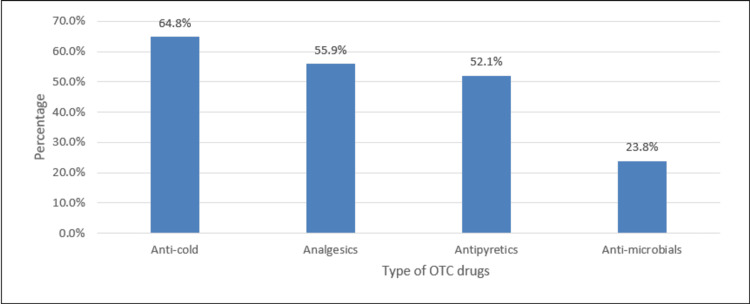 Figure 1
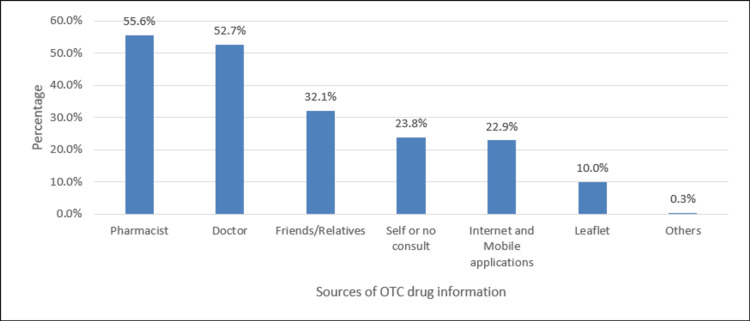 Figure 2
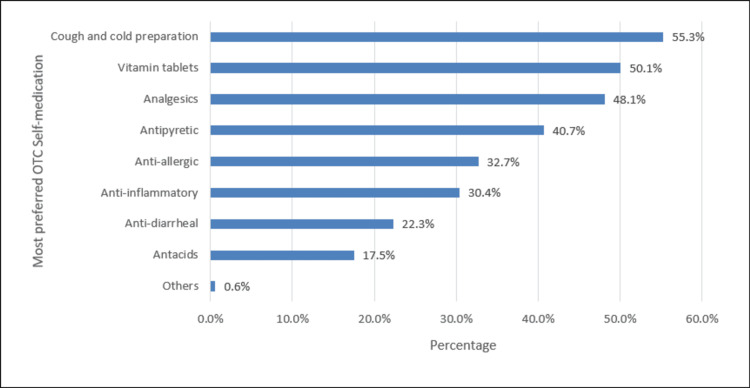 Figure 3
| Study variables | N (%) |
| Age group | |
| 18 – 20 years | 97 (27.8%) |
| 21 – 23 years | 183 (52.4%) |
| 24 – 26 years | 48 (13.8%) |
| >26 years | 21 (06.0%) |
| Gender | |
| Male | 47 (13.5%) |
| Female | 302 (86.5%) |
| Marital status | |
| Single | 327 (93.7%) |
| Married | 20 (05.7%) |
| Divorced | 02 (0.60%) |
| Academic field of study | |
| Medicines | 225 (64.5%) |
| Nursing | 79 (22.6%) |
| Laboratory science | 20 (05.7%) |
| Pharmacy | 25 (07.2%) |
| Year of Study | |
| First Year | 27 (07.7%) |
| Second Year | 95 (27.2%) |
| Third Year | 60 (17.2%) |
| Fourth Year | 60 (17.2%) |
| Fifth Year | 42 (12.0%) |
| Sixth Year | 65 (18.6%) |
| Statement | N (%) |
| Medicines are always used on the prescription of a doctor | |
| Yes | 186 (53.3%) |
| No | 153 (43.8%) |
| I don't know | 10 (02.9%) |
| All OTC drugs are safe and effective | |
| Yes | 129 (37.0%) |
| No | 180 (51.6%) |
| I don't know | 40 (11.5%) |
| OTC drugs are usually used for treating diseases like: | |
| Chronic Illnesses | 70 (20.1%) |
| Minor Illnesses and Injuries | 233 (66.8%) |
| I don't know | 46 (13.2%) |
| OTC drugs are approved for self-care | |
| Yes | 208 (59.6%) |
| No | 75 (21.5%) |
| I don't know | 66 (18.9%) |
| OTC drugs could be used after their expiry date | |
| Yes | 70 (20.1%) |
| No | 241 (69.1%) |
| I don't know | 38 (10.9%) |
| OTC drugs can cause side effects | |
| Sometimes cause side-effects | 246 (70.5%) |
| Mostly cause side-effects | 69 (19.8%) |
| Never cause side-effects | 18 (05.2%) |
| I don't know | 16 (04.6%) |
| While using OTC drugs, caution should be taken mostly during † | |
| Pregnancy | 259 (74.2%) |
| Lactation | 200 (57.3%) |
| Elderly | 166 (47.6%) |
| Children | 220 (63.0%) |
| Adolescent/Middle Adults | 84 (24.1%) |
| If suspected side-effect(s) are seen, then one should † | |
| Immediately stop using the drug | 250 (71.6%) |
| Take a low dose until side effects subside | 76 (21.8%) |
| Continue taking the drug regardless of the side effects | 38 (10.9%) |
| Report to a Doctor or Pharmacist | 209 (59.9%) |
| Others | 03 (0.90%) |
| All OTC drugs, when taken along with the prescribed drug, are safe | |
| Yes | 141 (40.4%) |
| No | 129 (37.0%) |
| I don't know | 79 (22.6%) |
| Statement | Mean ± SD |
| OTC drugs are not affected by storage conditions like temperature, moisture, and direct sunlight * | 3.72 ± 1.22 |
| It is appropriate to seek a pharmacist's advice when someone has OTC medicines that he/she has never used before | 3.60 ± 1.34 |
| It is appropriate to treat minor-ailments like a common cold with OTC medications | 3.42 ± 1.19 |
| Is there a need to consult a pharmacist for dispensing and using OTC medications? | 3.37 ± 1.14 |
| OTC drugs can modify or alter the action of another drug | 3.34 ± 1.15 |
| When someone goes to a pharmacy for OTC medication, he/she should bring all medications he/she is currently taking | 3.20 ± 1.23 |
| OTC drugs are cheaper and more convenient | 3.05 ± 1.11 |
| It is okay to share OTC medications with others | 2.75 ± 1.19 |
| Total attitude score (mean ± SD) | 26.5 ± 5.76 |
| Level of attitude | |
| Negative | 45 (12.9%) |
| Neutral | 215 (61.6%) |
| Positive | 89 (25.5%) |
| Statement | N (%) |
| Have you ever practiced medication use with OTC drugs? | |
| Yes | 265 (75.9%) |
| No | 84 (24.1%) |
| When did you consume OTC drugs? * | |
| When symptoms are minor and manageable | 199 (57.0%) |
| Whenever I feel sick | 174 (49.9%) |
| When I can't visit a doctor | 139 (39.8%) |
| Others | 03 (0.90%) |
| Common reason(s) for using OTC drugs is * | |
| Time-saving | 193 (55.3%) |
| Low cost | 167 (47.9%) |
| Safe and well tolerable | 114 (32.7%) |
| Easy accessibility | 204 (58.5%) |
| Others | 05 (01.4%) |
| Have you ever experienced adverse effects from OTC drugs? | |
| Yes | 133 (38.1%) |
| No | 216 (61.9%) |
| How often do you read the instructions on the drug's label before use? | |
| Always | 139 (39.8%) |
| Occasionally | 100 (28.7%) |
| Rarely | 85 (24.4%) |
| Never | 25 (07.2%) |
| How often do you check the expiry date? | |
| Always | 190 (54.4%) |
| Occasionally | 83 (23.8%) |
| Rarely | 50 (14.3%) |
| Never | 26 (07.4%) |
| What do you do in case OTC drugs do not work well (not cure)? * | |
| I double the dose | 110 (31.5%) |
| I change to another powerful over-the-counter drug | 121 (34.7%) |
| I go to a health facility | 188 (53.9%) |
| Others | 03 (0.90%) |
| What do you do if OTC drugs show a change in shape, color, and or odor? * | |
| Immediately discard the drug | 273 (78.2%) |
| Continue using till it expires | 68 (19.5%) |
| Continue using even if after it expires | 35 (10.0%) |
| Others | 01 (0.30%) |
| Where do you usually store OTC drugs? * | |
| Medicine box | 181 (51.9%) |
| Bedroom/open in the table | 134 (38.4%) |
| Refrigerator | 151 (43.3%) |
| Kitchen | 54 (15.5%) |
| Bathroom | 27 (07.7%) |
| Factor | Attitude Score (40) Mean ± SD | Z/H-test | p-value § |
| Age group | |||
| 18 – 20 years | 25.5 ± 5.71 | 4.405 | 0.111 ‡ |
| 21 – 23 years | 26.7 ± 5.88 | ||
| >23 years | 27.2 ± 5.39 | ||
| Gender | |||
| Male | 27.3 ± 6.58 | 1.522 | 0.128 |
| Female | 26.3 ± 5.62 | ||
| Academic field of study | |||
| Medicines | 27.1 ± 5.47 | 2.570 | 0.010 ** |
| Non-medicine | 25.4 ± 6.13 | ||
| Academic year level | |||
| Junior students (1st – 3rd year) | 25.2 ± 5.94 | 4.437 | <0.001 ** |
| Senior students (4th – 6th year | 27.8 ± 5.24 | ||
| Medicines are always used on the prescription of a doctor | |||
| Yes | 25.4 ± 5.79 | 3.925 | <0.001 ** |
| No | 27.7 ± 5.49 | ||
| All OTC drugs are safe and effective | |||
| Yes | 25.0 ± 6.93 | 3.156 | 0.002 ** |
| No | 27.6 ± 4.86 | ||
| OTC drugs are approved for self-care | |||
| Yes | 26.4 ± 6.40 | 1.411 | 0.158 |
| No | 25.7 ± 5.23 | ||
| OTC drugs could be used after their expiry date | |||
| Yes | 22.4 ± 7.39 | 5.147 | <0.001 ** |
| No | 27.5 ± 4.68 | ||
| All OTC drugs, when taken along with the prescribed drug, are safe | |||
| Yes | 24.1 ± 6.38 | 5.343 | <0.001 ** |
| No | 28.1 ± 4.79 | ||
| Have you ever practiced medication use with OTC drugs? | |||
| Yes | 26.7 ± 5.93 | 2.563 | 0.010 ** |
| No | 25.7 ± 5.13 | ||
| Have you ever experienced adverse effects from OTC drugs? | |||
| Yes | 23.9 ± 6.54 | 5.715 | <0.001 ** |
| No | 28.0 ± 4.60 |
| Factor | Use of OTC drugs | P-value § | |
| Yes N (%) (n=265) | No N (%) (n=84) | ||
| Age group | |||
| 18 – 20 years | 76 (28.7%) | 21 (25.0%) | 0.534 |
| 21 – 23 years | 140 (52.8%) | 43 (51.2%) | |
| >23 years | 49 (18.5%) | 20 (23.8%) | |
| Gender | |||
| Male | 37 (14.0%) | 10 (11.9%) | 0.630 |
| Female | 228 (86.0%) | 74 (88.1%) | |
| Academic field of study | |||
| Medicines | 175 (66.0%) | 50 (59.5%) | 0.277 |
| Non-medicine | 90 (34.0%) | 34 (40.5%) | |
| Academic year level | |||
| Junior students (1st – 3rd year) | 138 (52.1%) | 44 (52.4%) | 0.961 |
| Senior students (4th – 6th year | 127 (47.9%) | 40 (47.6%) | |
| Medicines are always used on the prescription of a doctor | |||
| Yes | 136 (52.5%) | 50 (62.5%) | 0.117 |
| No | 123 (47.5%) | 30 (37.5%) | |
| All OTC drugs are safe and effective | |||
| Yes | 105 (43.8%) | 24 (34.8%) | 0.183 |
| No | 135 (56.3%) | 45 (65.2%) | |
| OTC drugs are approved for self-care | |||
| Yes | 168 (76.4%) | 40 (63.5%) | 0.041 ** |
| No | 52 (23.6%) | 23 (36.5%) | |
| OTC drugs could be used after their expiry date | |||
| Yes | 56 (23.4%) | 14 (19.4%) | 0.478 |
| No | 183 (76.6%) | 58 (80.6%) | |
| All OTC drugs, when taken along with the prescribed drug, are safe | |||
| Yes | 108 (52.2%) | 33 (52.4%) | 0.977 |
| No | 99 (47.8%) | 30 (47.6%) | |
| Have you ever experienced adverse effects from OTC drugs? | |||
| Yes | 112 (42.3%) | 21 (25.0%) | 0.005 ** |
| No | 153 (57.7%) | 63 (75.0%) | |
Peer Reviews
No public reviews on file for this paper yet. If you reviewed it on a platform where reviews are public (OpenReview, ICLR, NeurIPS, ICML), you can paste yours below so the community can read it here.
Videos
No videos yet. Explain this paper in a talk, walkthrough, or lecture? Add one.
Taxonomy
TopicsPharmaceutical Practices and Patient Outcomes · Pharmaceutical Economics and Policy · Pharmaceutical Quality and Counterfeiting
Introduction
Over-the-counter (OTC) medicines are medicines that may be sold directly to a consumer without a prescription from a physician, as compared to prescription drugs, which are dispensed only to consumers possessing a valid prescription [1]. OTC drugs are medicines sold without a medical prescription to treat common and temperate medical conditions [2]. OTC drugs fall into the following ten groups, according to the WHO Anatomical Therapeutic Chemical (ATC) classification: dermatologicals, cough-and-cold remedies, antacids, analgesics, laxatives, antithrombotic agents, antihistamines, throat preparations, nose preparations, and antidiarrheals.
Globally, many studies have reported the prevalence of self-medication among healthcare professionals in both developing and developed countries [3,4].
A cross-sectional study conducted at Aga Khan University in Karachi, Pakistan showed that the prevalence of self-medication was 76% [5]. The study also revealed that the most commonly used medicines were analgesics (88.3%), antipyretics (65.1%), and antibiotics (35.2%). Similar findings were also reported by studies conducted in Serbia and India in which the total prevalence of self-medication was 79.9% and 78.6%, respectively [6,7]. A more profound outcome was reported by a study conducted in Kuwait, in which the overall prevalence of self-medication was 97.8% [8].
A variety of reasons were given as the common motives to practice self-medication, the most common being prior experience and using it in treatment of mild symptoms. In many of the studies, OTC drugs were commonly used, though some of the studies have also reported the use of prescription-only drugs which are dangerous without professional counseling [9].
Self-medication among healthcare professional students, especially medical students, is increasingly worrying because of factors such as academic stress, convenience, and lack of time. Research indicates that there is a considerable variation in students' understanding, attitudes, and behaviors concerning self-medication and the adverse drug reactions that can result from it [10-12].
Few studies have been conducted regarding self-medication. One systematic review revealed that the prevalence of self-medication practice in Ethiopia was between 12.8% and 77.1%, with an average of 36.8% [13].
Other studies conducted in Addis Ababa and Mekelle showed that the prevalence of self-medication was 62.7% and 43.24%, respectively. It was also reported that nearly half of the respondents (47.3%) did not know the medication classification of OTC and prescription-only drugs [14]. However, various studies have been conducted in different countries but never localized at Fakeeh College for Medical Sciences in Jeddah, Saudi Arabia. The aim of this study was to assess the knowledge, attitude, and practice (KAP) of OTC medication use and related factors among medical students at Fakeeh College for Medical Sciences in Jeddah, Saudi Arabia.
Materials and methods
Setting
This is an epidemiological, cross-sectional study, executed from September 2023 till February 2024 at Fakeeh College for Medical Sciences (FCMS) among medical students in Jeddah, Saudi Arabia (KSA).
Design
The sample size was 347 medical students from the FCMS enrolled in this study. The sample size was measured using the Epi-Info CDC software calculator (Centers for Disease Control and Prevention, Atlanta, Georgia) [15]. The data was collected with a pre-tested validated questionnaire, and it was distributed online [16]. The study population consisted of all healthcare students studying at Fakeeh College of Medical Sciences. Participants were randomly chosen from all years of the healthcare field. All healthcare students from different fields, genders, and nationalities studying at Fakeeh College were included, and students who refused to participate in the research were excluded.
Data questionnaire
The questionnaire is a multidisciplinary piece composed of four different parts (see Appendices). The first part included participants' sociodemographic characteristics, whereas the second part included knowledge of the study participants towards OTC Medication. The third part included the attitude of the respondents towards OTC medication use, and the fourth part consisted of the OTC drug practice-related characteristics of the study participants. Data was entered through a Google Form.
The attitude toward OTC drugs has been assessed using an eight-item questionnaire, with 5-point Likert Scale categories ranging from "strongly disagree" coded with 1 to "strongly agree" coded 5 as the answer option. A negative question has been re-coded inversely to avoid bias in the score. The total attitude score has been calculated by adding all eight items. Scores ranging from 8 to 40 points have been achieved. The higher the score, the higher the attitude toward OTC drugs. By using (50%) and (75%) as cutoff points to determine the level of attitude, medical students were considered as having a negative attitude if the score was below 50%, 50% to 75% were considered as a neutral attitude, and above 75% were considered as having positive attitude levels.
Data analysis
Descriptive statistics were calculated to present numbers and percentages (%) for categorical variables, while means and standard deviations were used to summarize all continuous variables. The attitude score was compared to the socio-demographic characteristics, knowledge, and practice towards OTC using the Mann-Whitney Z-test and the Kruskal-Wallis H-test. The normality test was performed using the Shapiro-Wilk test and Kolmogorov-Smirnov test. Based on the results, the attitude followed the abnormal distribution; therefore, the non-parametric tests were applied. Also, the relationship between the use of OTC drugs according to the socio-demographic characteristics and the knowledge of OTC drugs has been examined using the chi-square test. A P-value of 0.05 was considered statistically significant. The data were analyzed using IBM SPSS Statistics for Windows, Version 26 (Released 2019; IBM Corp., Armonk, New York, United States).
Results
This study enrolled 349 medical students. As described in Table 1, 183 (52.4%) were aged between 21 and 23 years old, with the majority being female, 302 (86.5%). Nearly all were single, 327 (93.7%). The most commonly chosen field of study was medicine 225 (64.5%). Additionally, 95 (27.2%) were at second-year levels.
Regarding students' knowledge about OTC medications (Table 2), 186 (53.3%) of the students believed that medicine always needed a prescription from the doctor. Students who thought that OTC drugs were effective and safe constituted 129 (37%). According to students' knowledge, OTC drugs were for the treatment of minor illnesses and injuries, 233 (66.8%). Students who knew that OTC drugs are approved for self-care were 208 (59.6%). Only 70 (20.1%) would use OTC drugs after the expiry date. Most of the students believed that OTC drugs can sometimes cause side effects (246; 70.5%). The most common population group that should be cautioned about taking OTC medication was pregnant women, 259 (74.2%). If one experienced side effects, the most common action to be taken was to cease taking the medication immediately, 250 (71.6%). In addition, 141 (40.4%) of the students believed that all OTC drugs can be taken together with prescribed drugs.
When examining the attitude toward OTC medications (Table 3), it can be observed that the top three statements with the highest ratings were "OTC drugs are not affected by storage conditions like temperature, moisture, and direct sunlight" (mean score: 3.72), "It is appropriate to seek a pharmacist's advice when someone has OTC medicines that he/she has never used before" (mean score: 3.60) and "It is appropriate to treat minor-ailments like a common cold with OTC medications" (mean score: 3.42). Accordingly, based on eight attitude items, the total mean attitude score was 26.5 (SD 5.76), with negative, neutral, and positive attitudes constituting 12.9%, 61.6%, and 25.5%, respectively.
As illustrated in Figure 1, the most common types of OTC drugs were anti-cold (64.8%) and analgesics (55.9%).
Type of OTC drugs%: percent, polls represent the percentage of responsesOTC: Over-the-counter
Figure 2 showed that the most common source of OTC drug information was a pharmacist (55.6%), followed by a doctor (52.7%) and friends/relatives (32.1%).
Sources of OTC drug information%: percent, polls represent the percentage of responsesOTC: Over-the-counter
In Figure 3, the commonly preferred OTC self-medication was cough and cold preparation (55.3%), followed by vitamin tablets (50.1%) and analgesics (48.1%).
Most preferred OTC self-medication%: percent, polls represent the percentage of responsesOTC: Over-the-counter
Regarding the assessment of practice toward OTC medications (Table 4), it was revealed that 265 (75.9%) were regularly taking OTC drugs. One hundred and ninety-nine (57%) usually take OTC drugs for minor symptoms, while the most common reason for choosing OTC drugs is that they are accessible (204; 58.5%). The proportion of students who experienced side effects after taking OTC drugs was 133 (38.1%). Students who regularly read OTC drug instructions constitute 139 (39.8%), while those who regularly check expiry dates were 190 (54.4%). More than half (188; 53.9%) would go to a healthcare facility if an OTC medication does not work for them. The most common action to be taken if OTC drugs show a change in shape, color, or odor is to discard the drug immediately, 273 (78.2%). In addition, 181 (51.9%) preferred to store OTC drugs in a medicine box.
When measuring the association between the attitude score in relation to the socio-demographic characteristics, the knowledge and practice of OTC drugs (Table 5), it was found that a higher attitude score was more associated with being enrolled in medicines (Z=2.570; p=0.010), being senior students (Z=4.437; p<0.001), those who do not believe that medicines always need doctor's prescription (Z=3.925; p<0.001), those who do not believe that all OTC drugs are safe and effective (Z=3.156; p=0.002), those who were not aware that OTC drugs could be used after its expiry date (Z=5.147; p<0.001), those who were against OTC drugs can be taken along with prescribed drug (Z=5.343; p<0.001), those who were taking OTC drugs (Z=2.563; p=0.010) and those who did not experience side effects from OTC drugs (Z=5.715; p<0.001).
Table 5: Association between attitude among the socio-demographic characteristics, the knowledge, and practice of OTC drugs (n=349) § The p-value has been calculated using the Mann-Whitney Z-test. ‡ The p-value has been calculated using the Kruskal-Wallis H-test. ** Significant at p<0.05 level.
When measuring the relationship between the use of OTC drugs with regard to the socio-demographic characteristics, the knowledge, and other related practices of OTC drugs (Table 6), it was observed that students who knew that OTC drugs are approved for self-care (p=0.041) and those who experienced adverse effects from OTC drugs (p=0.005) were more likely to use OTC drugs.
Table 6: Relationship between the use of OTC drugs among the socio-demographic characteristics, the knowledge, and practice of OTC drugs (n=349) § The P-value has been calculated using the chi-square test. ** Significant at p<0.05 level.OTC: Over-the-counter
Discussion
This study investigated medical students' KAP about OTC drugs and determined the factors that influence them the most. The results of this study would be an important addition to the literature, given that self-medication is widely practiced throughout the globe. Hence, increased awareness of OTC misuse is crucial among users.
Knowledge about OTC drugs
Consulting the knowledge of medical students about OTC drugs was inadequate. Only 129 (37%) were confident that OTC drugs are safe and effective. Also, we noted that even though the majority were aware of OTC drugs' adverse effects, some students (70; 20.1%) indicated that they could be consumed even after the expiry date, while only 141 (40.4%) believed that OTC medications are safe even when consumed along with the prescribed drug. In India [16], pharmacy students' knowledge regarding the efficacy of OTC drugs was higher. Approximately 87.1% believed that OTC was safe and that the use of OTC drugs was mainly due to economic problems and lack of time to visit physicians. In our study, being accessible and time-saving were the main reasons for choosing OTC drugs. On the other hand, in Pakistan [5], most university students believed that self-medication could be detrimental to health and practice.
Almost 83% thought about consulting a doctor before taking new medicine, which was supported by the study done in Malaysia [10]. However, in a study done by Thadani et al. [15], the lack of understanding of drugs and their side effects was identified as the main reason for not practicing self-medication. In contrast, studies done by Sharma et al. [17] as well as Elbur et al. [11] showed satisfactory knowledge about self-medication among the public.
Sources of OTC drug information
The sources of information are one of the cores of knowledge. In this study, the sources of OTC drug information were mainly from the pharmacist (55.6%) and the doctor (52.7%). Other sources, such as friends and relatives, self-experience, internet and mobile applications, and leaflets, were rated less. There are conflicting reports regarding the sources of information related to OTC medications. For instance, Bollu et al. [16] reported that pharmacy students' most common source of information was family and friends (48%), followed by the pharmacist (31.7%), while Beyene et al. [18] cited reading material (56.3%) and pharmacist (43.8%), which was in accordance with the report of Abay and Amelo [3]. Current research suggests that the use of over-the-counter drugs is prevalent, underscoring the need to raise awareness and educate students about the benefits and risks associated with self-medication [19].
Attitude toward OTC drugs
Medical students seem to have optimistic attitudes toward OTC drugs. Results from our study revealed that the majority (61.6%) were deemed to have a neutral attitude, 25.5% were positive, and only 12.9% were negative (mean score: 26.5 out of 40 points). This almost mirrored the report of Bekele et al. (2020) [14]. The mean attitude toward OTC drugs among students was 26.6 out of 40 points, which is likely to be in the neutral category.
Significant factors of attitude
In this study, we identified several factors that could likely influence the attitude toward OTC drugs, including being enrolled in a medicine specialty, being a senior student, believing that medicines are not always based on a doctor's prescription, all OTC drugs are not safe and effective, OTC drugs cannot be used after expiry date, OTC drugs are not safe when taken along with prescribed drug, regular use of OTC medications and did not experience adverse effect from taking OTC drugs. Contradicting these reports, in Brunei [20], a study found no significant relationship between the attitude and the socio-demographic characteristics of the students.
Specific details of attitude
When examining attitude details, we noticed that the ratings were higher in 7 out of 8 items, with mean scores ranging from 3.05 to 3.72 points (out of 5 points). Only the statement about "sharing OTC medications with others" did not reach 3 points (mean score: 2.75). This low rating is understandable, students may be hesitant to share non-prescribed drugs with someone due to varying reasons that may be beyond the scope of this study. The healthcare students in Riyadh [1] demonstrated conflicting attitudes toward OTC drugs. Generally, students were seen to have a positive attitude towards pharmacists when providing consultations; however, most of them showed a negative attitude about the pharmacist's advice on nutritional supplements. In contrast, among healthcare and pharmacy students in India [19], a deficient attitude toward OTC drugs was seen in most students. For instance, a vast majority of the students were not reading the label content of the medicine (75%), resulting in a lack of knowledge of the common side effects and contraindications of the drugs, with only 22% aware of the drugs' side effects. Our respondents also exhibited these attitudes, as only 39.8% regularly read the drug's label before use.
Practice toward OTC drugs
There was a predominant use of OTC drugs among medical students. More than three-quarters were regularly taking OTC drugs. Multiple studies have documented high consumption rates of OTC medications among students, ranging from 38% to 98% [8,16,17,19,21]. However, a study done by Thadani et al. [15] reported that most students were not frequently doing self-medication (79.4%), with only 11.3% usually practicing it, but 9.3% were not practicing self-medication at all. A study conducted by Al-Hussaini et al. [8] reported the highest prevalence of self-medication at 97.8%.
Significant factor of practice
This study found no significant relationship between the use of OTC drugs and the demographic variables of the medical students (p>0.05). However, we noted that the use of OTC drugs was more prevalent among those who knew that OTC drugs are approved for self-care (p=0.041) and those with previous experience of OTC drug side effects (p=0.005). This is comparable to the previous study by Abay and Amelo [3]. Even though they found a significant association between self-medication and the year of study, a lack of evidence was seen for the association between self-medication in terms of medical versus nonmedical, males versus females, and the type of school. Opposing these results, Lukovic et al. [6] detected an association between self-medication and home pharmacies, lower level of father education, female gender, older age, and physical activities.
Specific details of practice
Most of our respondents were using OTC medication because of minor symptoms or whenever they felt ill. Being accessible and time-saving were identified as the most frequent reasons for choosing OTC drugs. We also observed that even though their practice for adverse effects was seen to be good, their action when OTC drugs do not work well seems conflicting. Only 53.9% had the correct practice to consult a doctor when OTC failed to improve their condition. In Egypt [4], nearly two-thirds discontinued the medication if they felt it was not improving, and 60% chose to increase the dose without medical advice. Only 14.4% followed what was written in the prescription. This has been supported by the study in Pakistan [9], wherein 43% of the respondents said they modified the prescribed medicine regimen, and 61.9% ceased taking medications without visiting a doctor.
Future prospects and limitations
Self-medication among healthcare professional students, especially medical students, is increasingly worrying because of factors such as academic stress, convenience, and lack of time. Research indicates that there is a considerable variation in students' understanding, attitudes, and behaviors concerning self-medication and the adverse drug reactions that can result from it.
While this study offers insightful information, there are some important limitations to be aware of. There are limitations in establishing causality or tracking changes over time with the cross-sectional approach. In addition, response bias could be introduced by the study's dependence on self-reported data.
Conclusions
Despite gaps in knowledge and attitude, non-prescribed medication practices were common among medical students enrolled at Fakeeh University. However, a better attitude toward OTC drugs was seen more frequently among senior medical students who had a better understanding and practice of the use of OTC drugs. Consistent with the literature, this study supports the fact that the use of OTC drugs was prevalent even among medical students. Hence, continuous awareness is crucial to educate students about the pros and cons of OTC medications. Pharmacists and other healthcare professionals may have vital roles in delivering the appropriate information about the advantages and disadvantages of self-medication.
The reference list from the paper itself. Each links out to its DOI / PubMed record.
- 1Knowledge, attitudes and practices towards medication use among health care students in King Saud University Int J Med Stud Eissa AT 666912013 https://ijms.info/IJMS/article/view/v 01i 02a 02
- 2Over-the-counter medicines: global perspective and Indian scenario J Postgrad Med Marathe PA Kamat SK Tripathi RK Raut SB Khatri NP 2834662020 https://journals.lww.com/jopm/abstract/2020/66010/over_the_counter_medicines__global_perspective_and.7.aspx 3189859610.4103/jpgm.JPGM_381_19PMC 6970327 · doi ↗ · pubmed ↗
- 3Assessment of self-medication practices among medical, pharmacy, and health science students in Gondar University, Ethiopia J Young Pharm Abay SM Amelo W 30631022010 https://www.sciencedirect.com/science/article/abs/pii/S 0975148310230194?via%3Dihub 2104249110.4103/0975-1483.66798 PMC 2964771 · doi ↗ · pubmed ↗
- 4Knowledge, attitude and practice of medical students towards self medication at Ain Shams University, Egypt J Prev Med Hyg El Ezz NF Ez-Elarab HS 196200522011 https://pubmed.ncbi.nlm.nih.gov/22442925/22442925 · pubmed ↗
- 5Self-medication amongst university students of Karachi: prevalence, knowledge and attitudes J Pak Med Assoc Zafar SN Syed R Waqar S 214217582008 https://pubmed.ncbi.nlm.nih.gov/18655436/18655436 · pubmed ↗
- 6Self-medication practices and risk factors for self-medication among medical students in Belgrade, Serbia P Lo S One Lukovic JA Miletic V Pekmezovic T Trajkovic G Ratkovic N Aleksic D Grgurevic A 092014 https://journals.plos.org/plosone/article?id=10.1371/journal.pone.011464410.1371/journal.pone.0114644 PMC 426367525503967 · doi ↗ · pubmed ↗
- 7Perceptions and practices of self-medication among medical students in coastal South India P Lo S One Kumar N Kanchan T Unnikrishnan B 082013 https://journals.plos.org/plosone/article?id=10.1371/journal.pone.007224710.1371/journal.pone.0072247 PMC 375605824015223 · doi ↗ · pubmed ↗
- 8Self-medication among undergraduate medical students in Kuwait with reference to the role of the pharmacist J Res Pharm Pract Al-Hussaini M Mustafa S Ali S 232732014 https://pubmed.ncbi.nlm.nih.gov/24991632/2499163210.4103/2279-042X.132706 PMC 4078651 · doi ↗ · pubmed ↗