IoTKITs: A novel dataset for IoT education kit recognition
Thanh-Thien Nguyen, Anh-Tuan Nguyen Do, Duc-Lung Vu

TL;DR
The paper introduces IoTKITs, a new dataset for identifying and classifying IoT education kits, which helps improve research and education in smart learning environments.
Contribution
The paper introduces IoTKITs, a novel dataset for IoT education kit recognition with detailed annotations and baseline evaluations.
Findings
The dataset contains over 3,000 high-resolution images of popular IoT kits like Arduino Uno and ESP32.
State-of-the-art object detection models were evaluated to establish baselines for KIT classification.
Abstract
This paper introduces IoTKITs, a novel and well-annotated dataset specifically designed for the identification and classification of IoT education kits (KITs), addressing the scarcity of publicly available datasets in this domain. The dataset comprises over 3,000 high-resolution images of various KITs, including popular designs such as Arduino Uno, Arduino Nano, ESP32, and others, with detailed annotations for object detection tasks. To establish baselines, we evaluated state-of-the-art object detection models, including YOLOv5, YOLOv7, Faster R-CNN, and SSD, on the dataset. IoTKITs is designed to advance KIT classification research and foster applications in education, embedded systems, and smart learning environments.
Genes, proteins, chemicals, diseases, species, mutations and cell lines named across the full text — each resolved to its canonical identifier and authoritative record.
Click any figure to enlarge with its caption.
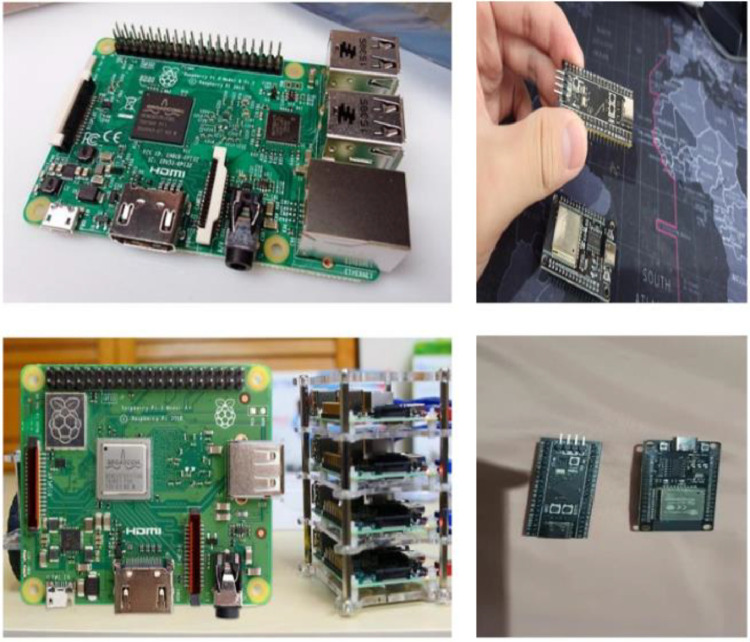 Figure 1
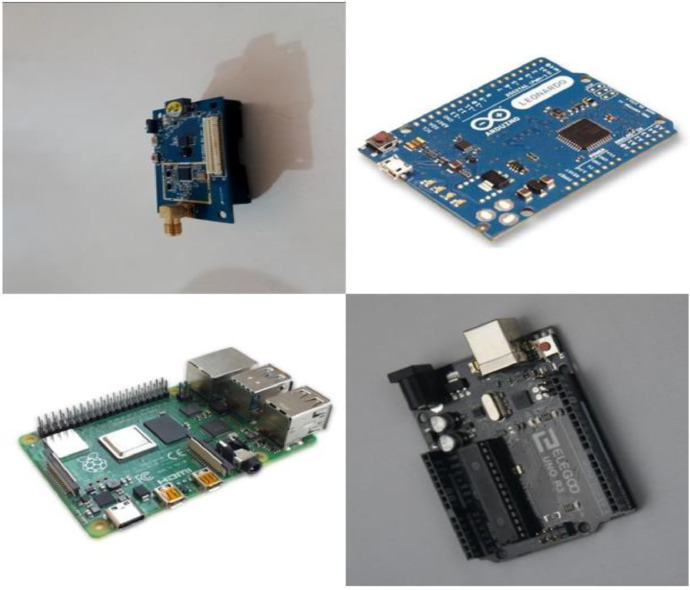 Figure 2
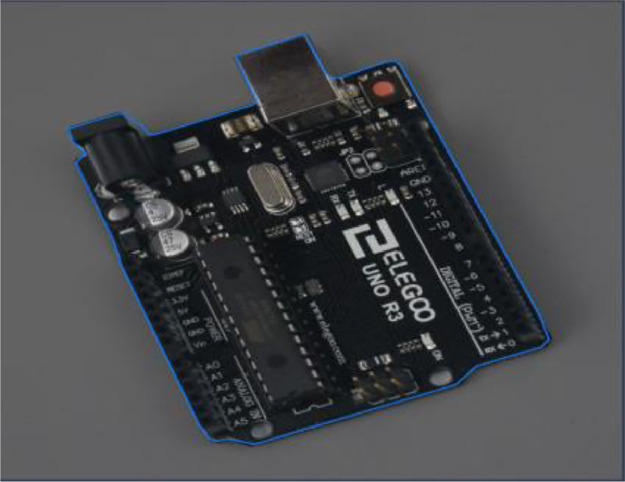 Figure 3
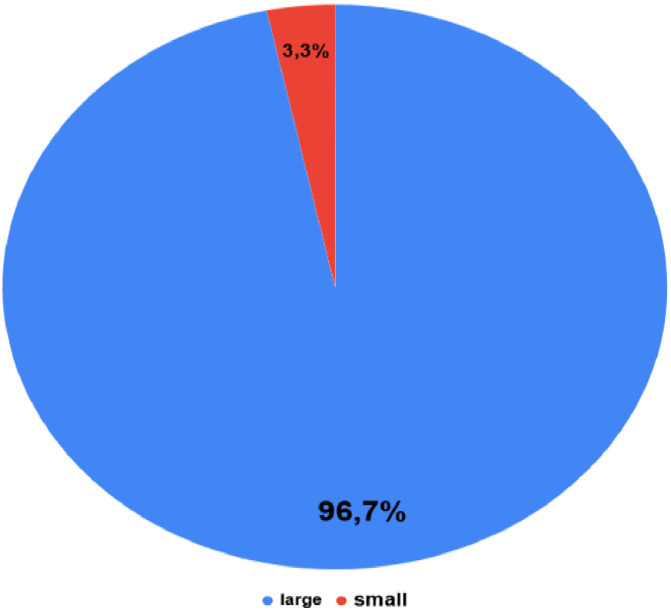 Figure 4
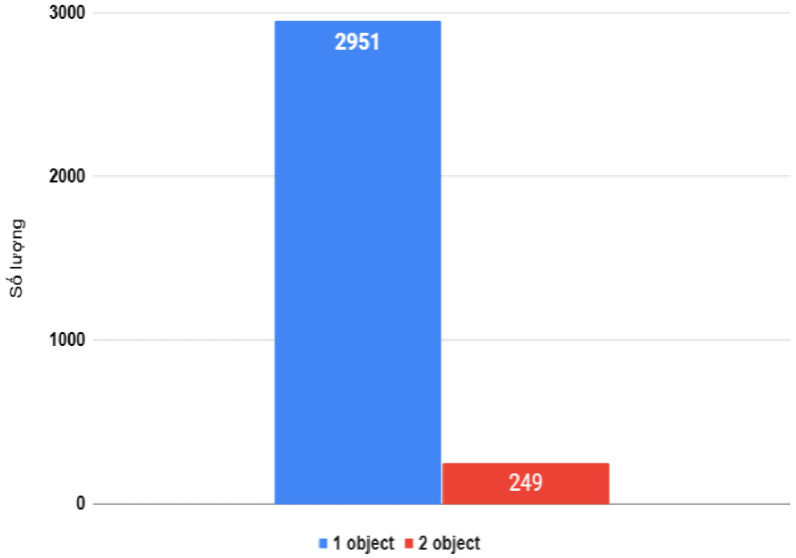 Figure 5
Peer Reviews
No public reviews on file for this paper yet. If you reviewed it on a platform where reviews are public (OpenReview, ICLR, NeurIPS, ICML), you can paste yours below so the community can read it here.
Videos
No videos yet. Explain this paper in a talk, walkthrough, or lecture? Add one.
Taxonomy
TopicsIoT-based Smart Home Systems · IoT and Edge/Fog Computing · IoT and GPS-based Vehicle Safety Systems
Specifications TableSubjectComputer SciencesSpecific subject areaRecognition and classification of IoT boards, including Arduino, Raspberry Pi, and othersType of data2D RGB images (.jpg, .jpeg)Annotations: JSON format (.json)Data collectionImages were collected from multiple sources including Kaggle, Roboflow Universe, and original photos taken by the authors.All images were manually annotated using the Smart Polygon tool in Roboflow, which allows labeling objects with polygon masks instead of traditional 4-point bounding boxes.Data source locationVarious online sources (Kaggle, Roboflow Universe) and original photographs; not limited to a specific geographic location.Data accessibilityRepository name: Mendeley DataData identification number: 10.17632/x5thzmkxhy.1Direct URL to data: https://data.mendeley.com/datasets/x5thzmkxhy/1Related research articleNone
Value of the Data
1
- •The dataset fills a gap in publicly available image data for full IoT education kits.
- •It provides annotated high-resolution images from real-world and controlled environments.
- •The dataset enables reproducibility and benchmarking of CNN-based models for KIT classification in educational settings.
Background
2
IoT education kits (KITs) are essential components in modern electronics and STEM education, serving as platforms for learning embedded systems, programming, and hardware integration. While numerous public datasets exist for PCB defect detection and component-level recognition, they typically focus on industrial boards or surface-level analysis.
For example, datasets such as ElectroCom 61 [1], DeepPCB [2], FPIC [3], and VisA [4] support tasks like identifying ICs, resistors, and defects such as cracks or missing components. However, they do not address the holistic classification of full IoT education kits, such as Arduino or Raspberry Pi, which are commonly used in classrooms and university labs.
Recent works using YOLO-based models and hybrid data inputs (e.g., RGB + hyperspectral) have shown success in KIT component detection [5,6], but these approaches are optimized for industrial contexts. To fill this gap, IoTKITs was developed to provide a comprehensive dataset of complete IoT kits captured under realistic educational settings.
However, these studies focused mainly on component-level or industrial PCB scenarios, not on the complete educational KIT recognition gap that IoTKITs aims to fill.
Data Description
3
This study introduces IoTKITs [7], a novel dataset targeting the holistic recognition of IoT kits commonly used in STEM education and research. IoTKITs consists of 3,200 manually annotated images spanning 32 KIT classes, including popular boards such as Arduino Uno, Arduino Nano, ESP32, Raspberry Pi, and more. Annotation was performed using the Roboflow tool with polygon-based labeling, ensuring precision in marking KIT regions. To the best of our knowledge, this is the first dataset designed specifically for comprehensive recognition of IoT educational kits. Table 1 lists the quantity of each IoT KIT included in IoTKITs dataset.Table 1. List of IoT device types in the dataset.Table 1:NoNameQuantity1Mega 2560 (Yellow)1002Mega 2560 (Black)1003Mega 2560 (Blue)1004Uno (Black)1005Uno (Green)1006Uno Camera Shield1007Uno WiFi Shield1008Arduino-Due1009Arduino-leonardo10010Arduino-Micro10011Arduino-Nano10012Arduino-Pro Mini10013Arduino-Zero10014ESP3210015ESP826610016Jetson Nano10017Jetson TX210018Raspberry Pi 1 B+10019Raspberry Pi 3 B+10020Raspberry-Pi-1-A+10021Raspberry-Pi-2-B10022Raspberry-Pi-3-A+10023Raspberry-Pi-3-B10024Raspberry-Pi-4-B10025Raspberry-Pi-510026Raspberry-Pi-Zero10027Raspberry-Pi-Zero-2-W10028Raspberry-Pi-Zero-W10029Raspberry-Pi-Zero-WH10030STM3210031TelosB10032Wemos100
Experimental Design, Materials and Methods
4
Dataset collection process
4.1
To develop the dataset, a comprehensive survey was first conducted to identify the most commonly used IoT boards in teaching and research. Faculty members, researchers, and students from over 20 universities participated in the survey, which focused on gathering insights into the frequency and importance of various devices in educational and research settings. The results, summarized in Table 2, reflect the devices most frequently utilized in practical exercises and academic projects.Table 2. List of universities using IoT devices in teaching.Table 2. NoUniversities1Eastern International University2Lac Hong University3Binh Duong University4Ton Duc Thang University5University of Economics and Finance of Ho Chi Minh City6Vietnam Aviation Academy7University of Economics and Technology in Binh Duong8University of Transport in Ho Chi Minh City9University of Science and Technology in Ho Chi Minh City10Hanoi University of Transport11Ho Chi Minh City Power College12Thuy Loi University13Van Lang University14Saigon Van Lang College15Hanoi University of Transport16Hoa Sen University17International University - VNU HCM18International University19University of Information Technology20University of Danang - University of Science and Technology21University of Natural Sciences, VNU-HCM
A survey revealed 32 frequently used object classes. Consequently, the dataset was structured with a balanced 80 training and 20 testing images per class. This specific allocation enhances model training while providing diverse test data for accurate performance assessment.
Among the 3,200 images in the dataset, most are individual photographs of experimental boards, with a smaller number featuring multiple boards within the same frame. This approach aims to capture the diversity in the usage and arrangement of IoT boards in real-world educational and research environments.
As shown in Fig. 1, Fig. 2, the dataset captures images in two distinct contexts: real-world environments and plain-colored backgrounds. Real-world images include surrounding objects, such as other devices or circuit boards, simulating practical lab or classroom conditions. Plain-colored images, mostly with white or gray backgrounds (as in Fig. 2), emphasize the main features of the boards. This approach improves object recognition across diverse scenarios, ensuring the model adapts to various lighting and contextual changes frequently encountered in real-world applications.Fig. 1. Single and multiple objects data.Fig 1. Fig. 2Images with a single background.Fig 2
This approach aims to enhance the accuracy and applicability of object recognition models in practical scenarios where IoT boards are used in diverse environments. By including images with both plain and complex backgrounds, the model is expected to recognize objects accurately even under varying contexts and lighting conditions.
Annotation process
4.2
To improve the efficiency of model training, all images in the dataset were resized to a uniform dimension of 640 × 640 pixels. Given that the original dataset did not include annotations, manual labeling was performed using Roboflow, a widely recognized tool for its intuitive interface and cost-effectiveness. Roboflow’s “Smart Polygon Labeling” feature was utilized to generate highly precise polygonal annotations, enabling accurate delineation of object boundaries. This level of precision plays a critical role in enhancing the quality of annotations, thereby contributing to improved model performance during training and evaluation.
The annotation process involved identifying objects within each image and carefully outlining them using polygonal points. This approach was particularly effective for capturing the intricate shapes and irregular contours of IoT devices. The method ensured that even objects with complex geometries were annotated with high accuracy. In total, 3,200 images were manually labeled following this procedure.
Roboflow was selected as the primary annotation tool due to its user-friendly interface, flexibility, and cost-effectiveness when processing a large number of images. One of its standout features, “Smart Polygon Labeling,” allows for the automatic generation of detailed and precise polygonal labels. For example, an image of KITs labeled as shown in the Fig. 3. This feature not only improves upon traditional manual labeling methods by significantly reducing time but also ensures a high degree of accuracy in delineating object boundaries. Additionally, these polygonal labels are easily adjustable and can be refined further to enhance the quality of the training data or refined into a box shape suitable for different object detection and segmentation models.Fig. 3. Example of IoT device labeling using Roboflow software.Fig 3
In the dataset of 3200 images, objects are classified by size as follows: objects with an area greater than 1020px are categorized as “large”, accounting for 96.7% (3095 images). On the other hand, objects with an area smaller than 224px are categorized as “small”, making up 3.3% (105 images) as in Fig. 4. This distribution indicates the dominance of “large” objects in the dataset, with only a small proportion being “small” objects. In the dataset, the images mainly contain just one KIT as shown in distribution Fig. 5.Fig. 4. Object size distribution in images.Fig 4. Fig. 5Object distribution in the dataset.Fig 5
Validation
4.3
To validate the utility of IoTKITs, we benchmarked four widely used object detection models: YOLOv5, YOLOv7, Faster R-CNN, and SSD. These CNN-based models were selected for their balance of detection accuracy, computational efficiency, and deployability on resource-constrained devices like Raspberry Pi and Jetson Nano.
While newer transformer-based models (e.g., DETR, Swin Transformer) have shown promise, they generally require large-scale datasets and more computational resources [8], which are less suitable for educational settings. CNN models, in contrast, are more efficient and better aligned with the goals of lightweight deployment.
Training setup
4.4
Each model was trained on the IoTKITs dataset using a consistent input resolution of 640 × 640 pixels. Training was run for up to 1000 epochs, with early stopping set at 100 epochs to avoid overfitting. Table 3 summarizes the key training parameters.Table 3. The training parameters used in this research.Table 3. ModelEpochsBatch SizeImage SizePatienceYolo V5100032640 × 640100Yolo V7Faster-RCNNSSD
Evaluation metrics
4.5
Model performance was evaluated using:
mAP@50 and mAP@50–95: widely used metrics for object detection accuracy
Number of parameters (in G): reflects model complexity and suitability for deployment
These metrics are particularly relevant for educational environments, where computing resources are limited. Table 4 show the performance of 4 models.Table 4. Training results of 4 models.Table 4. Stopping training early(1000)ModelmAP 50mAP 50-95parameters(G)474Yolo v50.9910.9540.070964291000Yolo v70.9870.9560.37363770206Faster RCNN0.9660.9010.43712278161SSD0.9290.7500.27850710
Results and observations
4.6
Among the tested models, YOLOv5 achieved the best balance of performance and size, making it ideal for embedded systems used in classrooms. YOLOv7 delivered slightly higher mAP@50–95 but required significantly more resources. Faster R-CNN showed strong accuracy but was the heaviest, and SSD, while efficient, had the lowest accuracy.
Limitations
Although IoTKITs provides valuable annotated data for educational IoT kits, it has several limitations:
- •The dataset contains only 3,200 images and 32 classes, which are relatively small compared to large-scale object detection datasets such as COCO or OpenImages.
- •Most of the images contain single objects in the foreground, with only a small portion showing multiple KITs per frame, which may limit model training for multi-object detection scenarios.
- •While images were captured in both plain and real-world backgrounds, lighting variation and occlusion are not yet extensively represented.
- •The dataset has not yet been tested under adversarial conditions (e.g., noise, blur, occlusion) or on images captured in uncontrolled classroom environments.
- •Statistical significance testing and real-hardware benchmarks (e.g., inference speed on Raspberry Pi) are planned for future work to validate model robustness and deployment feasibility.
Ethics Statement
This work does not involve human subjects, animal experiments. Our dataset empolyed original photographs taken by the authors and kit images obtained from the following source: Kaggle repository (https://www.kaggle.com/datasets/frettapper/micropcb-images) and Roboflow Universe repository (https://universe.roboflow.com/ontheball/1a-1b), both of them are under the Creative Commons Attribution 4.0 International (CC BY 4.0) license.
CRediT authorship contribution statement
Thanh-Thien Nguyen: Methodology, Software, Validation. Anh-Tuan Nguyen Do: Conceptualization, Software, Validation, Formal analysis, Investigation, Data curation, Writing – original draft, Visualization. Duc-Lung Vu: Conceptualization, Methodology, Formal analysis, Resources, Writing – review & editing, Supervision, Project administration, Funding acquisition.
The reference list from the paper itself. Each links out to its DOI / PubMed record.
- 1Faiyaz M.A.S.Osmani A.M.I.M.Rahman T.Deepti J.F.Electro Com 61: a multiclass dataset for detection of electronic components Sci. Data 111202481110.1016/j.dib.2025.111331 PMC 1184728039990128 · doi ↗ · pubmed ↗
- 2Lv S.Ouyang B.Deng Z.Liang T.Jiang S.Zhang K.Chen J.Li Z.A dataset for deep learning based detection of printed circuit board surface defect Sci. Data 11202481110.1038/s 41597-024-03656-8PMC 1126339039039085 · doi ↗ · pubmed ↗
- 3Jessurun N.Dizon-Paradis O.P.Harrison J.Ghosh S.Tehranipoor M.M.Woodard D.L.Asadizanjani N.FPIC: a novel semantic dataset for optical PCB assurance Proc. ACM Interact. Mob. Wearable Ubiquit. Technol.642022123
- 4Zou Y.Jeong J.Pemula L.Zhang D.Dabeer O.S Pot-the-difference self-supervised pre-training for anomaly detection and segmentationar Xiv preprint 2022 ar Xiv:2207.14315
- 5Zeng N.Wu P.Wang Z.Li H.Liu W.A small-sized object detection oriented multi-scale feature fusion approach with application to defect detection IEEE Trans.2022
- 6Li J.Chen Y.Li W.Gu J.Balanced-YOL Ov 3: addressing the imbalance problem of object detection in PCB assembly scene Electronics 2022
- 7NguyễnĐỗAnh Tuấn Io TKI Ts Mendeley Data, V 1202510.17632/x 5thzmkxhy.1 · doi ↗
- 8Gai L.Xing M.Chen W.Zhang Y.Qiao X.Comparing CNN-based and transformer-based models for identifying lung cancer: which is more effective?Multimed. Tools Appl.8320245925359269