Status and influencing factors of dual health literacy in modern medicine and traditional Chinese medicine among Chinese residents
Fenfang Mi, Wenkai Zhou, Lingzhi Wang, Fang Yuan, Min Qian, Hongxia Zhang, Ningjun Xu

TL;DR
This study examines how Chinese residents understand both modern medicine and traditional Chinese medicine, finding that urban and educated individuals have higher health literacy, while rural and less educated groups need more support.
Contribution
The study introduces a dual health literacy framework combining modern medicine and TCM, identifying key factors influencing integrated health literacy.
Findings
Only 6.8% of participants achieved standard dual health literacy (DHL), with rural areas performing significantly worse than urban areas.
Higher education and health insurance coverage were strongly associated with better health literacy in both modern medicine and TCM.
Health skills and chronic disease prevention were among the lowest areas of health literacy attainment.
Abstract
Dual Health Literacy (DHL), integrating modern and traditional Chinese medicine (TCM), is crucial for health management in China. However, many struggle with both systems, causing fragmented decisions and poor outcomes. Most studies address only one system, overlooking their interplay. This study bridges the gap by assessing DHL and its key influencing factors to support integrated healthcare. Based on standardized 2017 questionnaires, this survey assessed health literacy based on modern medicine (HL) and traditional Chinese medicine (TCM-HL) among Chinese residents aged 15 to 69, using sampling via an online Sojump questionnaire. Group differences were assessed using the Mann–Whitney and Kruskal-Wallis test for continuous variables, and the chi-square test for categorical variables. Multivariate logistic regression was employed to identify factors associated with HL, TCM-HL, and DHL.…
Genes, proteins, chemicals, diseases, species, mutations and cell lines named across the full text — each resolved to its canonical identifier and authoritative record.
Click any figure to enlarge with its caption.
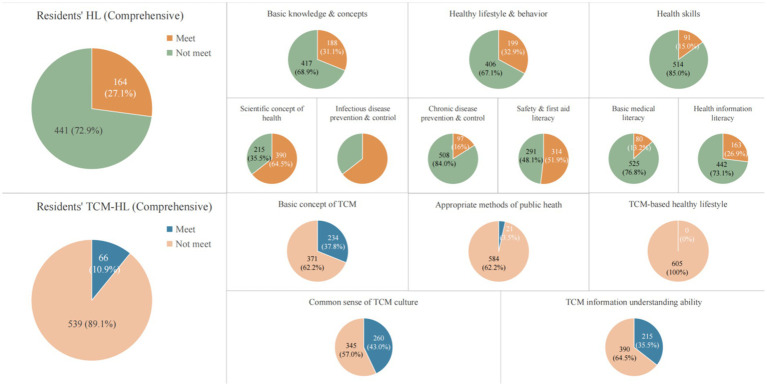 Figure 1
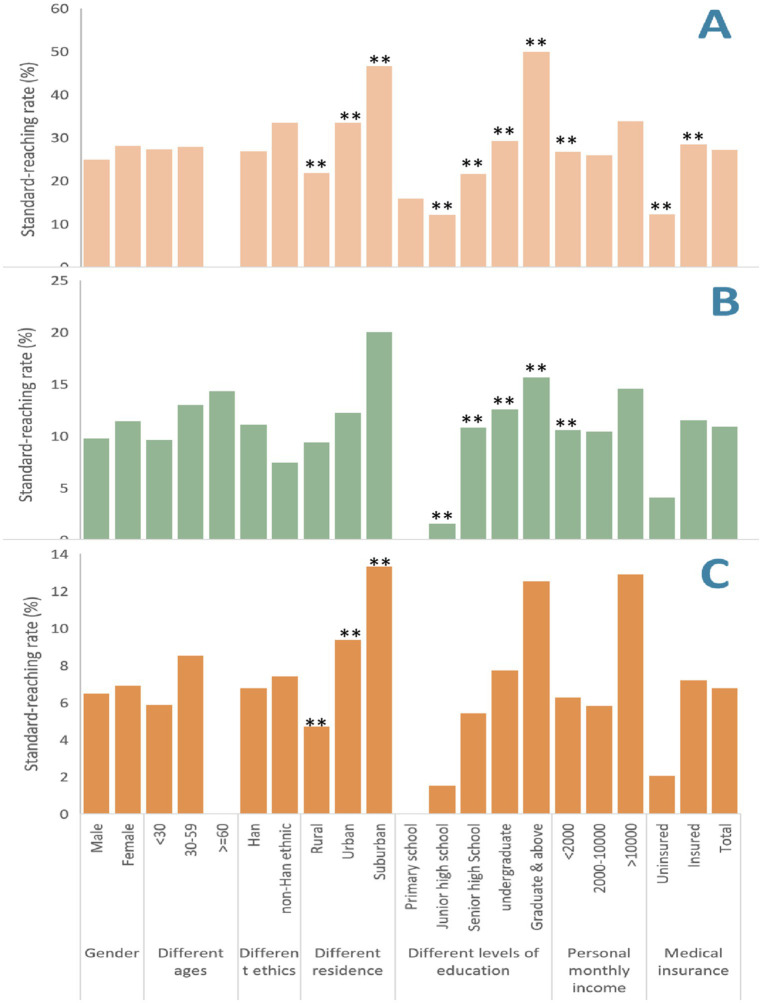 Figure 2
Peer Reviews
No public reviews on file for this paper yet. If you reviewed it on a platform where reviews are public (OpenReview, ICLR, NeurIPS, ICML), you can paste yours below so the community can read it here.
Videos
No videos yet. Explain this paper in a talk, walkthrough, or lecture? Add one.
Taxonomy
TopicsHealth Literacy and Information Accessibility · Social Media in Health Education · Pediatric health and respiratory diseases