Diagnostic value of tongue manifestations for primary Sjögren’s syndrome: construction and validation of disease screening model
Jia-qi Chen, Yan Zhang, Jia-he Liao, Jian-ying Yang, Bo-han Jiang, Zi-wei Huang, Tzu-hua Wu, Li-ning Zhang, Zi-han Wang, Chun-xin Lei, Xi-ya Zhang, Jing Luo, Qing-wen Tao

TL;DR
This study shows that tongue features from traditional Chinese medicine can help screen for primary Sjögren’s syndrome with high accuracy.
Contribution
A novel non-invasive screening model for pSS based on tongue manifestations and demographic factors is developed and validated.
Findings
The model achieved an AUC of 0.89 in training and 0.93 in testing with high sensitivity and specificity.
Key predictors included bluish-purple tongue, thin tongue, and specific tongue fur characteristics.
The model was validated using bootstrap and test set analysis, showing strong discrimination and calibration.
Abstract
Tongue manifestations (tongue fur and tongue body) of traditional Chinese medicine is specific for primary Sjögren’s syndrome (pSS). We investigated the value of tongue manifestations in the diagnosis of pSS and established a model for screening or diagnosing pSS. A total of 400 individuals attended at the China-Japan Friendship Hospital were included in this study. 200 patients with pSS and 200 healthy individuals were randomly divided into training and test sets (7:3 ratio). The training set was used to build models based on combined tongue, tongue fur, and tongue body, respectively, and the optimal model was selected through model discrimination and calibration. The optimal model is internally validated using the bootstrap method and further performed on the test set to assess transportability and generalisability. Receiver operating characteristic curve, calibration curve, Brier…
Genes, proteins, chemicals, diseases, species, mutations and cell lines named across the full text — each resolved to its canonical identifier and authoritative record.
Click any figure to enlarge with its caption.
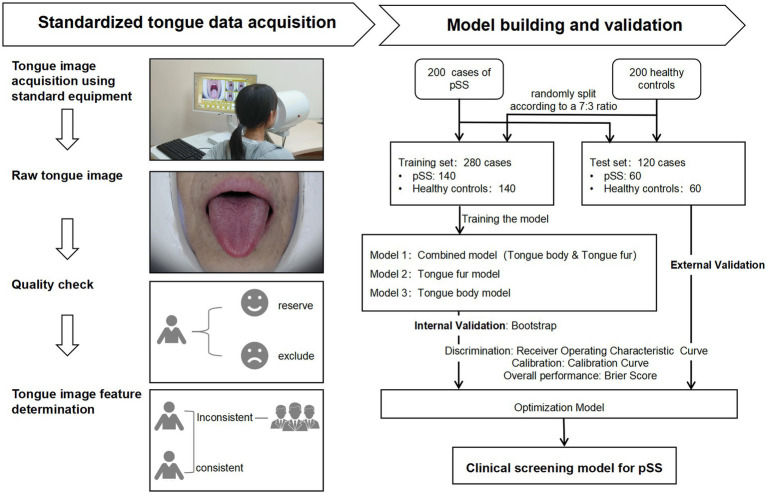 Figure 1
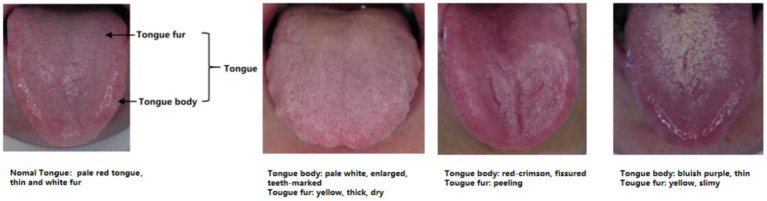 Figure 2
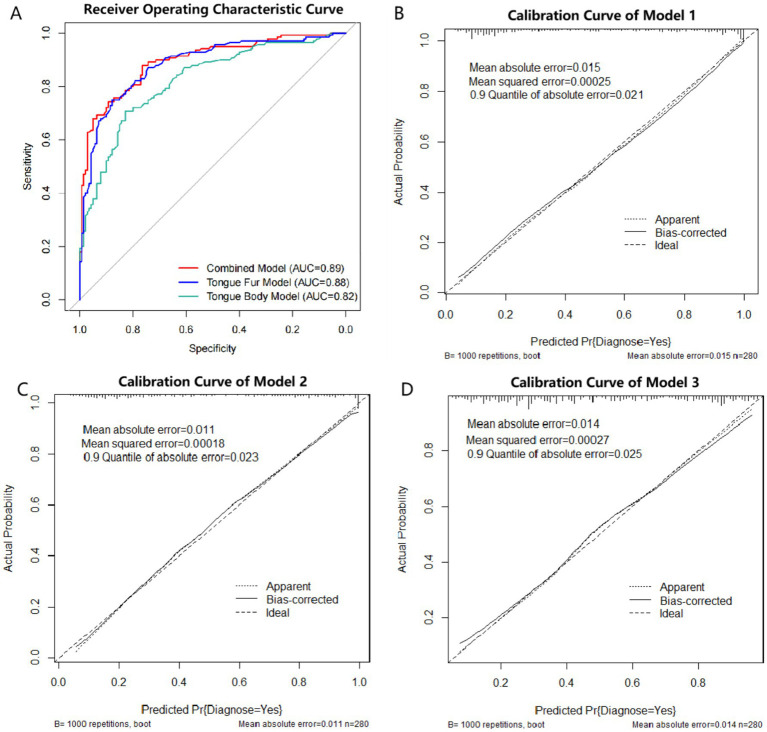 Figure 3
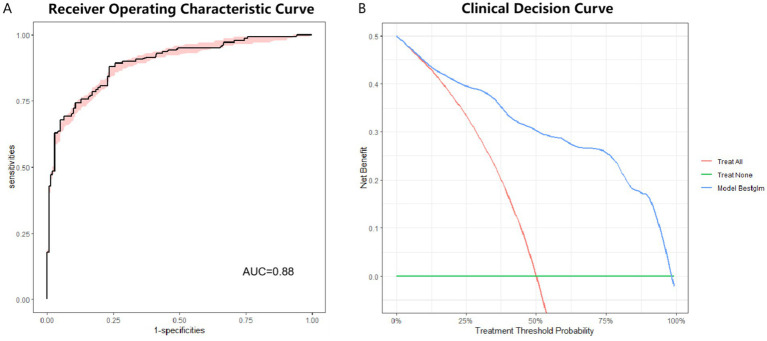 Figure 4
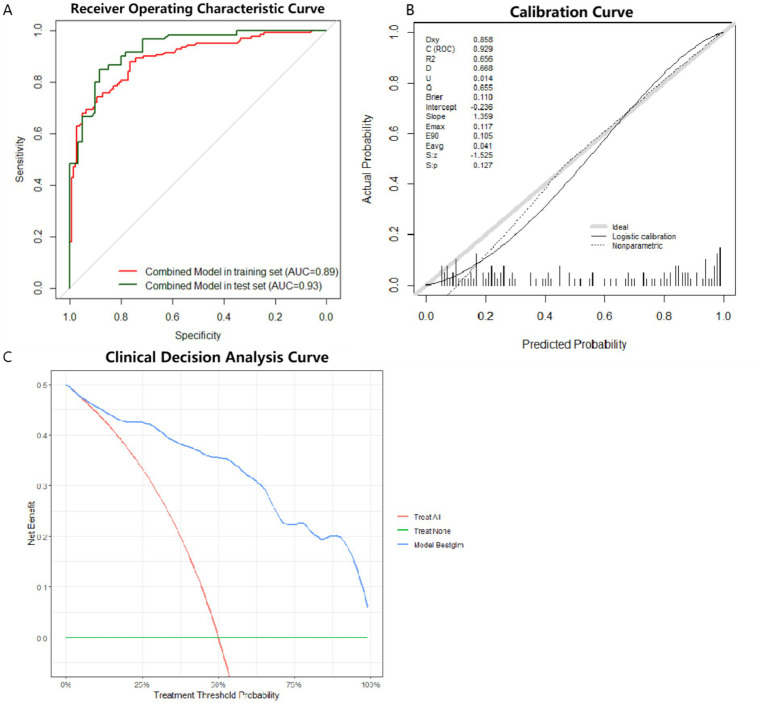 Figure 5
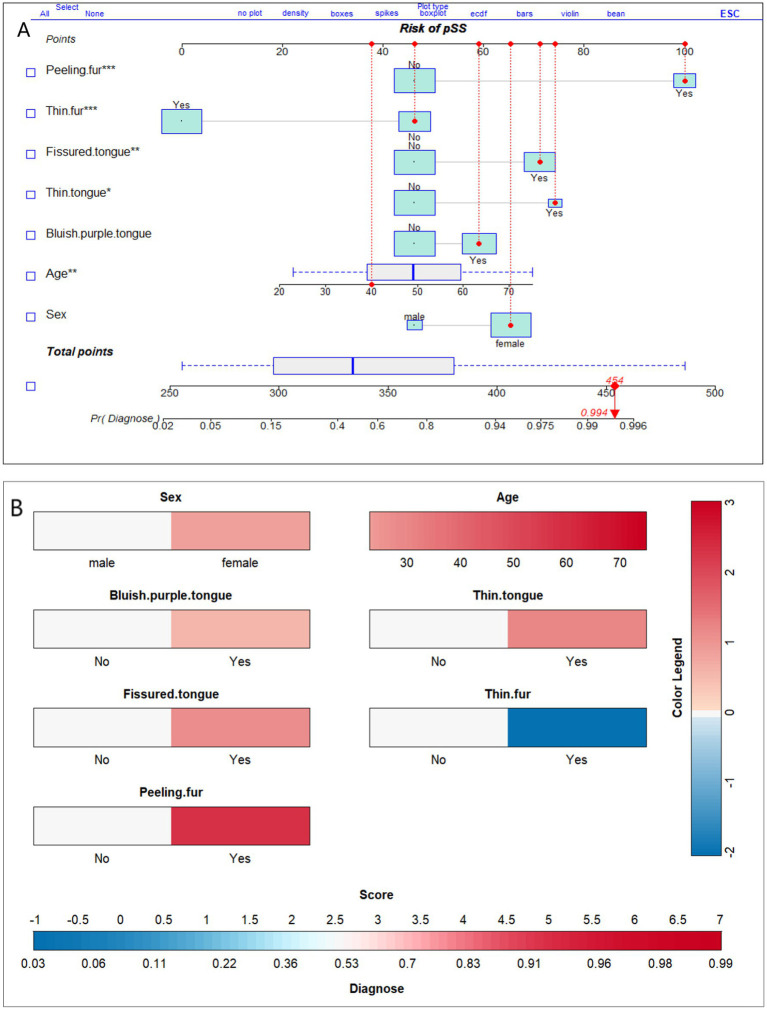 Figure 6
Peer Reviews
No public reviews on file for this paper yet. If you reviewed it on a platform where reviews are public (OpenReview, ICLR, NeurIPS, ICML), you can paste yours below so the community can read it here.
Videos
No videos yet. Explain this paper in a talk, walkthrough, or lecture? Add one.
Taxonomy
TopicsSalivary Gland Disorders and Functions · Oral Health Pathology and Treatment · Growth Hormone and Insulin-like Growth Factors