Impacts of chronic intermittent ethanol vapor and predator odor on ethanol intake and striatal D1 and CB1 cannabinoid receptor-expressing medium spiny neurons
Cristiane Aparecida Favoretto, Allyson Nguyen, Gabriela R. Chacon, Amanda J. Roberts, Tali Nadav, Saumya Ranjan, Luisa Becker Bertotto, Fábio Cardoso Cruz, Eric P. Zorrilla

TL;DR
This study shows that predator odor stress speeds up alcohol intake in mice exposed to ethanol vapors and alters brain cell activity in the nucleus accumbens.
Contribution
The study reveals how stress and ethanol exposure interact to affect brain cell activation and ethanol intake in mice.
Findings
Predator odor accelerated the increase in ethanol intake caused by CIE exposure.
CIE increased Fos+ and co-labeled cells in the nucleus accumbens but not in the dorsal striatum.
Predator odor reduced Fos+ and triple-labeled cells in the nucleus accumbens compared to control bedding.
Abstract
Stress is a risk factor for ethanol use disorders, which has been modeled by chronic intermittent ethanol (CIE) vapor exposure. Repeated stress alters CB1 receptor signaling, which could influence ethanol-related behaviors. Striatal CB1 receptors regulate D1-medium spiny neurons (D1-MSNs), involved in goal-directed behaviors and stress responses. This study tested the hypothesis that predator odor stress interacts with CIE exposure to: (1) increase or accelerate CIE-induced escalation in ethanol intake, (2) increase plasma corticosterone levels, and (3) increase the expression or co-localization of CB1 receptors, D1-MSNs, and Fos neuronal activation marker in the nucleus accumbens (NAc), dorsomedial (DMS), and dorsolateral (DLS) striatum. Male C57BL/6J mice underwent three cycles of 4 days CIE or air exposure, alternated with 5 days ethanol access. During the last two cycles, mice were…
Genes, proteins, chemicals, diseases, species, mutations and cell lines named across the full text — each resolved to its canonical identifier and authoritative record.
Click any figure to enlarge with its caption.
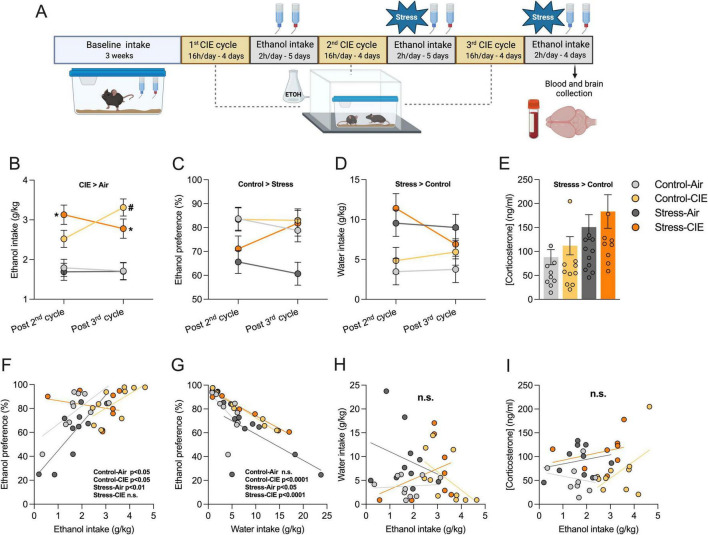 Figure 1
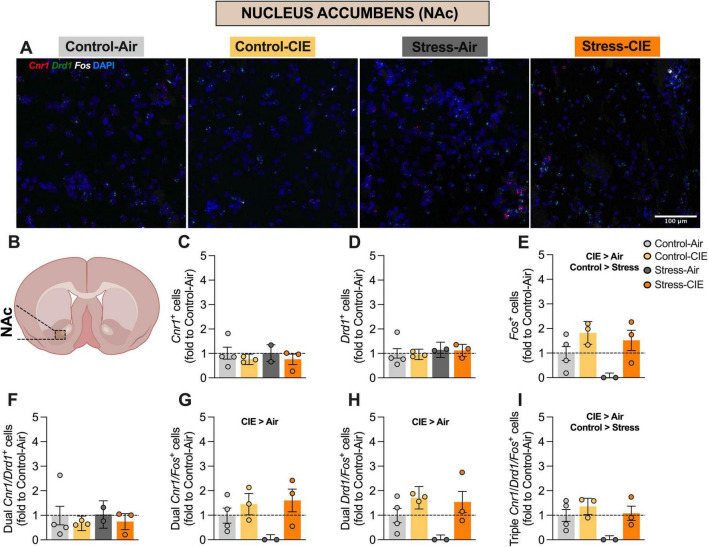 Figure 2
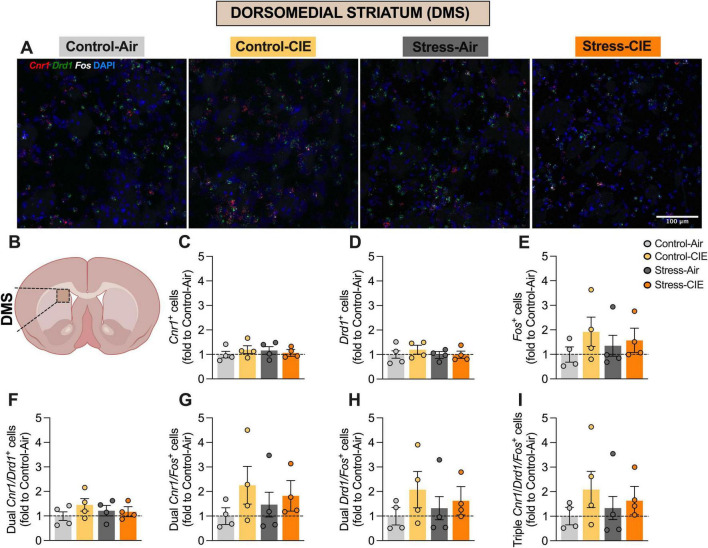 Figure 3
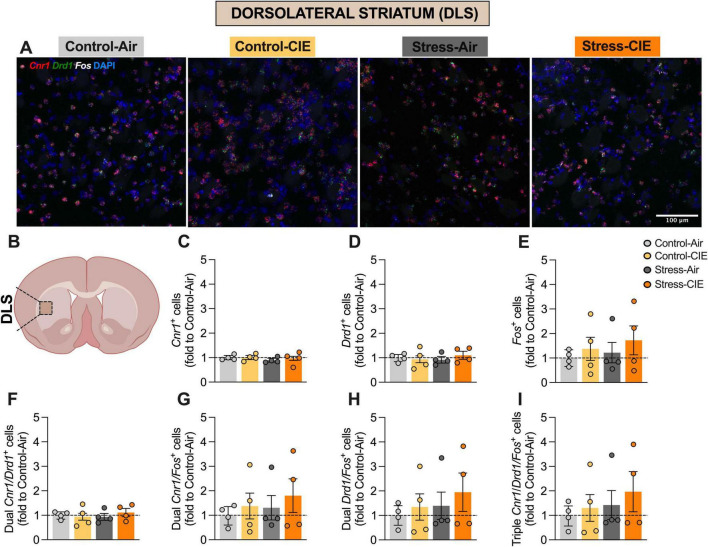 Figure 4
Peer Reviews
No public reviews on file for this paper yet. If you reviewed it on a platform where reviews are public (OpenReview, ICLR, NeurIPS, ICML), you can paste yours below so the community can read it here.
Videos
No videos yet. Explain this paper in a talk, walkthrough, or lecture? Add one.
Taxonomy
TopicsCannabis and Cannabinoid Research · Neuroscience and Neuropharmacology Research · Neurotransmitter Receptor Influence on Behavior