Metabolomic and Genomic Analysis of Bioactive Compounds of Phacidium infestans Karsten DSM 5139 Cultivated on Pinus sylvestris Needles
Chahira Zerouki, Omolara Mofikoya, Taskeen Badar, Marko Mäkinen, Ossi Turunen, Janne Jänis

TL;DR
This study explores how a cold-adapted fungus, Phacidium infestans, breaks down pine needles and uses their nutrients despite their antimicrobial properties.
Contribution
The study reveals novel metabolic and genomic strategies used by Phacidium infestans to survive and thrive on pine needles.
Findings
DI-HRMS identified 112 compounds in needle samples, showing increased terpenoids from resin ducts after fungal cultivation.
P. infestans consumed antifungal compounds like taxiresinol and salicylic acid, with high CTR/SA ratios.
Genomic analysis revealed 421 secreted proteins, including enzymes and efflux pumps, aiding in host penetration and detoxification.
Abstract
This study investigates how Phacidium infestans acquires nutrients on Pinus sylvestris needles, which possess antimicrobial properties. P. infestans was evaluated for its growth and enzyme production on various substrates, alongside genomic and metabolomic analysis. Direct‐infusion high‐resolution mass spectrometry (DI‐HRMS) was performed on methanol extracts obtained from P. infestans cultivated on needles and malt extract media. DI‐HRMS analysis identified 21 compounds from the malt extract and 112 from the needle samples. The resin components increased in the needle samples post‐cultivation, suggesting terpenoid release from resin ducts due to fungal degradation of plant cell walls. P. infestans fully consumed sugars and antifungal compounds, including taxiresinol and salicylic acid, with control‐to‐sample ratios (CTR/SA) of 289.76 and 47.24, respectively. Moreover,…
Genes, proteins, chemicals, diseases, species, mutations and cell lines named across the full text — each resolved to its canonical identifier and authoritative record.
Click any figure to enlarge with its caption.
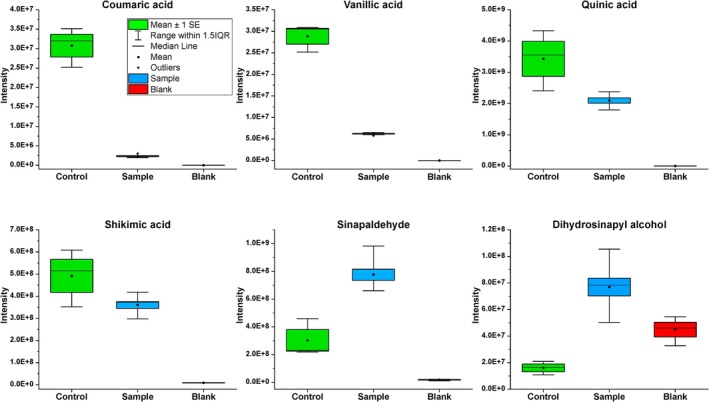 Figure 1
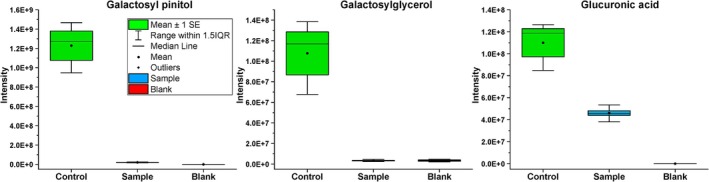 Figure 2
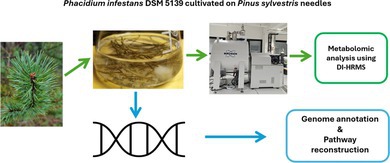 Figure 3
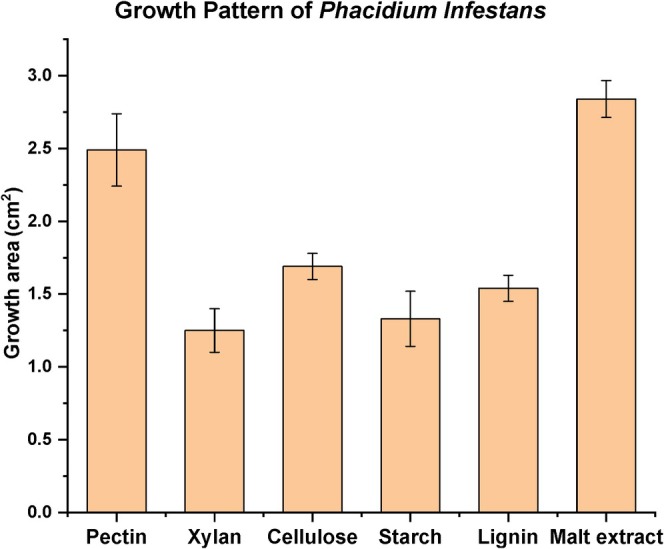 Figure 4
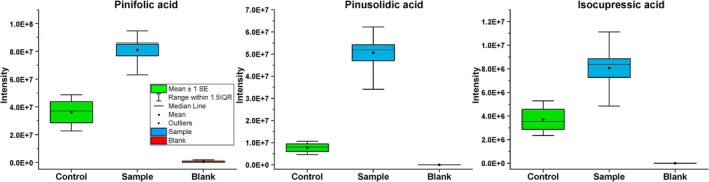 Figure 5
Peer Reviews
No public reviews on file for this paper yet. If you reviewed it on a platform where reviews are public (OpenReview, ICLR, NeurIPS, ICML), you can paste yours below so the community can read it here.
Videos
No videos yet. Explain this paper in a talk, walkthrough, or lecture? Add one.
Taxonomy
TopicsPhytochemical compounds biological activities · Plant tissue culture and regeneration · Plant biochemistry and biosynthesis