HIV drug resistance, early treatment outcomes and impact of guidelines compliance after protease inhibitor‐based second‐line failure in a dedicated resistance clinic in western Kenya: a retrospective cohort study
John M. Humphrey, Shamim M. Ali, Allison DeLong, Vlad Novitsky, Edwin Sang, Bilal Jawed, Emmanuel Kemboi, Celia Ngetich, Suzanne Goodrich, Adrian Gardner, Joseph W. Hogan, Rami Kantor

TL;DR
This study examines drug resistance and treatment outcomes in HIV patients in Kenya after failing second-line protease inhibitor therapy, emphasizing the importance of following guidelines and using third-line treatments.
Contribution
The study provides insights into drug resistance patterns and treatment outcomes in a Kenyan clinic following protease inhibitor-based second-line failure, emphasizing the impact of guidelines compliance.
Findings
High levels of drug resistance were found in patients failing PI-based second-line ART.
Guidelines-supported regimens were associated with significantly lower odds of post-genotype viral failure.
Switching to third-line treatment improved early viral outcomes compared to remaining on second-line.
Abstract
Data on drug resistance, viral outcomes and guidelines compliance following protease inhibitor (PI)‐based second‐line failure in low‐ and middle‐income countries are limited, particularly in the era of dolutegravir‐containing antiretroviral therapy (ART). We conducted a retrospective cohort study of people living with HIV (PLWH) ≥3 years old with second‐line viral failure (VF, ≥1000 copies/ml) at the Academic Model Providing Access to Healthcare from 2011 to 2021. We assessed resistance prevalence and patterns at second‐line VF, stratified by PI (atazanavir/ritonavir or lopinavir/ritonavir), and examined correlations of resistance and treatment strategies with VF at 6–18 months post‐genotype. Analyses employed inverse probability weighting, adjusting for calendar year, age, gender, ART duration, PI at genotyping and class‐specific resistance, and considered guidelines‐supported versus…
Genes, proteins, chemicals, diseases, species, mutations and cell lines named across the full text — each resolved to its canonical identifier and authoritative record.
Click any figure to enlarge with its caption.
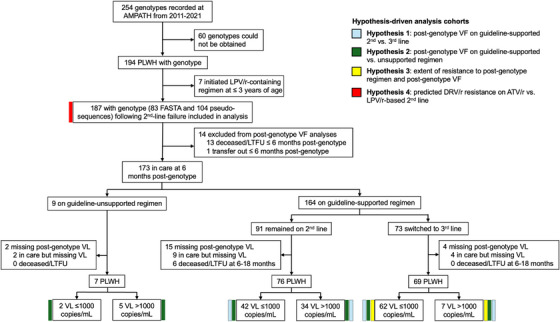 Figure 1
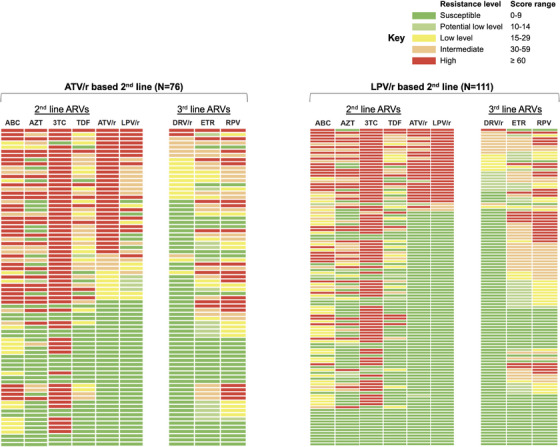 Figure 2
Peer Reviews
No public reviews on file for this paper yet. If you reviewed it on a platform where reviews are public (OpenReview, ICLR, NeurIPS, ICML), you can paste yours below so the community can read it here.
Videos
No videos yet. Explain this paper in a talk, walkthrough, or lecture? Add one.
Taxonomy
TopicsHIV/AIDS drug development and treatment · HIV/AIDS Research and Interventions · HIV Research and Treatment