Comparative study on the effect of different high-frequency chest wall oscillation and back patting modes on sputum excretion in patients with severe pneumonia
Bing Tang, Bin Gao, Li Tang, Yunying Li, Xiaomin Xiong, Boyuan Wang, Zhe Xu, Gexin Xiao, Zunxiong Xiao

TL;DR
This study compares different chest wall oscillation and back patting methods to see which are most effective at helping severe pneumonia patients clear mucus from their lungs.
Contribution
The study identifies optimal back-patting parameters for sputum clearance in severe pneumonia patients, offering insights for clinical care and robot development.
Findings
Different back-patting methods significantly affect sputum volume, viscosity, and blood oxygen saturation.
High-frequency chest wall oscillation improves sputum expectoration and lung function in severe pneumonia patients.
Optimal back-patting patterns can reduce hospital stays by enhancing mucus clearance.
Abstract
The effect of different backslapping parameters on sputum discharge in SP patients is unclear. To investigate the effects of different back-patting modes on sputum clearance from the lungs of SP patients. To provide a theoretical basis for future clinical care and development of critical care robots. The patients with severe pneumonia in ICU of Guangyuan tertiary hospital were selected as the study object, and according to the specific conditions of the patients, different back-patting methods were selected and given different back-patting intensity, back-patting frequency, back-patting times, back-patting times, back-patting times, and back-patting times, respectively, to compare and analyse the effects of the different back-patting methods on the patient’s expectoration effect, blood oxygen concentration, and lung signs. Finally, 143 patients with severe pneumonia were included.…
Genes, proteins, chemicals, diseases, species, mutations and cell lines named across the full text — each resolved to its canonical identifier and authoritative record.
Click any figure to enlarge with its caption.
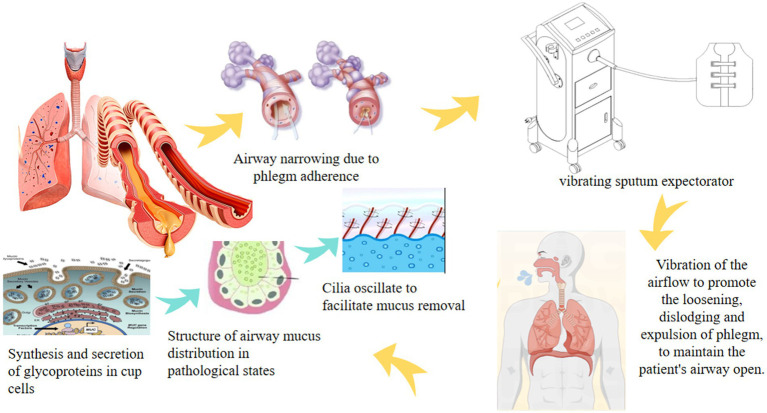 Figure 1
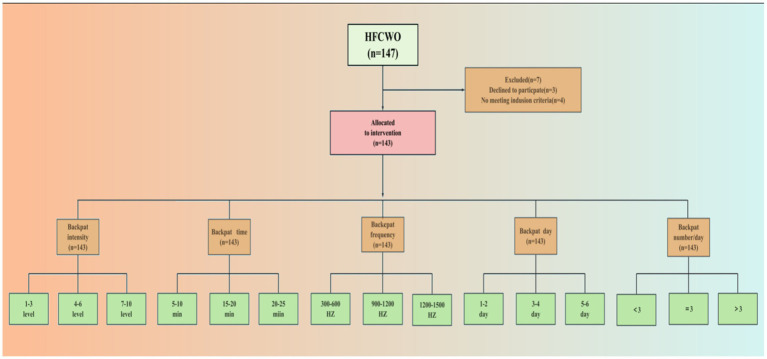 Figure 2
Peer Reviews
No public reviews on file for this paper yet. If you reviewed it on a platform where reviews are public (OpenReview, ICLR, NeurIPS, ICML), you can paste yours below so the community can read it here.
Videos
No videos yet. Explain this paper in a talk, walkthrough, or lecture? Add one.
Taxonomy
TopicsChronic Obstructive Pulmonary Disease (COPD) Research · Respiratory Support and Mechanisms · Pediatric health and respiratory diseases