Knee angle reproduction tests: influences of body orientation, movement direction and limb dominance
Juliane Wieber, Abigail Preece, Robert Rein, Bjoern Braunstein

TL;DR
This study shows that knee angle reproduction errors vary based on body position, movement direction, and limb dominance, affecting how joint position sense tests should be interpreted.
Contribution
The study identifies specific test conditions that influence knee angle reproduction errors in healthy individuals.
Findings
Reproduction errors were greater in the seated position compared to the prone position.
Using the dominant limb as the reference increased errors in the seated position but not in the prone position.
Test conditions should be standardized to avoid biased comparisons between knees.
Abstract
Applying joint position sense tests under different test conditions may introduce reproduction error bias, which can result in different therapeutic consequences. This study investigated the effects of body orientation, movement direction, and limb dominance on the active knee angle reproduction error. Subjects underwent active contralateral knee angle reproduction tests in a seated versus prone position, from a starting point of knee flexion versus knee extension, and with the dominant versus nondominant limb setting the target angle. The test order was randomly determined for each subject. The primary outcome was the absolute active knee angle reproduction error (°). The data of 54 healthy subjects (mean±standard deviation, age: 26±5 years, height: 174±11 cm, body mass: 69.9±14.4 kg, and Tegner activity score: 5.8±1.9) showed that the reproduction error was greater in the seated…
Genes, proteins, chemicals, diseases, species, mutations and cell lines named across the full text — each resolved to its canonical identifier and authoritative record.
Click any figure to enlarge with its caption.
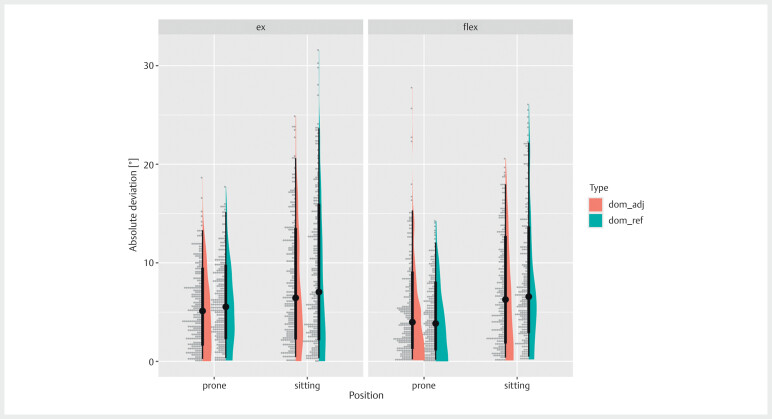 Figure 1
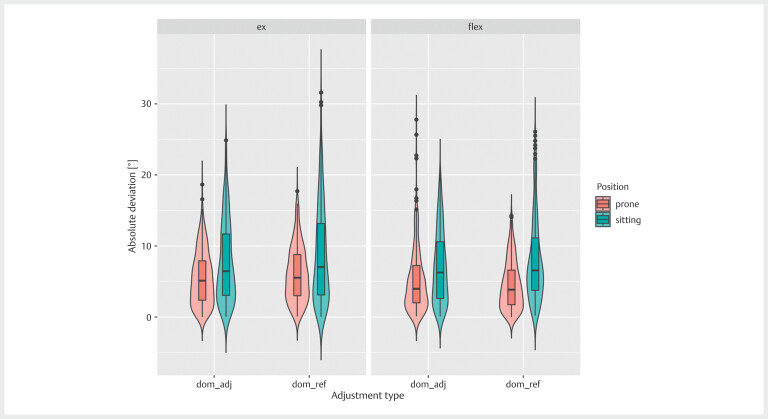 Figure 2
Peer Reviews
No public reviews on file for this paper yet. If you reviewed it on a platform where reviews are public (OpenReview, ICLR, NeurIPS, ICML), you can paste yours below so the community can read it here.
Videos
No videos yet. Explain this paper in a talk, walkthrough, or lecture? Add one.
Taxonomy
TopicsSports Performance and Training · Muscle activation and electromyography studies · Lower Extremity Biomechanics and Pathologies