Reverse T3 in patients with hypothyroidism on different thyroid hormone replacement
Julian B. Wilson, Thanh D. Hoang, Martin L. Lee, Ma’ayan Epstein, Theodore C. Friedman, Apeksha Niraula, Apeksha Niraula, Apeksha Niraula

TL;DR
The study found that patients with hypothyroidism taking only T4 hormone replacement had higher levels of reverse T3, which may contribute to ongoing symptoms like fatigue.
Contribution
This study provides empirical evidence linking elevated reverse T3 levels to specific thyroid hormone replacement therapies.
Findings
Patients on L-T4 alone had the highest elevated reverse T3 levels.
Reverse T3 levels correlated with free T4 and free T3 levels but inversely with log TSH.
Those on L-T3-only preparations had the lowest reverse T3 levels.
Abstract
Reverse T3 (rT3) is a biologically inactive form of T3 (triiodothyronine), a thyroid hormone, that is created by peripheral 5 deiodination of T4 (thyroxine) by type 1 and type 3 deiodinase enzymes (D1 and D3 respectively) and may block T3 binding to the thyroid hormone receptor. Approximately 15% of patients on L-T4 replacement therapy with a normalized thyroid-stimulating hormone (TSH) report experience continued fatigue and other hypothyroid symptoms; therefore, efforts are needed to understand why this occurs and how it can be corrected. Decades ago, endocrinologists realized that in patients with severe illnesses, rT3 is typically high and T3 is typically low; this was termed “euthyroid sick syndrome”. More recently, functional medicine and other doctors, have argued that high rT3 is detrimental and can block T3 from binding to the thyroid hormone receptor. Due to the lack of…
Genes, proteins, chemicals, diseases, species, mutations and cell lines named across the full text — each resolved to its canonical identifier and authoritative record.
Click any figure to enlarge with its caption.
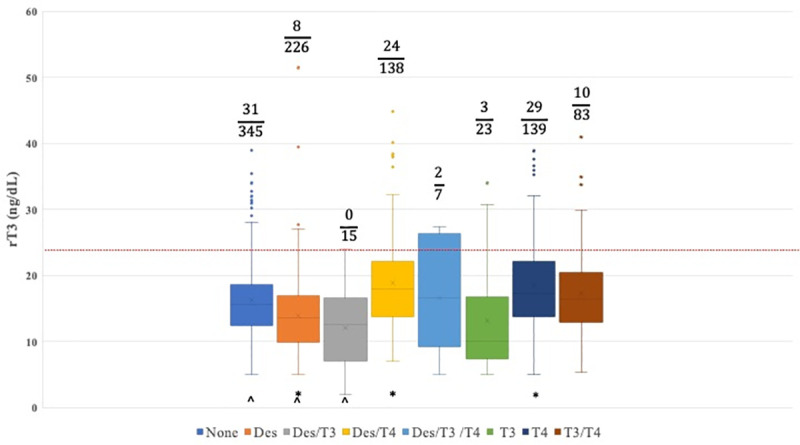 Figure 1
 Figure 2
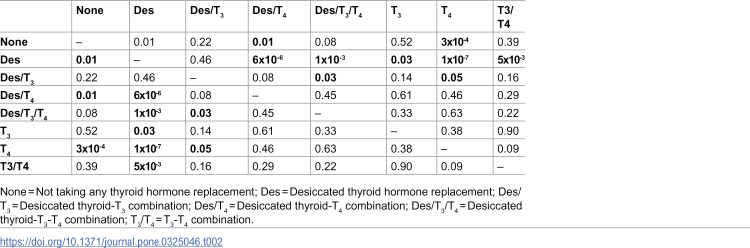 Figure 3
 Figure 4
 Figure 5
Peer Reviews
No public reviews on file for this paper yet. If you reviewed it on a platform where reviews are public (OpenReview, ICLR, NeurIPS, ICML), you can paste yours below so the community can read it here.
Videos
No videos yet. Explain this paper in a talk, walkthrough, or lecture? Add one.
Taxonomy
TopicsThyroid Disorders and Treatments · Neuroendocrine Tumor Research Advances · Thyroid Cancer Diagnosis and Treatment