Day-ahead optimal dispatch considering demand response compensation and carbon trading under uncertain environment
Ze Ye, Deping Liang, Meihui Wang, Lei Chen

TL;DR
This paper proposes a model for optimizing energy dispatch that considers demand response and carbon trading to reduce emissions and costs.
Contribution
A novel low-carbon economic optimization model combining demand response and carbon trading mechanisms is proposed.
Findings
A reward-punishment laddered carbon trading model is established to reduce carbon emissions on the source side.
The triangular fuzzy method effectively handles uncertainty in new energy and load forecasting.
Simulation results verify the economic and low-carbon benefits of the proposed model.
Abstract
To fully explore the regulation resources on both sides of the source and load under uncertain environment and collaboratively achieve the energy saving and emission reduction goals, a low-carbon economic optimization dispatch model combining demand response and carbon trading mechanism is proposed in this paper. Firstly, the economic principle of demand response (DR) is analyzed, as well as the demand response compensation model is constructed for shiftable loads and curtailable loads respectively. Second, we describe the source-load synergistic low-carbon effect. The source side further reduces carbon emissions by establishing a reward-punishment laddered carbon trading model. Accordingly, the optimization model is constructed with the objective of minimizing the sum of DR compensation cost, carbon trading cost and system operation cost. The triangular fuzzy method is used to deal…
Genes, proteins, chemicals, diseases, species, mutations and cell lines named across the full text — each resolved to its canonical identifier and authoritative record.
Click any figure to enlarge with its caption.
 Figure 1
 Figure 2
 Figure 3
 Figure 4
 Figure 5
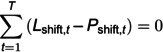 Figure 6
 Figure 7
 Figure 8
 Figure 9
 Figure 10
 Figure 11
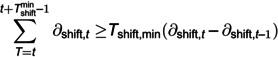 Figure 12
 Figure 13
 Figure 14
 Figure 15
 Figure 16
 Figure 17
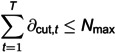 Figure 18
 Figure 19
 Figure 20
 Figure 21
 Figure 22
 Figure 23
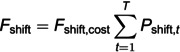 Figure 24
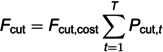 Figure 25
 Figure 26
 Figure 27
 Figure 28
 Figure 29
 Figure 30
 Figure 31
 Figure 32
 Figure 33
 Figure 34
 Figure 35
 Figure 36
 Figure 37
 Figure 38
 Figure 39
 Figure 40
 Figure 41
 Figure 42
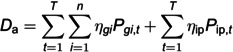 Figure 43
 Figure 44
 Figure 45
 Figure 46
 Figure 47
 Figure 48
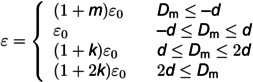 Figure 49
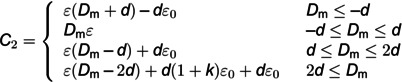 Figure 50
Peer Reviews
No public reviews on file for this paper yet. If you reviewed it on a platform where reviews are public (OpenReview, ICLR, NeurIPS, ICML), you can paste yours below so the community can read it here.
Videos
No videos yet. Explain this paper in a talk, walkthrough, or lecture? Add one.
Taxonomy
TopicsEnergy Load and Power Forecasting · Electric Power System Optimization · Integrated Energy Systems Optimization