Evaluation of data driven low-rank matrix factorization for accelerated solutions of the Vlasov equation
Bhavana Jonnalagadda, Stephen Becker

TL;DR
This paper introduces a neural network-based method to speed up simulations of plasma behavior by efficiently decomposing data.
Contribution
A data-driven neural network approach for low-rank matrix factorization is proposed, offering faster computation than traditional methods.
Findings
The method achieves comparable accuracy to standard techniques for interpolation tasks.
The model generalizes to unseen data but fails to extrapolate future states effectively.
The technique is well-suited for simulations with temporal stability but not for time-evolving systems.
Abstract
Low-rank methods have shown success in accelerating simulations of a collisionless plasma described by the Vlasov equation, but still rely on computationally costly linear algebra every time step. We propose a data-driven factorization method using artificial neural networks, specifically with convolutional layer architecture, that trains on existing simulation data. At inference time, the model outputs a low-rank decomposition of the distribution field of the charged particles, and we demonstrate that this step is faster than the standard linear algebra technique. Numerical experiments show that the method achieves comparable reconstruction accuracy for interpolation tasks, generalizing to unseen test data in a manner beyond just memorizing training data; patterns in factorization also inherently followed the same numerical trend as those within algebraic methods (e.g., truncated…
Genes, proteins, chemicals, diseases, species, mutations and cell lines named across the full text — each resolved to its canonical identifier and authoritative record.
Click any figure to enlarge with its caption.
 Figure 1
 Figure 2
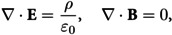 Figure 3
 Figure 4
 Figure 5
 Figure 6
 Figure 7
 Figure 8
 Figure 9
 Figure 10
 Figure 11
 Figure 12
 Figure 13
 Figure 14
 Figure 15
 Figure 16
 Figure 17
 Figure 18
 Figure 19
 Figure 20
 Figure 21
 Figure 22
 Figure 23
 Figure 24
 Figure 25
 Figure 26
 Figure 27
 Figure 28
 Figure 29
 Figure 30
 Figure 31
 Figure 32
 Figure 33
 Figure 34
 Figure 35
 Figure 36
 Figure 37
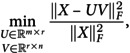 Figure 38
 Figure 39
 Figure 40
 Figure 41
 Figure 42
 Figure 43
 Figure 44
 Figure 45
 Figure 46
 Figure 47
 Figure 48
 Figure 49
 Figure 50
Peer Reviews
No public reviews on file for this paper yet. If you reviewed it on a platform where reviews are public (OpenReview, ICLR, NeurIPS, ICML), you can paste yours below so the community can read it here.
Videos
No videos yet. Explain this paper in a talk, walkthrough, or lecture? Add one.
Taxonomy
TopicsGamma-ray bursts and supernovae · Cosmology and Gravitation Theories · Solar and Space Plasma Dynamics