Developing a stakeholder-informed social responsibility model for translational science
Elise M. R. Smith, Georgia Loutrianakis, Kimberly Beatty, Krista Bohn, Kathryn A. Cunningham, Sharon Croisant, Jeffrey S. Farroni, Micheal Gienger, Dominique Guinn, Jometra Hawkins-Sneed, Sondip Mathur, Victoria McNamara, Marnina Miller, Stephen Molldrem, Kimberly Pounds

TL;DR
This paper presents a model for socially responsible translational science developed with input from scientists and community members to better align research with social benefits.
Contribution
A stakeholder-informed model for socially responsible translational science that emphasizes relevance, usability, and sustainability.
Findings
Participants emphasized the need to broaden biomedical research to consider social impacts and health determinants.
Improving usability requires increasing access to research and integrating community systems into research infrastructure.
Sustainability was linked to co-developing and co-funding research with community input throughout the project lifecycle.
Abstract
Innovation in biomedical research has increased markedly over the last few decades. However, clinical, therapeutic, and public health advances have often not yielded expected improvements in health outcomes nor reduced disparities. Translational science was developed to improve social benefits related to research and development. We propose a practical model for socially responsible translational science that aims to better align research with its expected social benefits. Scientists and community members from the Houston-Galveston region participated in 12 focus groups and a one-day Deliberative Dialogue Summit to examine the expected social benefits of science, establish the factors and practices of social responsibility, and design an empirical model for socially responsible translational science. Researchers and community members discussed three distinct fields of research – HIV,…
Genes, proteins, chemicals, diseases, species, mutations and cell lines named across the full text — each resolved to its canonical identifier and authoritative record.
Click any figure to enlarge with its caption.
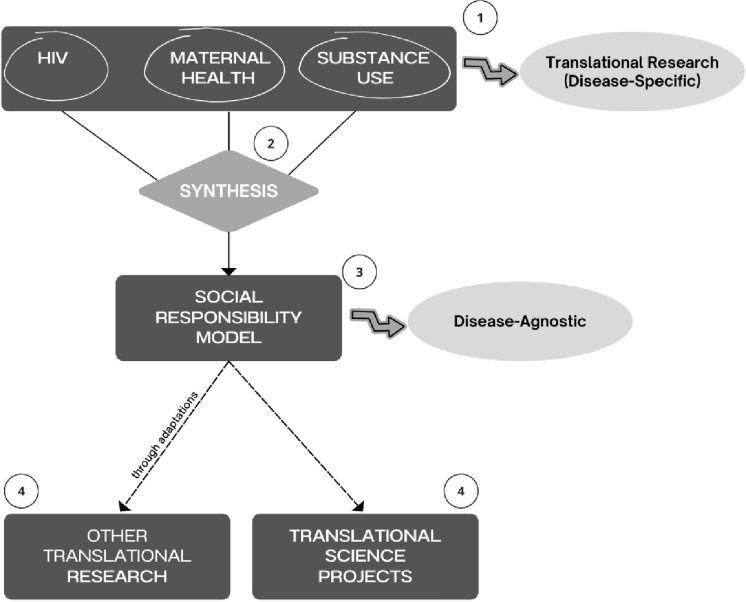 Figure 1
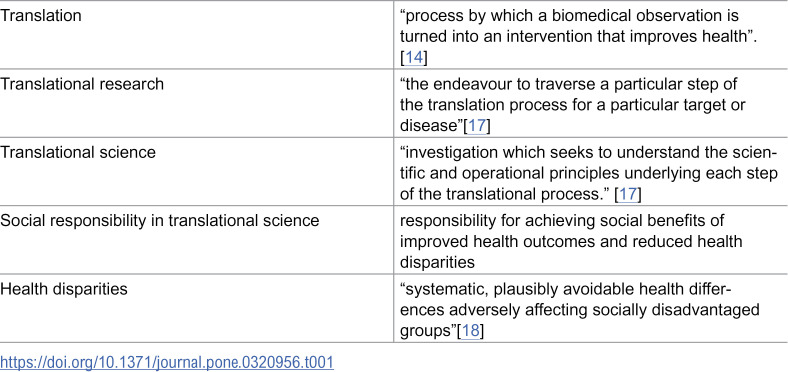 Figure 2
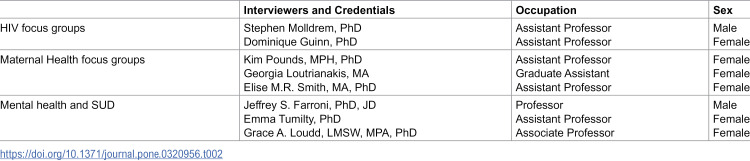 Figure 3
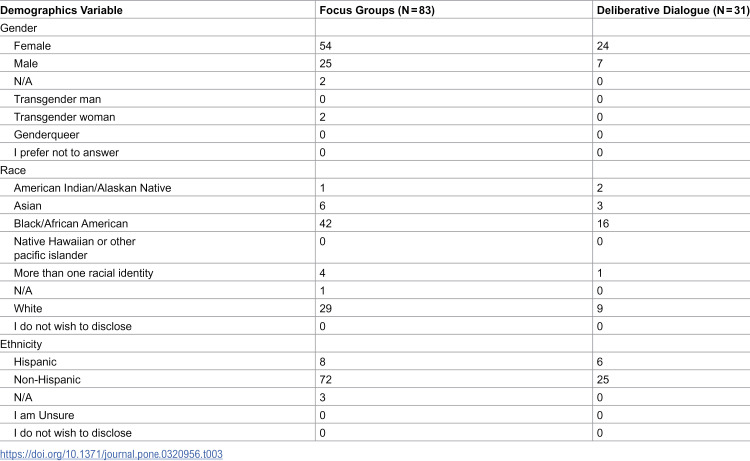 Figure 4
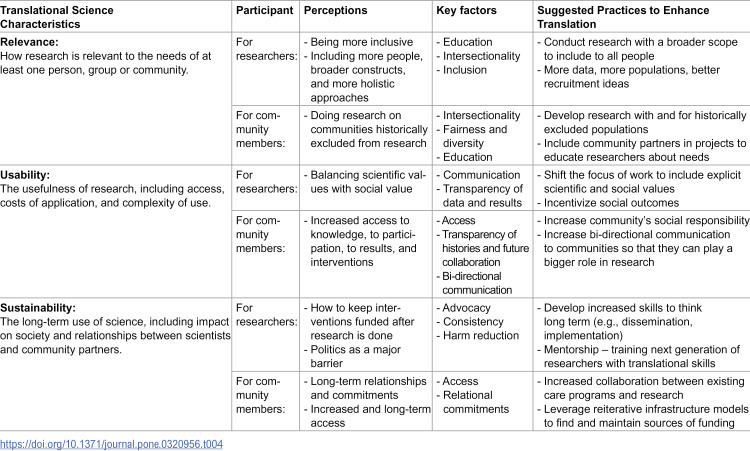 Figure 5
Peer Reviews
No public reviews on file for this paper yet. If you reviewed it on a platform where reviews are public (OpenReview, ICLR, NeurIPS, ICML), you can paste yours below so the community can read it here.
Videos
No videos yet. Explain this paper in a talk, walkthrough, or lecture? Add one.
Taxonomy
TopicsHealth Policy Implementation Science · Mental Health and Patient Involvement · Ethics in Clinical Research