From eyes’ microtremors to critical flicker fusion
Pedro Lencastre, Rujeena Mathema, Pedro G. Lind

TL;DR
This paper explores how eye microtremors relate to the critical flicker fusion threshold, a measure of visual perception that can indicate health conditions.
Contribution
The study introduces a novel method to predict individual CFFT ranges using eye microtremor frequencies with high accuracy.
Findings
Individual differences in CFFT can be explained by eye microtremors.
A classifier based on microtremor frequencies predicts CFFT ranges with 85% accuracy at 60 Hz and 88% at 120 Hz.
Abstract
The critical flicker fusion threshold (CFFT) is the frequency at which a flickering light source becomes indistinguishable from continuous light. The CFFT is an important biomarker of health conditions, such as Alzheimer’s disease and epilepsy, and is affected by factors as diverse as fatigue, drug consumption, and oxygen pressure, which make CFFT individual- and context-specific. Other causal factors beyond such biophysical processes are still to be uncovered. We investigate the connection between CFFT and specific eye-movements, called microtremors, which are small oscillatory gaze movements during fixation periods. We present evidence that individual differences in CFFT can be accounted by microtremors, and design an experiment, using a high-frequency monitor and recording the participant’s eye-movements with an eye-tracker device, which enables to measure the range of frequencies of…
Genes, proteins, chemicals, diseases, species, mutations and cell lines named across the full text — each resolved to its canonical identifier and authoritative record.
Click any figure to enlarge with its caption.
 Figure 1
 Figure 2
 Figure 3
 Figure 4
 Figure 5
 Figure 6
 Figure 7
 Figure 8
 Figure 9
 Figure 10
 Figure 11
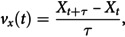 Figure 12
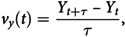 Figure 13
 Figure 14
 Figure 15
 Figure 16
 Figure 17
 Figure 18
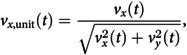 Figure 19
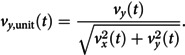 Figure 20
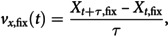 Figure 21
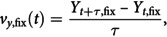 Figure 22
 Figure 23
 Figure 24
 Figure 25
 Figure 26
 Figure 27
 Figure 28
 Figure 29
 Figure 30
 Figure 31
 Figure 32
 Figure 33
 Figure 34
 Figure 35
 Figure 36
 Figure 37
 Figure 38
 Figure 39
 Figure 40
 Figure 41
 Figure 42
 Figure 43
 Figure 44
 Figure 45
 Figure 46
 Figure 47
 Figure 48
 Figure 49
 Figure 50
Peer Reviews
No public reviews on file for this paper yet. If you reviewed it on a platform where reviews are public (OpenReview, ICLR, NeurIPS, ICML), you can paste yours below so the community can read it here.
Videos
No videos yet. Explain this paper in a talk, walkthrough, or lecture? Add one.
Taxonomy
TopicsEEG and Brain-Computer Interfaces · Vestibular and auditory disorders · Neuroscience and Neural Engineering