Absence of item origin bias on a Brazilian interinstitutional Progress Test examination: A pooled analysis of items approach
Pedro Tadao Hamamoto Filho, Maria de Lourdes Marmorato Botta Hafner, Zilda Maria Tosta Ribeiro, Alba Regina de Abreu Lima, Leandro Arthur Diehl, Neide Tomimura Costa, Maria Cristina de Andrade, Samira Yarak, Patrícia Moretti Rehder, Júlio César Moriguti, Angélica Maria Bicudo

TL;DR
This study found no evidence of bias in a Brazilian interinstitutional exam based on the school where test items were created.
Contribution
The study demonstrates that best practices in test item creation can eliminate origin-based bias in cross-institutional exams.
Findings
No psychometric differences were found between self and non-self items across seven schools.
Three schools performed well on both self and non-self items, indicating no origin bias.
Confidence intervals for self and non-self items overlapped across all schools.
Abstract
It has been proposed that the school origin of items for cross-institutional Progress Tests (PTs) may introduce a bias in favour of students from the same school, posing a potential threat to the validity and reliability of PT results and cross-institutional comparisons. The aim of this study was to examine whether origin bias is present in a Brazilian cross-institutional PT examination. This study conducted a cross-sectional analysis of seven schools affiliated with the oldest PT consortium in Brazil, utilising a pooled analysis of differences in students’ performance concerning self and non-self items. A proportional meta-analysis of the items’ rate differences and confidence intervals with random effects was performed, providing an odds ratio (OR) for self and non-self items. Differences between the two groups of items were assessed by scrutinising whether the OR and 95% confidence…
Genes, proteins, chemicals, diseases, species, mutations and cell lines named across the full text — each resolved to its canonical identifier and authoritative record.
Click any figure to enlarge with its caption.
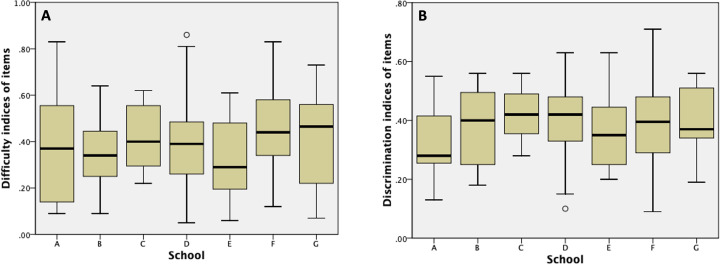 Figure 1
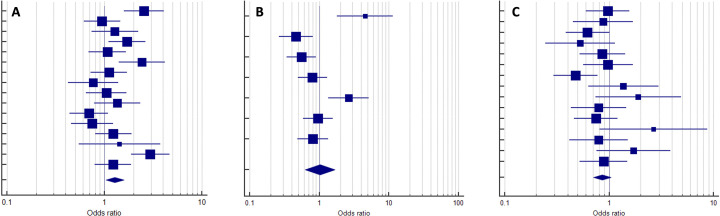 Figure 2
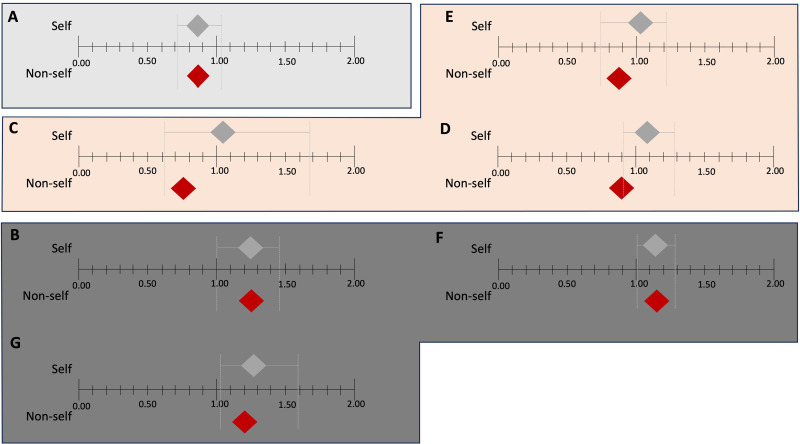 Figure 3
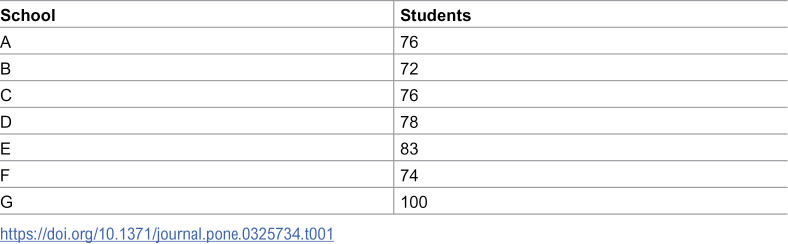 Figure 4
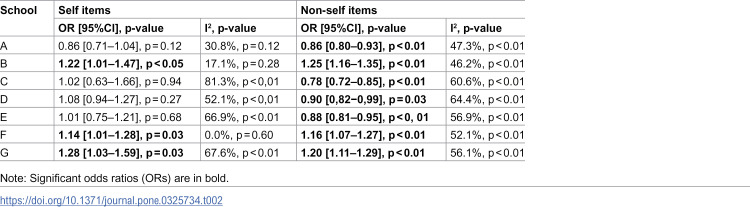 Figure 5
Peer Reviews
No public reviews on file for this paper yet. If you reviewed it on a platform where reviews are public (OpenReview, ICLR, NeurIPS, ICML), you can paste yours below so the community can read it here.
Videos
No videos yet. Explain this paper in a talk, walkthrough, or lecture? Add one.
Taxonomy
TopicsPsychometric Methodologies and Testing