Effects of salicylic acid, benzothiadiazole, and other commercial biostimulants on boosting faba bean (Vicia faba L.) tolerance against Orobanche spp
Amal Bouallegue, Faouzi Horchani, Siwar Thebti, Imen Trabelsi, Zayneb Kthiri, Moez Amri, Mohamed Kharrat, Zouhaier Abbes

TL;DR
This study shows that chemical and biological treatments can help faba bean plants tolerate broomrape infestation, improving growth and yield in both field and controlled settings.
Contribution
The study demonstrates the effectiveness of salicylic acid and benzothiadiazole as tolerance inducers against broomrapes in faba bean.
Findings
Salicylic acid and benzothiadiazole reduced broomrape infestation and improved plant growth and yield.
Biological inducers reduced broomrape infestation in controlled conditions but not in the field.
Tolerance inducers could be integrated into strategies for managing broomrape in faba bean cultivation.
Abstract
Broomrapes (Orobanche spp.) caused important agricultural problems reducing faba bean cultivated area and production in Tunisia. The effect of chemical tolerance inducers (Salicylic Acid SA and Benzothiadiazole BTH) and commercial biological tolerance inducers (Serenade, Trianum-P and Panoramix) on the induction of tolerance to O. foetida and O. crenata on faba bean was studied under field and controlled conditions experiments. These tolerance inducers were evaluated on the susceptible small seeded faba bean cv. Bachaar and applied as seeds’ pretreatment (seeds priming – coating). SA and BTH proved to be the best seed pretreatment inducers that reduced O. foetida infestation and increased plant growth and seed yield under field and controlled conditions. Induced tolerance was associated with reduced orobanche seed germination rate and tubercle number. Biological tolerance inducers…
Genes, proteins, chemicals, diseases, species, mutations and cell lines named across the full text — each resolved to its canonical identifier and authoritative record.
Click any figure to enlarge with its caption.
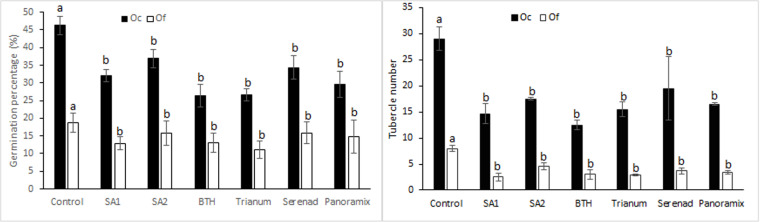 Figure 1
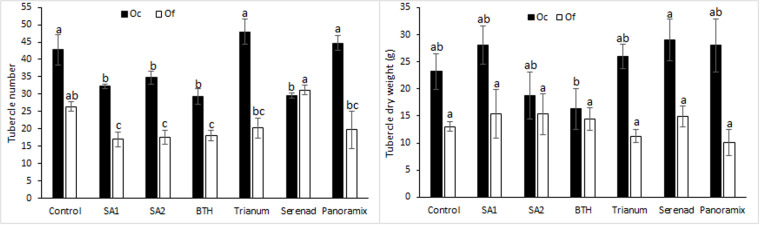 Figure 2
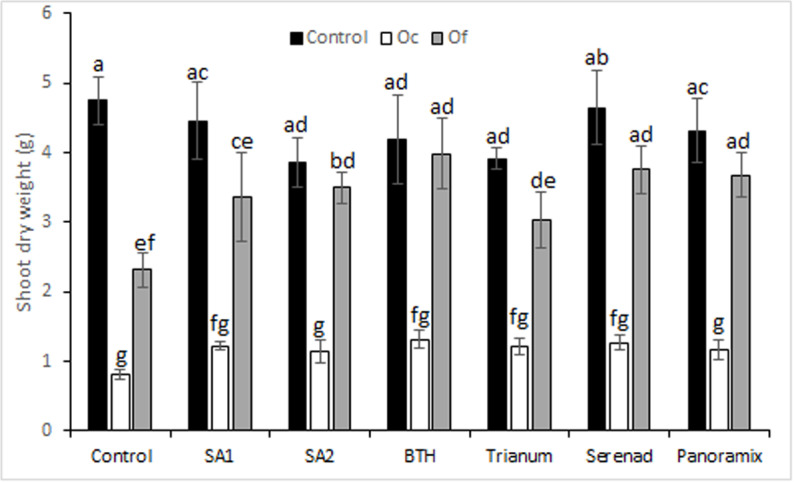 Figure 3
 Figure 4
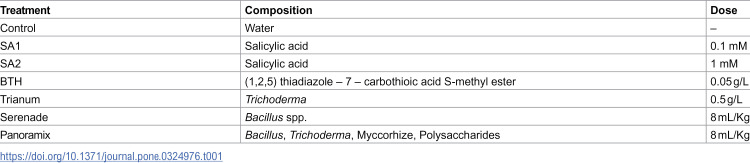 Figure 5
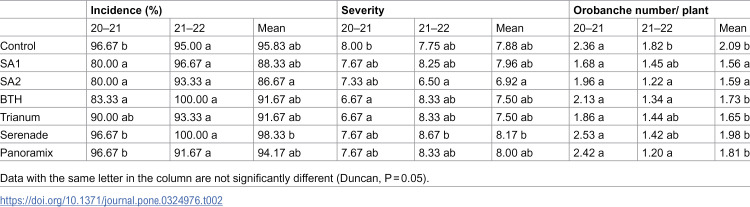 Figure 6
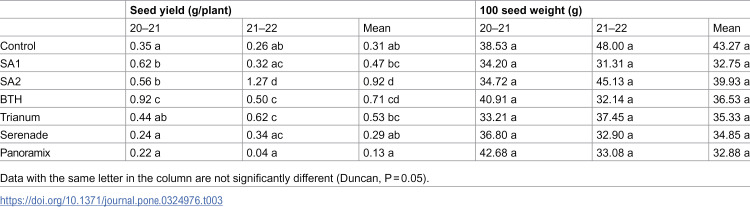 Figure 7
Peer Reviews
No public reviews on file for this paper yet. If you reviewed it on a platform where reviews are public (OpenReview, ICLR, NeurIPS, ICML), you can paste yours below so the community can read it here.
Videos
No videos yet. Explain this paper in a talk, walkthrough, or lecture? Add one.
Taxonomy
TopicsPlant Parasitism and Resistance · Allelopathy and phytotoxic interactions · Agronomic Practices and Intercropping Systems