Testing learning as alternative to the blank slate hypothesis in the honey bee, Apis mellifera
Olav Rueppell, Kayla De Jong, Jacob J. Herman, Cleo Randall

TL;DR
This study explores whether honey bees learn to recognize newly emerged workers as part of their colony, but finds no evidence against the 'blank slate' hypothesis.
Contribution
The study introduces a novel hypothesis that older bees learn to recognize newly emerged bees as colony members.
Findings
No significant difference in aggression toward newly emerged workers was found between bees with and without newly emerging bees in their colonies.
Groups showed significant differences in aggression toward foragers from their own colonies.
Temperature had a negative effect on aggression toward newly emerged workers.
Abstract
Reliable recognition of nestmates and discrimination against non-nestmates is key to the integrity of social insect colonies. Cuticular hydrocarbon profiles play a key role in this recognition process in many species, including honey bees. Newly emerged worker bees are largely devoid of cuticular hydrocarbons and therefore believed to represent a “blank slate” that is not discriminated against and instead accepted into other colonies regardless of colony origin. However, instead of being unrecognizable, the absence of cuticular hydrocarbons may also represent a recognizable “Gestalt”. Thus, an alternative hypothesis for the universal acceptance of newly emerged workers may be that older workers in every colony learn the absence of cuticular hydrocarbons as a familiar stimulus that belongs to their colony because other such workers are constantly emerging under normal circumstances.…
Genes, proteins, chemicals, diseases, species, mutations and cell lines named across the full text — each resolved to its canonical identifier and authoritative record.
Click any figure to enlarge with its caption.
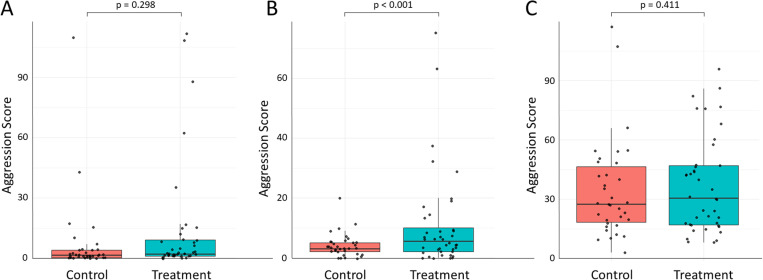 Figure 1
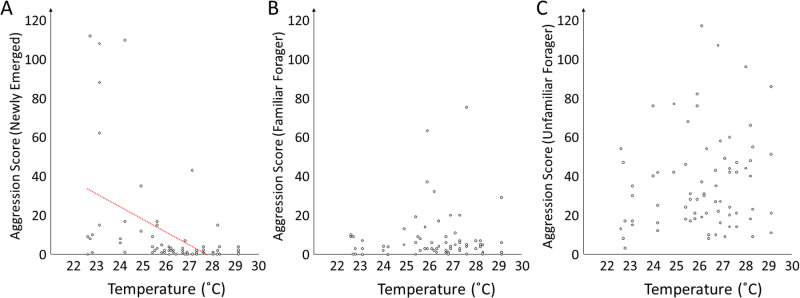 Figure 2
Peer Reviews
No public reviews on file for this paper yet. If you reviewed it on a platform where reviews are public (OpenReview, ICLR, NeurIPS, ICML), you can paste yours below so the community can read it here.
Videos
No videos yet. Explain this paper in a talk, walkthrough, or lecture? Add one.
Taxonomy
TopicsPlant and animal studies · Insect and Arachnid Ecology and Behavior · Insect and Pesticide Research